
 |
|
 |
|||||||||||||||




Photo by: Gary Fewless
Location: Brown Co., WI
Date taken: June 29, 2001
Camera: Olympus CL 2500L digital camera
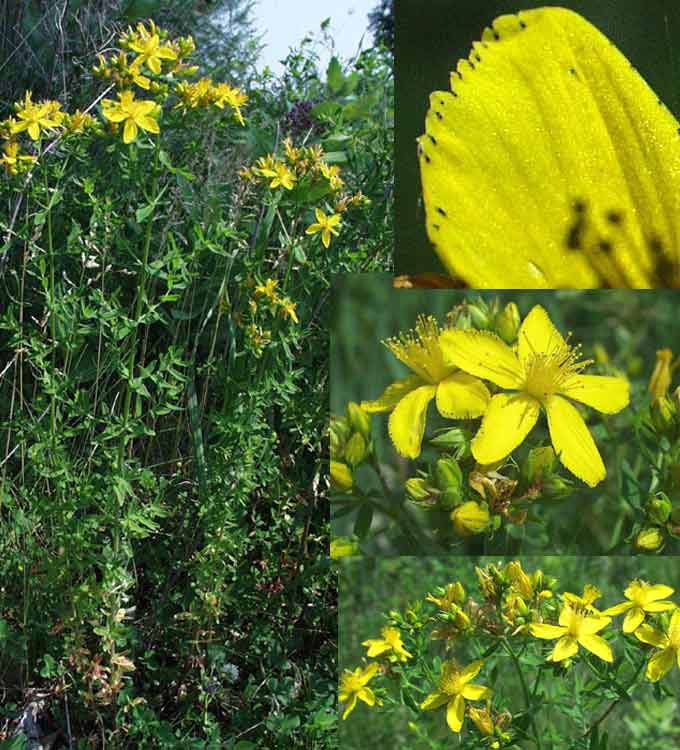
St Johns wort (Hypericum perforatum)
Click on image to see more photos showing plant structure -- 77K
St Johns wort (Hypericum perforatum), also known as Goatweed, is one of the summer flowers blooming now in the Arboretum. Folklore suggests that it always bloom around June 24 in commemoration of the solstice and the death of St. John the Baptist. The bright yellow flowers are about 2 inches across and often have black dots on the edges. The flowers cluster together near the top of the plants that grow 1 to 3 feet tall. St Johns wort is a perennial plant introduced from Europe and is listed as a non-native potential problem species by the DNR. It reproduces from seed and from underground rhizomes.
It is common in fields and along roadsides. Although the leaves of St. John's wort contain a toxin, which causes photosensitization in some insects and white-faced cattle that eat them, its purported medicinal properties are derived from chemicals contained in the dark spots that rim the edges of the flowers. The plant has been used to treat various aliments since ancient times and has been written about by many including the famous Greek healer Hippocrates (460-377 B.C.).
Contributed by Vicki Medland
© 2001-2004 The Cofrin Center
for Biodiversity and the University of Wisconsin Green Bay,
All Rights Reserved
 Last
updated on
August 20, 2014
Last
updated on
August 20, 2014