
 |
|
 |
|||||||||||||||




Photo by: Gary Fewless
Location: Brown Co., WI
Date taken: June 29, 2001
Camera: Olympus CL 2500L digital camera
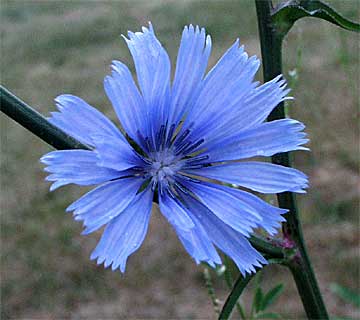
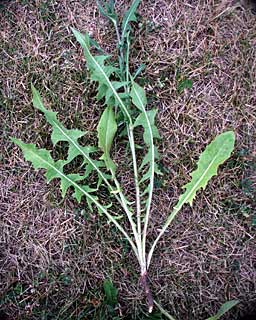
Chicory (Cichorium intybus)
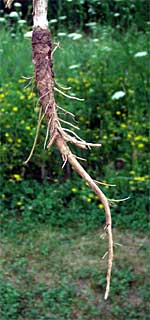
The taproot
is sometimes roasted and ground as a coffee substitute or as an addition
to commercial coffee. It is becoming increasingly important as a source
of the carbohydrate inulin, which is used to make soluble fibers and as
sugar and fat replacers. The leaves are less often used as a salad green
when very young--it is relatively closely related to lettuce in the Tribe
Cichoriae within the Family Asteraceae (Compositae of older books). Endive
is a cultivated variety of chicory. Other species within this tribe in
our area include Dandelion (Taraxacum officinale), Hawkweed (Hieracium
spp.), Sow Thistle (Sonchus spp.) and Yellow Goat's-beard (Tragopogon
spp.).
Contributed by Gary Fewless
© 2001-2004 The Cofrin Center
for Biodiversity and the University of Wisconsin Green Bay,
All Rights Reserved
 Last
updated on
May 12, 2014
Last
updated on
May 12, 2014