
 |

Observations by Gary Fewless for Green Bay WI (Lat.N 44.51° Long. W 88.02° ), except as noted. For flowers lacking conspicuous petals or sepals I define "anthesis" as release of pollen by mature anthers.
October 2002
Observations by Gary Fewless, except as noted
| Date | Observation (Click on links for photos) |
|---|---|
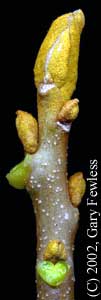
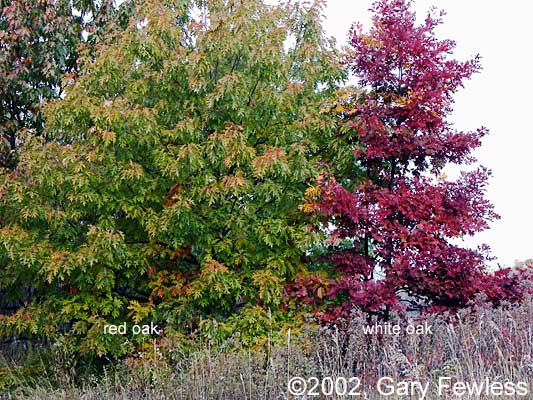
| Oct 30 | Sometimes the common names of plants are very appropriate and self-explanatory (e.g. "yellowbud hickory"). At other times it is not clear what relationship the name has to the appearance of the plant, at least during some portions of the life cycle. The linked photo shows two species of oak on UWGB's Cofrin arboretum. Red oak is on the left and white oak on the right. It seems likely that they were not named during this portion of the Fall season. Leaves of red oak do often turn red later, however. Although there are strong tendencies for any given species, there is considerable variablility in the color of Fall leaves, varying from one tree to the next, from season to season and from year to year (Gary Fewless). |
| Oct 29 | I was surprised to see the difference between this Fall and last. Last year our first measurable snowfall was December 23, with a total of 1.8 inches by the end of December. This year our first measurable snowfall was October 18 with a total of 1.8 inches in Green Bay so far and much more to our north (Gary Fewless). |
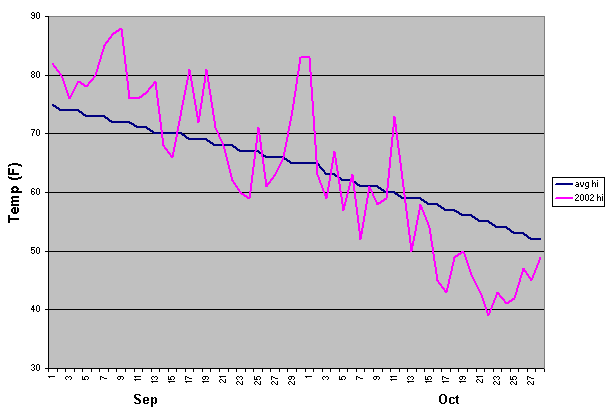
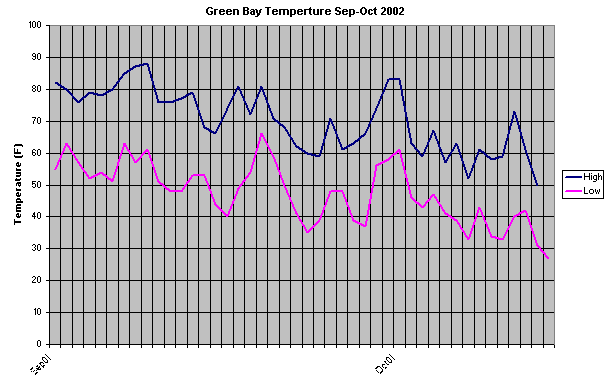
| Oct 28 | The daily high temperature in Green Bay has been below the average since Oct 12 (averaging about 9 degrees lower). In early September the temperature was roughly the same magnitude above average, making the transition into Fall seem even more pronounced. |
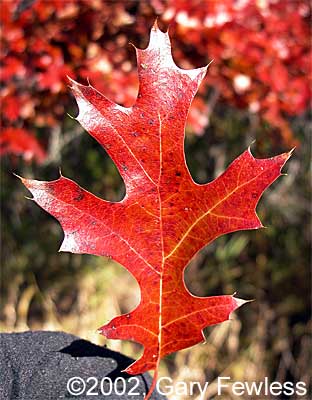
| Oct 27 | In the Green Bay area some of the oaks are now becoming very colorful, including Hill's oak (Quercus ellipsoidalis). Also known as northern pin oak, this species is distinctive of the midwest and is very common in our area. |
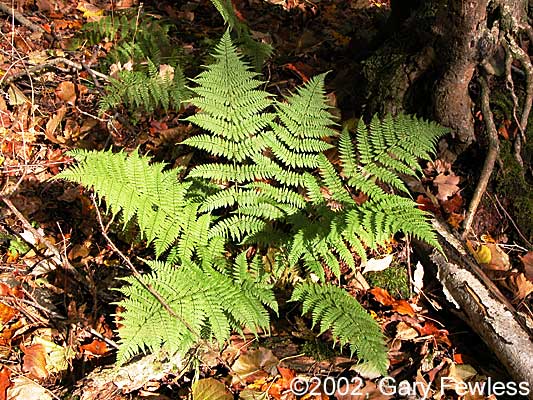
| Oct 26 | Fall leaf color is still very good in some parts of Door County. Sugar maples and beech are among the best colors currently. Also some understory plants are still in good condition, including the intermediate wood fern (Dryopteris intermedia), whose leaves may remain green all winter under the right conditions. |
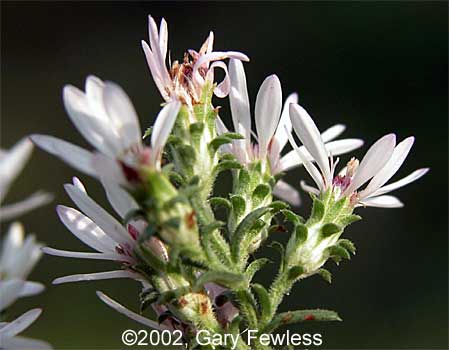
| Oct 24 | The daily low temperature in Green Bay has been at or below 32 F for the last 11 days. Average high and low for this time of year are 54 and 36 F. In spite of the colder temperatures, there are still some wild plants in flower, including showy goldenrod (Solidago speciosa), heath aster (Aster ericoides) and a variety of weeds such as charlock (Brassica kaber), hoary alyssum (Berteroa incana) and ragwort (Senecio vulgaris), UWGB (Gary Fewless). A new report on invasive species lists the cost to the great Lakes area as "well into the billions" of dollars, but acknowledges that the true cost is so high that it is effectively impossible to estimate accurately. Zebra Mussels alone cost local municpalities and governments about $69 million, and that does not include indirect costs associated with effects on the fishing industry and tourism. The loss of biodiversity due to invasive species is more difficult to estimate and nearly impossible to place a dollar value on. |
| Oct 22 | An additional 0.4 inches of snow fell in Green Bay today. The total precipitation for the month is 3.08 (as water) which is about twice our average. |
| Oct 21 | Green Bay received 1.2 inches of snow, a record for this date. The Wausau area had 4 inches and some areas, including Clark and Chippewa counties had 5-6 inches of snow. The Green Bay area had rain later in the day with a total precipitation of 0.83 inches. |
| Oct 20 | Tundra Swans return to Green Bay. Big flocks of Sand Hill Cranes heading south and large flocks of Robins, Pensaukee area, Oconto County (Tom Erdman). |
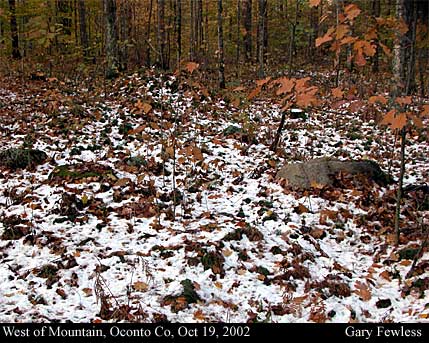
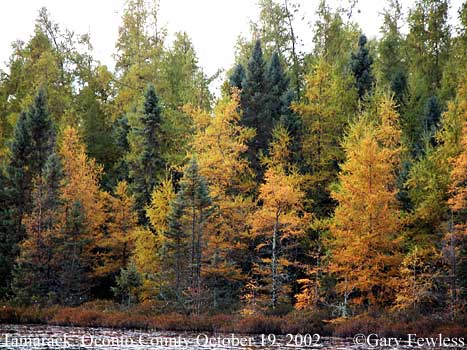
| Oct 19 | There is still some snow on the ground in the the Mountain area of Oconto County, from yesterday's snowfall. Some Tamaracks in good Fall color, but in other areas some are still green. (Gary Fewless) |
| Oct 18 | Some areas in northeastern Wisconsin received significant snow (Rhinelander had 3.0 inches). Snow plows ran on some main roads in the Mountain area of Oconto County. Green Bay had mostly light rain and 0.1 inch of snow, our first measurable snowfall of the year (a "trace" recorded yesterday) (Gary Fewless). |
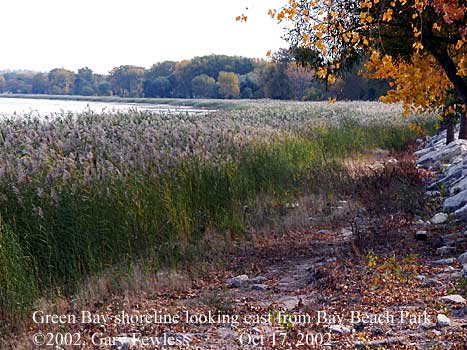
| Oct 17 | The invasive species, Phragmites australis (often just called Phragmites, sometimes giant reed) has taken over large areas of the lower Green Bay shoreline following the recent low water levels of 1999-2001. The area occupied by Phragmites is no longer available to other plants or the animals that depend on them, thereby reducing biodiversity in the area. In fact, Phragmites stands are often so thick and tall that they really aren't even usable by people for recreation. This land is lost to the natural communities almost as effectively as if the land had been filled or otherwise converted. Invasive species may well be the most important issue facing conservation of natural resources in the coming century (Gary Fewless). |
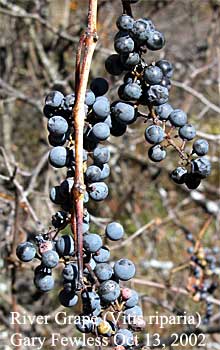
| Oct 14 | The low temperature was 27 F in Green Bay this morning. Iron Mountain, Michigan reported a low of 21 F! A graph of temperature in September and October shows the general cooling trend. Our common wild grape (Vitis riparia) is conspicuously in ripe fruit, as are many other plants (Gary Fewless). |
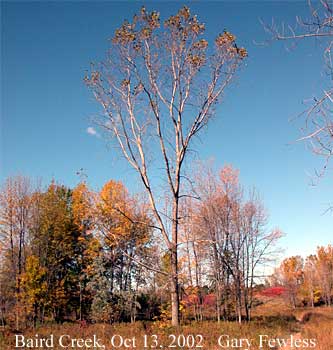
| Oct 13 | The low temperature of 31 F this morning was our first official freeze in the City of Green Bay this Fall and our lowest temperature since May 21 (when the low temperature was 30 F) . There are still many leaves on the trees for some species, but others such as this cottonwood (Populus deltoides) have lost most of their leaves (Gary Fewless). |
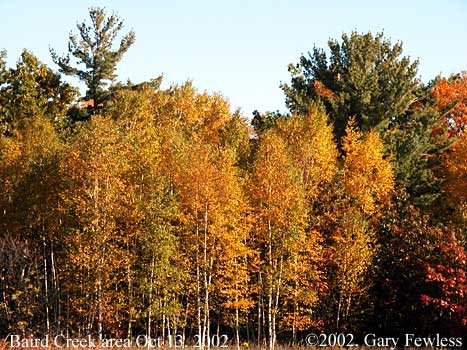
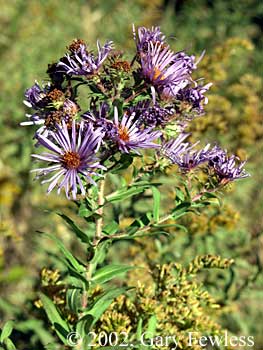
| Oct 11 | Fall leaf colors may be at about their peak in northeastern Wisconsin this weekend. We are expecting a hard freeze over the weekend which will quickly move the colors along. There are still many species in flower in the Green Bay area, including new england aster (Aster novae-angliae). |
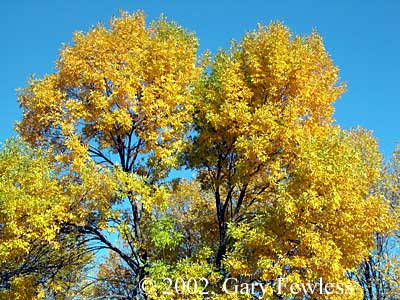
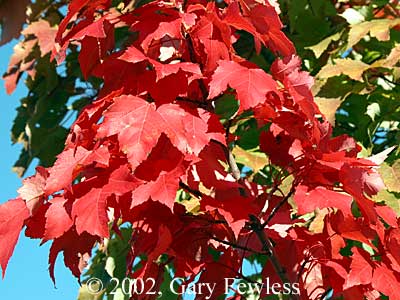
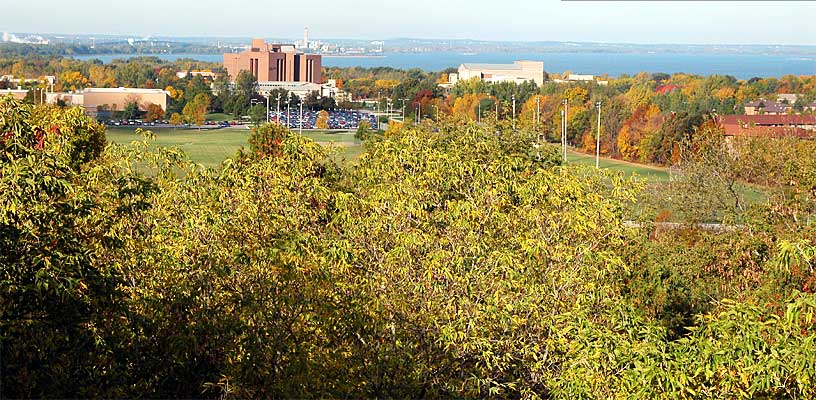
| Oct 9 | Fall colors are developing on UWGB's Cofrin Arboretum. Among the most conspicuous colored trees are white Ash (Fraxinus americana, mostly planted), green Ash (Fraxinus pennsylvanica) and red Maple (Acer rubrum). View from the observation tower (Gary Fewless). |
| Oct 4 | The U.S. Army Corps of Engineers reports that water level in Lake Michigan is about 9 inches higher that it was last year at this time. It is still about 1 foot below the long term average, however. Precipitation in the Lake Michigan/Huron Basin was about 1.4 inches below the average for September, but over the last 12 months the total precipitation is about 8% above average. Precipitation alone does not tell the whole story of water level and we must also consider how much water has been lost to evaporation, transpiration and outflow (Gary Fewless). |
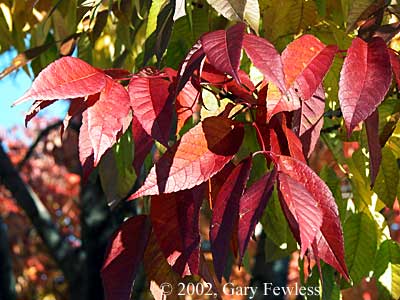
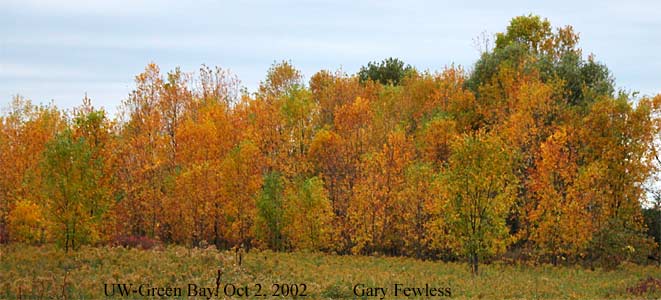
| Oct 2 | The leaves of some trees are rapidly turning to their Fall colors. The most conspicuous trees in the City of Green Bay are green ash (Fraxinus pennsylvanica), simply because they are very numerous in the old fields. Other conspicuous species include staghorn sumac (Rhus typhina, red), virginia creeper (Parthenocissus inserta, red), River grape (Vitis riparia, yellow), and gray dogwood (Cornus racemosa, red). Many other species are still green (Gary Fewless). |
| Oct 1 | The second consecutive unseasonably warm day. Green Bay's high temperature of 83 F was near the record high of 85 for this date. The average high temperature is 65. Canada Geese are now frequent and numerous in the fields along the East River in Allouez (Gary Fewless). |
© 2001-2004 The Cofrin Center
for Biodiversity and the University of Wisconsin Green Bay,
All Rights Reserved
 Last
updated on
May 20, 2015
Last
updated on
May 20, 2015