| Aug 15 |
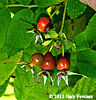 |
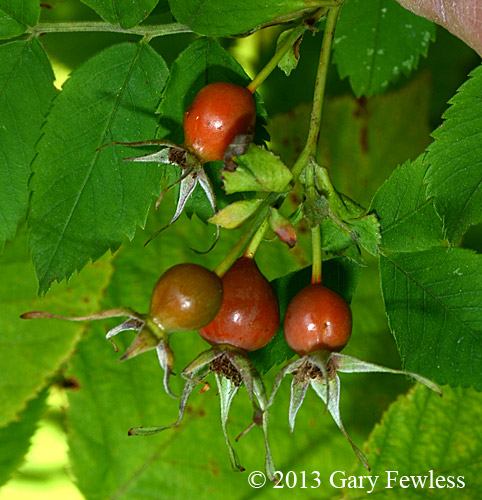
Rose hips, the fruit of roses, are now turning red for our common wild rose (Rosa blanda). |
|
| Aug 14 |
The low temperature in Green Bay this morning was 43° F. In Rhinelander, about 100 mile NW, the low temperature was 34°, which broke the previous record of 37°. At least 5 other locations in northeastern Wisconsin set or tied low temperature records.
|
| Aug 8 |
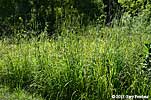 |
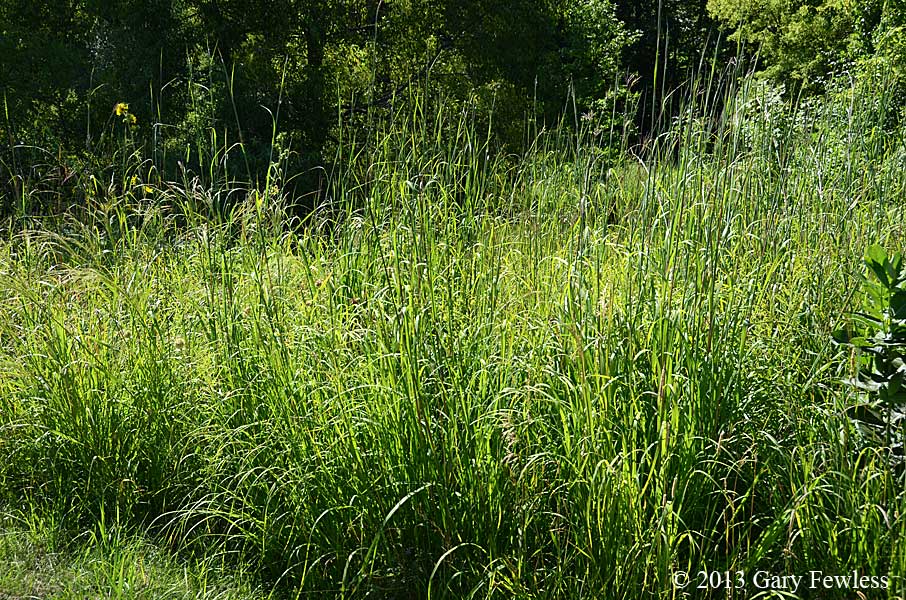
The large prairie grasses, big bluestem and switchgrass shown here, are also prominent in late summer. They have formed their inflorescences long since, but so far only a few big bluestem flowers have opened. Big bluestem can reach a height of 7-8 feet. |
|
| Aug 6 |
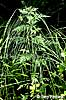 |
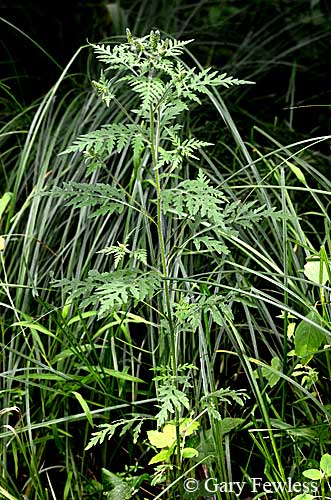
Common ragweed (Ambrosia artemisiifolia) has begun to flower (releasing pollen) in the Green Bay area. It is the major cause of late summer "hayfever". More photos and information here. |
|
| Aug 5 |
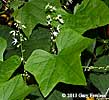 |
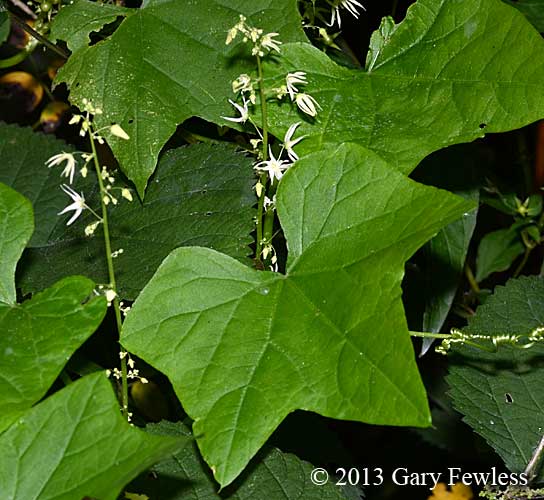
Wild cucumber (Echinocystis lobata) has begun to flower in the Green Bay area. |
|
| Aug 2 |
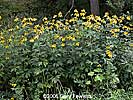 |
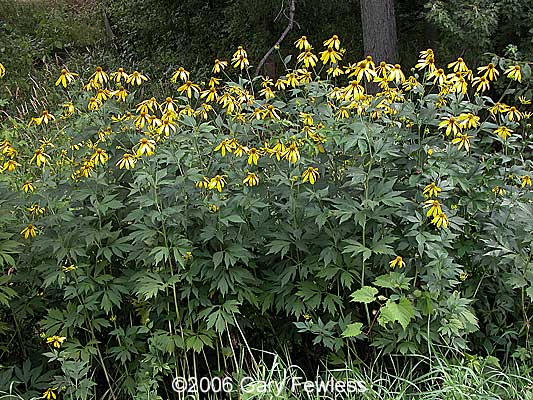
Late summer is a season in which many species of plants from the Aster family (Asteraceae) are prominent in our flora. Many of them, such as most of the goldenrods and asters, grow in sunny fields and roadsides, but a few are also found in woods. Among the latter is cut-leaved coneflower (Rudbeckia laciniata). It is a large plant, reaching 6-8 feet and often grows in moist or even wet soils, and it is now flowering in Brown County. |
|
| Aug 1 |
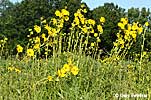 |
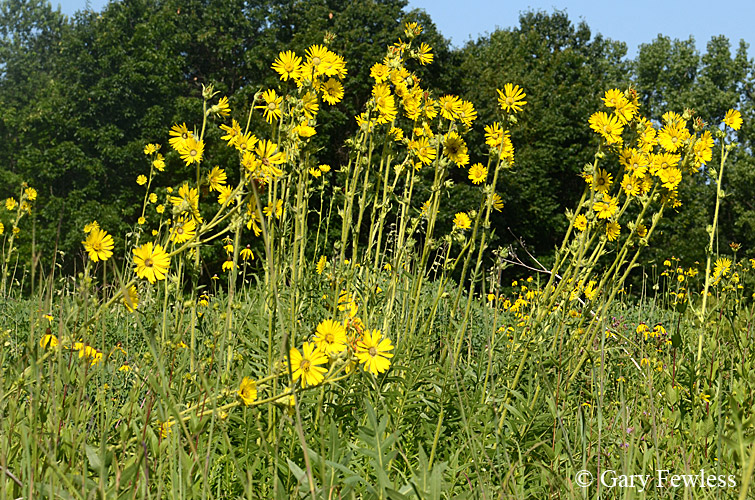
In the summer of 2011 the compass plants (Silphium laciniatum) in UW-Green Bays Cofrin Arboretum appeared to be in serious trouble. Plants were very small compared to their normal stature and many failed to flower or flowered only weakly. A rust (fungus) named Puccinia silphii was identified as the cause. It appeared that many of the plants would die. However, after just 2 years virtually all of the plants have recovered and in fact are having a remarkably good year now, as shown in the photo. |
|



 Last
updated on
May 20, 2015
Last
updated on
May 20, 2015