Why a Green Bay NERR
A Freshwater Asset
...for Wisconsin and the nation.
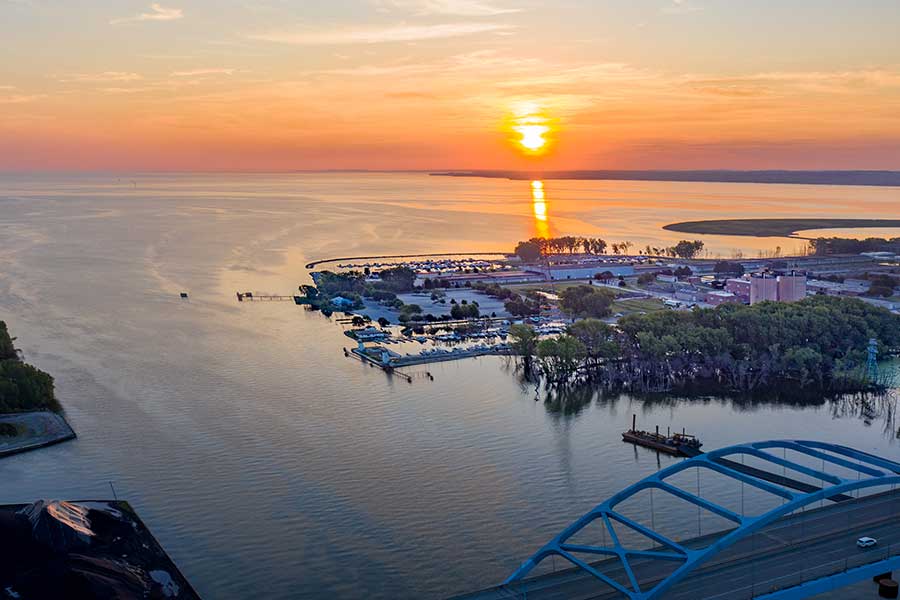
A Reserve in the Bay of Green Bay will make Congressional investment in the National Estuarine Research Reserve System (NERRS) more impactful, while serving the needs of Wisconsin communities by preserving the state’s water culture, addressing local challenges and promoting the long-term environmental health of the Bay of Green Bay.
Why Do We Need a NERR?
Here are 7 reasons why we need a National Estuarine Research Reserve in Green Bay.
1To steward the world’s largest freshwater estuary.
Designating the Bay of Green Bay as a National Estuarine Research Reserve will preserve a one-of-a-kind freshwater ecosystem.
2To advance clean water and habitat restoration.
Following the $1.5 billion cleanup and PCB removal of the Fox River from 2004 to 2020, the Reserve will lead and support efforts to restore critical habitats and protect the health of local waters, such as the ongoing work on the Lower Green Bay Area of Concern, whose boundaries overlap with proposed Reserve areas.
3To provide STEM education for the next generation.
There are 100+ schools within easy reach of the proposed Reserve, creating opportunities for K-12 students to learn through educational programming, field trips, and hands-on science.
4To promote cultural heritage and community engagement.
Collaborating with local tribes and partners, the Reserve will honor Wisconsin’s deep cultural connections to water through storytelling, historical exhibits, and community-driven art projects.
5To tackle problems with advanced technology.
The Reserve will be a testing ground for cutting edge tools and technology for environmental monitoring, data analysis, remote sensing, and archiving to improve research; public accessibility, and educational outreach.
6To contribute to the local economy.
The Reserve will support local jobs and Wisconsin’s tourist and recreation economy. The Reserve will protect and steward places that provide many valuable benefits to industries and communities, as well as become a hub for visitors to hike, birdwatch, kayak, and fish.
7To provide solutions for today’s challenges.
The Reserve will support local decision-makers with science-backed strategies to address pressing environmental issues, such as emerging contaminants, water quality, and coastal flooding and infrastructure.
About the NERR System
What is the National Estuarine Research Reserve System? Read below to learn more.
Who They Are
Established in 1972, the National Estuarine Reserve System is a network of 30 special places in 25 coastal states and territories. Each Reserve is a partnership between the National Oceanic and Atmospheric Administration (NOAA) and a U.S. state or territory.
What They Do
NOAA provides funding and national guidance, Reserve-based monitoring, research, education, stewardship and training programs provide information and services that communities need to protect people and property along the coasts.
How They Work
The National Estuarine Research Reserve Association (NERRA) works to strengthen the Reserve network so it can better address growing challenges to our nation’s estuaries, coasts and communities.
NERR System Locations
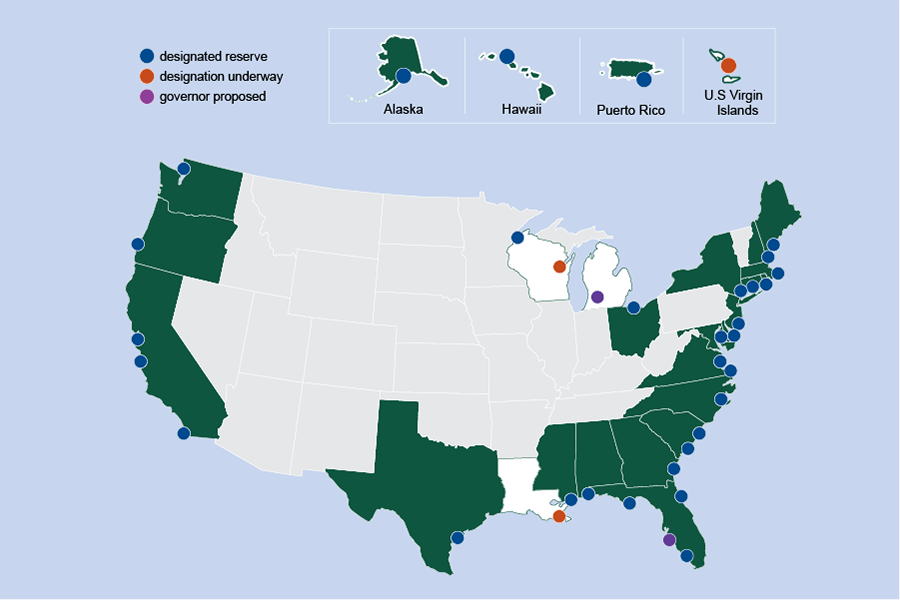
The map shows the locations of NERR System in the United States. Below is a list of the current, underway and proposed locations of National Estuarine Rsearch Reserves shown on the map. Proposed and underway designations are noted in the list.
- Atchafalaya Reserve (LA) - designation underway
- ACE Basin (SC)
- Apalachicola (FL)
- Bay of Green Bay (WI) - designation underway
- Chesapeake Bay (MD)
- Chesapeake Bay (VA)
- Connecticut
- Delaware
- Elkhorn Slough (CA)
- Florida - Governor proposed
- Grand Bay (MS)
- Great Bay (NH)
- Guana Tolomato Matanzas (FL)
- He’eia (HI)
- Hudson River (NY)
- Jacques Cousteau (NJ)
- Jobos Bay (PR)
- Kachemak Bay (AK)
- Michigan - Governor proposed
- Mission-Aransas (TX)
- Narragansett Bay (RI)
- North Carolina
- North Inlet-Winyah Bay (SC)
- Lake Superior (WI)
- Old Woman Creek (OH)
- Padilla Bay (WA)
- Rookery Bay (FL)
- San Francisco Bay(CA)
- Sapelo Island (GA)
- South Slough (OR)
- Tijuana River (CA)
- U.S. Virgin Islands - designation underway
- Waquoit Bay (MA)
- Weeks Bay (AL)
- Wells (ME)
Subscribe Today
Sign up to our newsletter to stay current on the designation, events and volunteer opportunities.
Need more Information
My name is Emily Tyner and I am the Director of Freshwater Strategy. Please let us know if you would like more information about our journey to become a National Reserve.