About
Small Classes, Big Benefits
Our professors specialize in personal attention and student success.
At UW-Green Bay, you'll never just be a number in a seat. Many of our students work on research projects, get access to internship opportunities and get professional support through close relationships with professors. The program is designed to fit your needs, whether you are full-time or part-time, with most courses also offered at times convenient for working individuals. Full-time students can complete the degree in 2 to 3 years, while part-time students take about 3 to 5 years. You'll get a solid foundation for building a career to address pressing ecological challenges across the Great Lakes region and beyond, as a leader in environmental science, management and communication.
Degree Tracks
Based on your interests and needs as a student, you'll choose a degree track that guides your program.
Areas of Focus
After you choose your degree track, you can further focus your degree in an area that fits your career goals.
Facilities
Knowledge gained beyond the classroom throughout our facilities means practical experience for you.
Tuition & Aid
Preparing now can pay off in the future. Find out how much your degree will cost, as well as ways to make it more accessible.
Calculate Your Cost
Investing money now can pay off in the future by earning a graduate degree and standing out to employers.
Finance Your Future
From grants to scholarships to filing your FAFSA, there are ways to ease financial stress.
Get an Assistantship
All students are considered for both research and teaching assistantships, where you can improve your resume and build your skills while earning money.
Choose Your Adventure
Our master's degree in Environmental Science and Policy program features courses from a number of programs, allowing students to tailor their training to specific fields of interest, engage in real-world environmental problems and build the technical, analytical and communication skills. You'll work in collaboration with advisors to choose between five areas of focus:
- Animal Behavior and Ecology
- Conservation Biology and Ecological Restoration
- Freshwater Ecology and Management
- Geoscience and Hydrogeochemistry
- Environmental Engineering and Remediation
Need a different Catalog Year?
The year you begin your studies is what catalog year you should consult to determine which courses you'll need to graduate. Click the year you started; then, once you're in the catalog, choose "Graduate Programs" in the menu, then click on our program.
Learning Outcomes
Graduates will develop and demonstrate:
- Knowledge specific to their Area of Emphasis.
- An understanding of the complex nature of environmental problems and the interrelated roles of science, administration, politics, policy, and technology in their solution and in the formulation and implementation of environmental policy.
- A working knowledge of the biological, chemical, physical, political, and administrative processes and techniques affecting environmental quality and related issues.
- The ability to contribute to the environmental science and policy research base, to access this research base, and to assess the quality of the research literature.
- The ability to think creatively and to identify potential solutions to current and emerging problems, and to evaluate the technical and economic feasibility of such solutions.
- The ability to design and implement research strategies, collect, organize, and evaluate data, and produce written reports of professional quality, including hands-on skills in using computers to achieve these objectives.
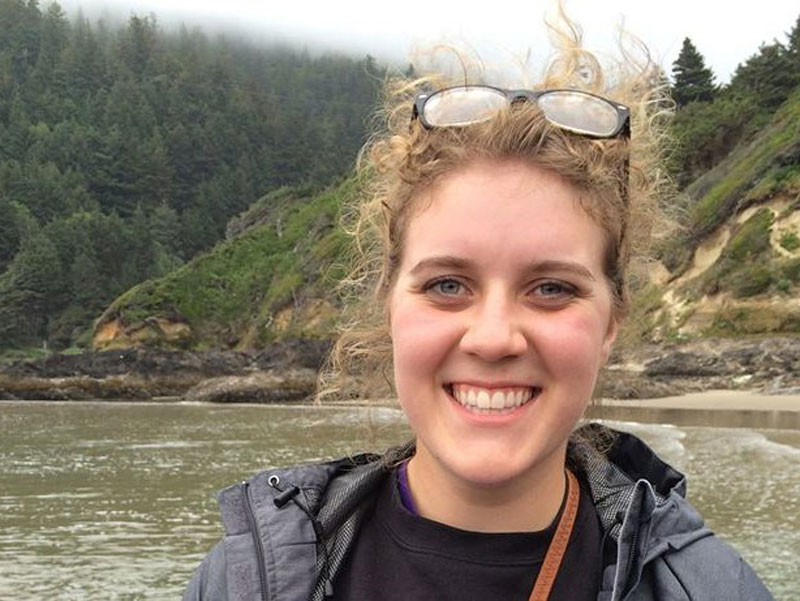
Meet a
Phoenix
"Great opportunities for participating in research projects, volunteering, professional development, presentations, internships and more quickly came flying my way! I felt really tapped into and connected with the wider conservation community, and, consequently, was able to develop a lot of meaningful relationships. I also thought that the networking opportunities provided through my class work, research assistantship and other extracurricular activities were extremely beneficial throughout my graduate studies and beyond."
Megan Hoff '20
M.S. in Environmental Science & Policy | Senior Planner, Lincoln County
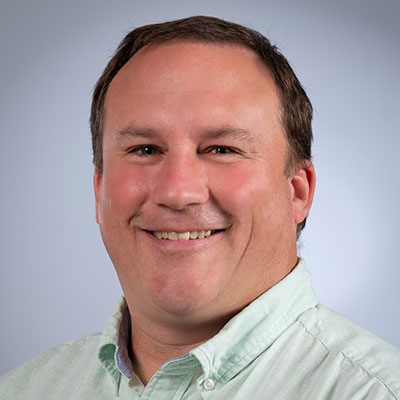
Let's Connect
Meet John Luczaj, Chair of the Environmental Science & Policy program. If you have questions, he's here to help!