2026 Issue
About the Cover:
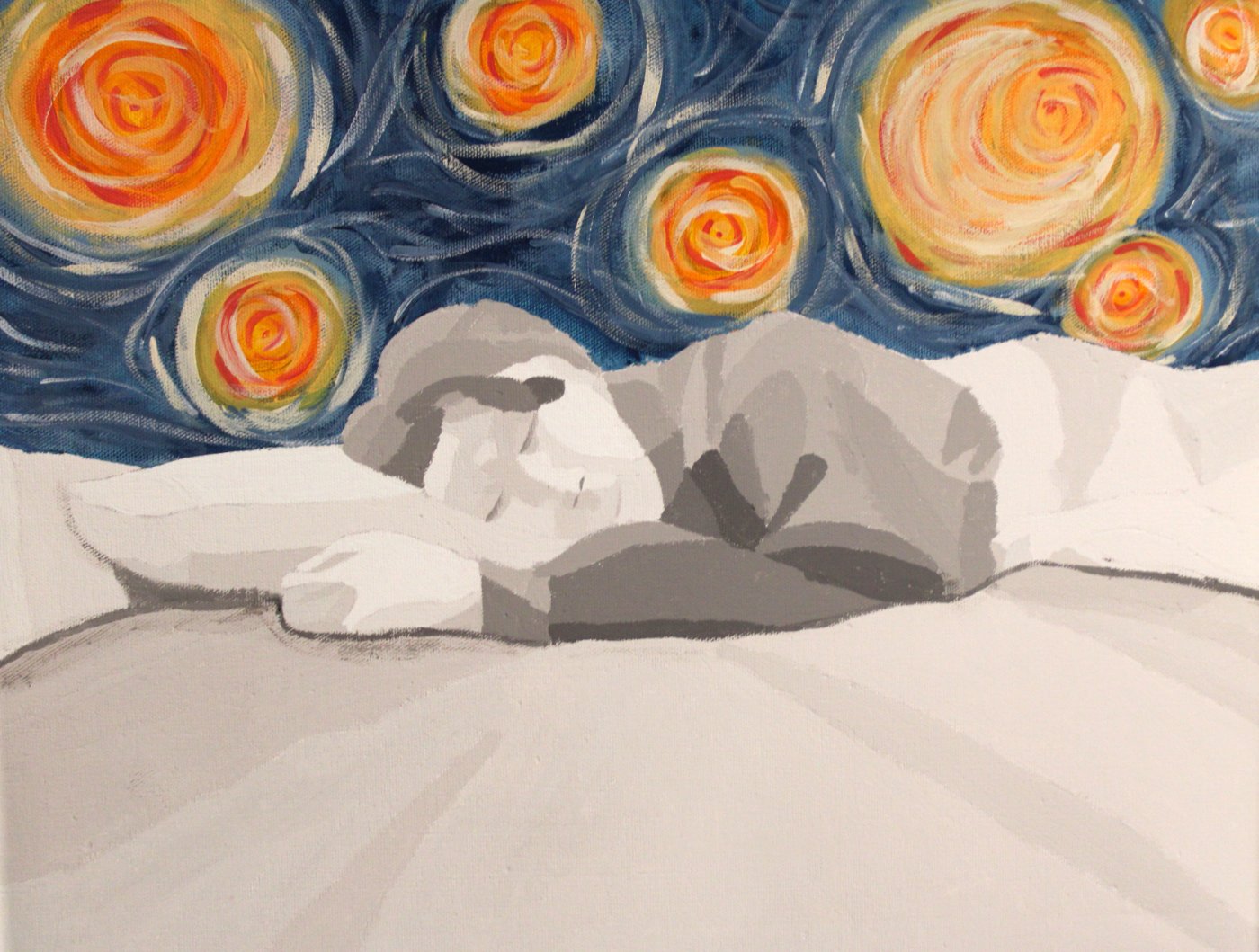
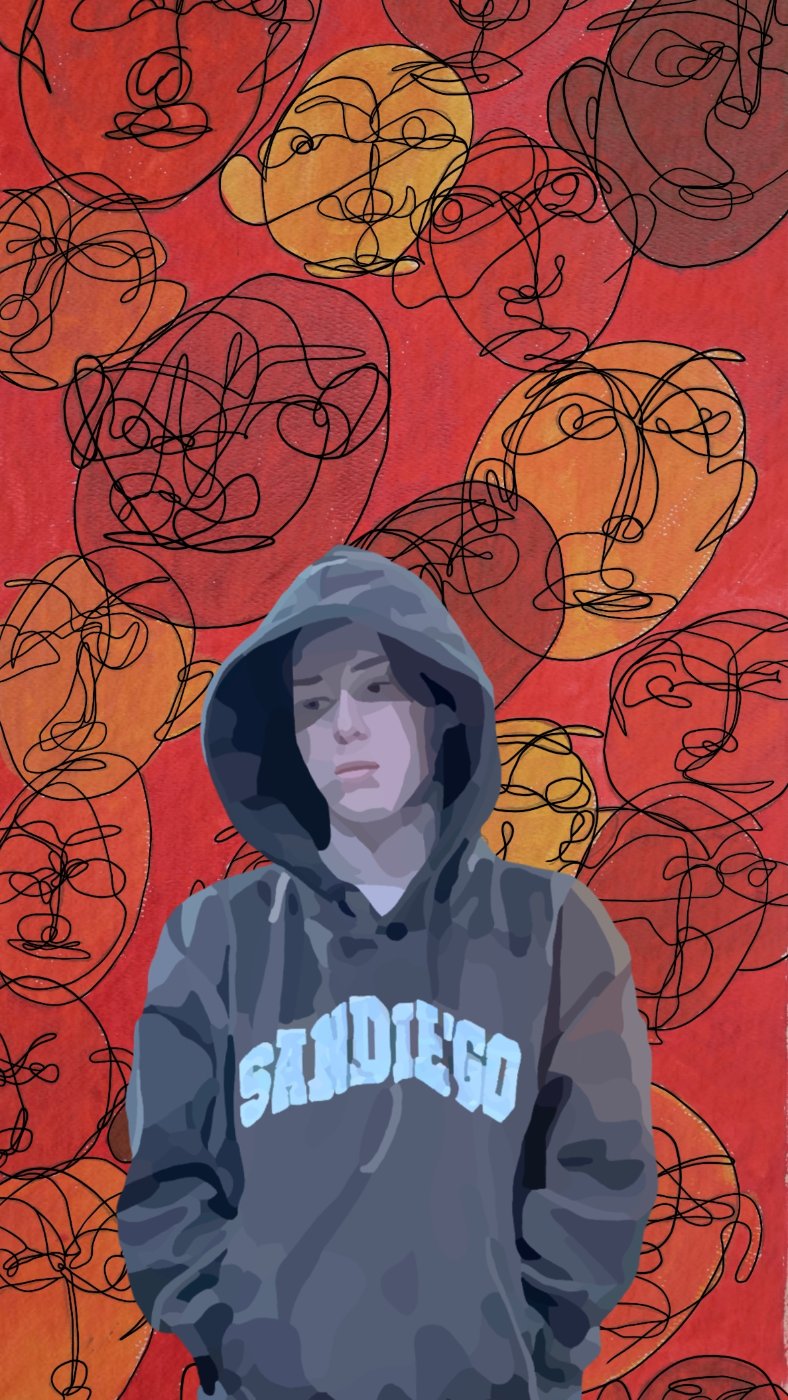
This year’s cover image is “Dreaming” by UW-Green Bay student Jos Donohue. Jos writes: “Dreaming” is the 8th piece of my 15-piece collection that focuses on exhaustion in today’s society and adults’ negative predetermined opinions about teenage exhaustion. “Dreaming” depicts how it feels to finally feel at peace when sleeping after an incredibly busy day. I depicted myself with solid, gray-scale colors, contrasting with the surrounding colorful and playful environment, which was inspired by post-impressionism, specifically Vincent van Gogh’s painting style. “Dreaming” was made with acrylic paint on canvas.
2026 Contributors
Welcome to the 2026 issue of the Northern Lights Journal! Meet the people behind the curtain, including the staff who put the journal together and the writers and artists who've shared their creative work with the world.
2026 Digital Bonus Content
The “Digital Bonus Content” section of the Northern Lights website includes our editors’ favorite submissions that didn’t fit into the print edition. The site also features digital-only pieces, like W. Tanner Forbes' multimedia digital story, "Bigs Carmichael and the Hybrid Heist."
Untitled Art 1: Alayna Neubert
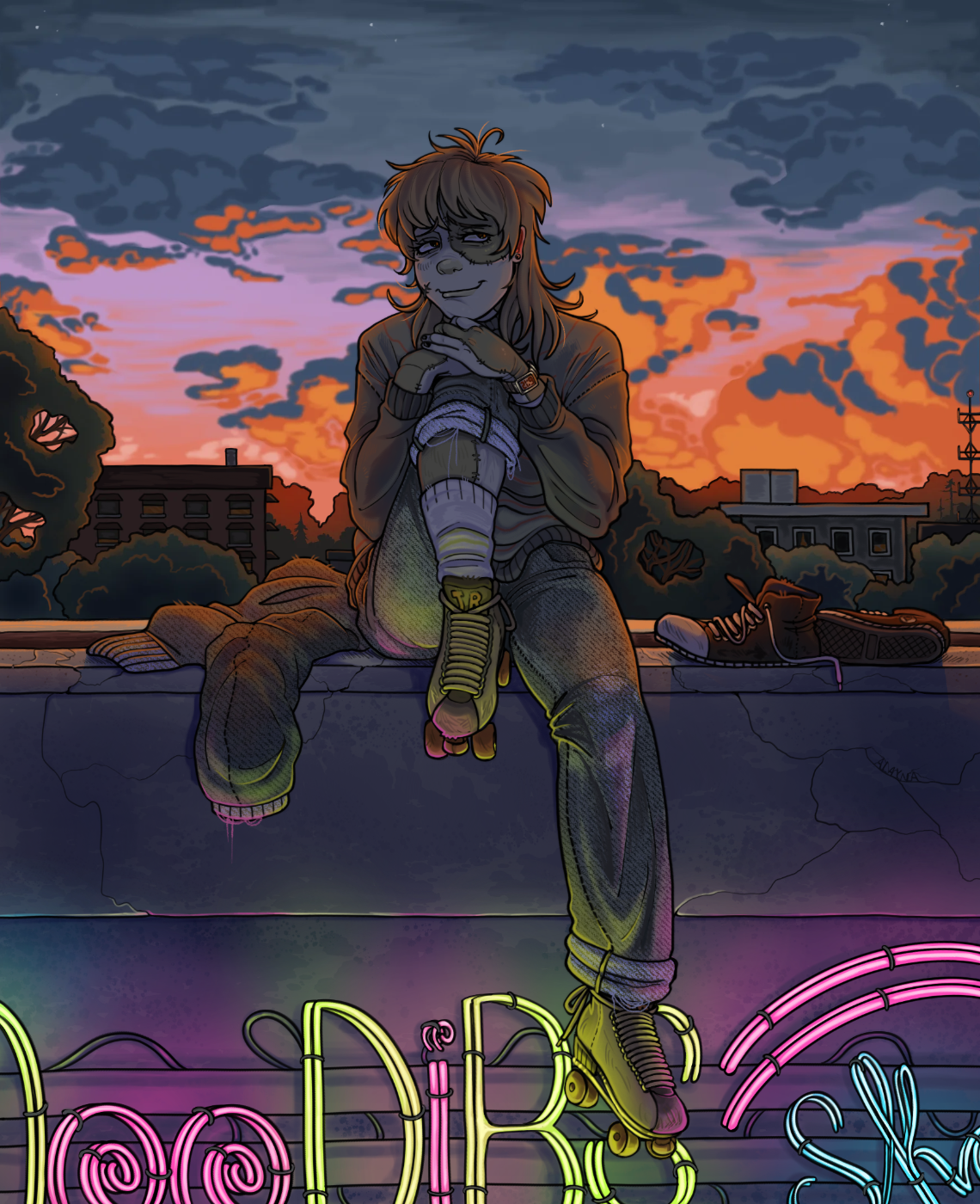
© 2026 by Alayna Neubert
Gas Station Angel
Two Marlboro Reds,
suffocated on pavement.
Click your lighter—
Watch the flame.
Soft glow on the end of a cigarette,
press your embers into my own.
Sizzle of a smoke’s kiss,
Black out my lungs—
Hold my heart—
Breathe me deeper still—
Ash sears my skin,
I let your tongue trail
along my charred palm.
Saliva soothes,
I still burn.
Devotion reflected in the
neon glow of a gas station window,
oxygen deprived and replaced
with the acrid smell
of diesel wafting through the air.
Each drag pulls me deeper,
each exhale weighs heavier.
Budding migraine,
the high is wearing off.
Sins of the flesh are all I know,
all you want.
—© 2026 by Jasmine Bertelson
Limerence
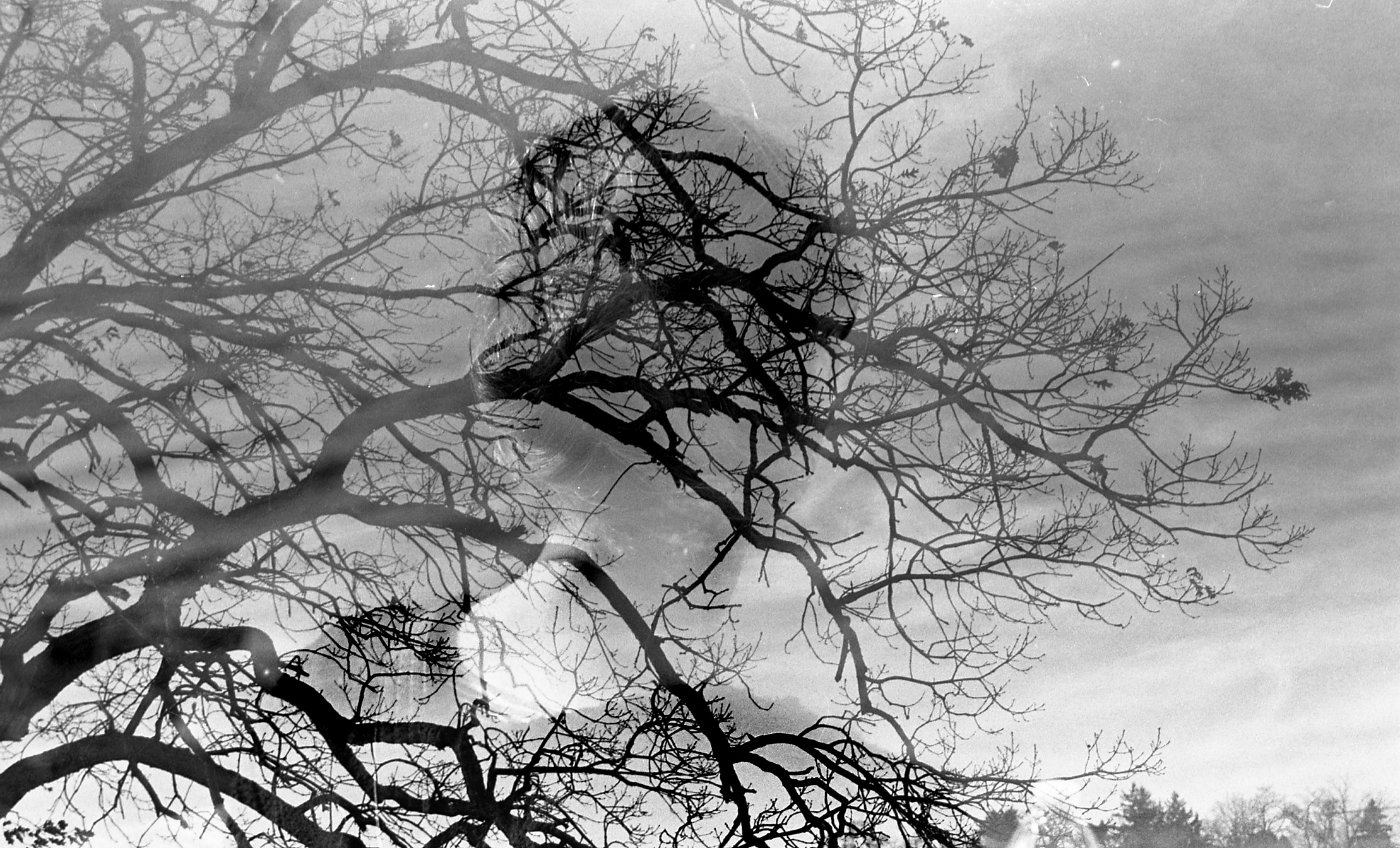
© 2026 by Taylor Rugh
Luna
There isn’t a word
for what I am now,
no script for the sibling
who stays.
So I give you to the night sky
in pieces—
your voice in my head,
the way you filled rooms,
the version of you
that doesn’t hurt to touch yet.
Luna.
Even your name keeps glowing.
I leave the harder nights
unspoken,
keep them deep in my chest,
call it getting through the day.
Is this allowed,
saving only what shines.
I do it again tomorrow,
because holding nothing
feels worse—
a sister-shaped love
with nowhere to go.
—© 2026 by Ginger Knauer
The Light We Chase Within
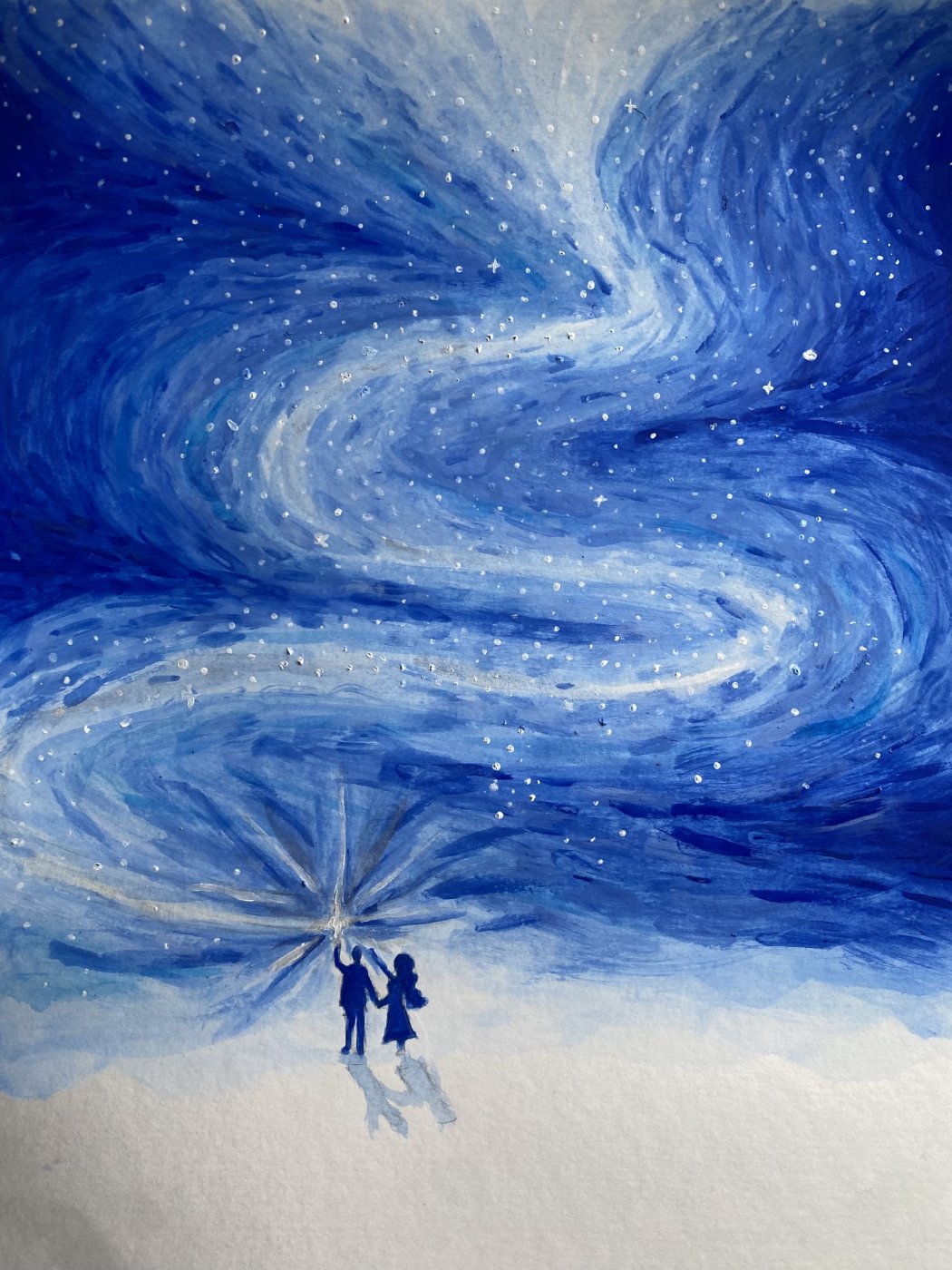
—© 2026 by Victoria Perez
For Abbey and her dad, keepers of the box of stars.
The Box of the World
She thought the world was in a box,
A giant one, with velvet locks,
Its walls were stitched with midnight thread,
And dreams were tucked beneath her bed.
The sky, she said, was cardboard thin,
Painted dark with stars pinned in—
Not stars, but holes, where light had crept,
Through places where the cosmos wept.
She’d lie awake and count the dots,
Each one a secret, each one a thought,
A whisper from the world beyond,
A shimmer from some magic pond.
The moon was just a silver seal,
To keep the box from breaking real,
And comets—sparks from matches struck,
By giants playing games of luck.
She wondered if the box could bend,
Or if it had a hidden end,
A flap, perhaps, she’d someday lift,
And find the stars were just a gift.
She’d walk among the glowing tears,
And dance with time for thousand years,
She’d ask the night what dreams were made,
And why the stars refused to fade.
The box, she knew, was not a cage,
But something built by ancient sage,
To hold the wonder, hold the light,
And keep it safe from morning’s bite.
So every dusk, she’d close her eyes,
And sail beneath the punctured skies,
Believing still, with heart so bold—
The world was boxed, and stars were holes.
—© 2026 by Karrie Wortner
Breathless
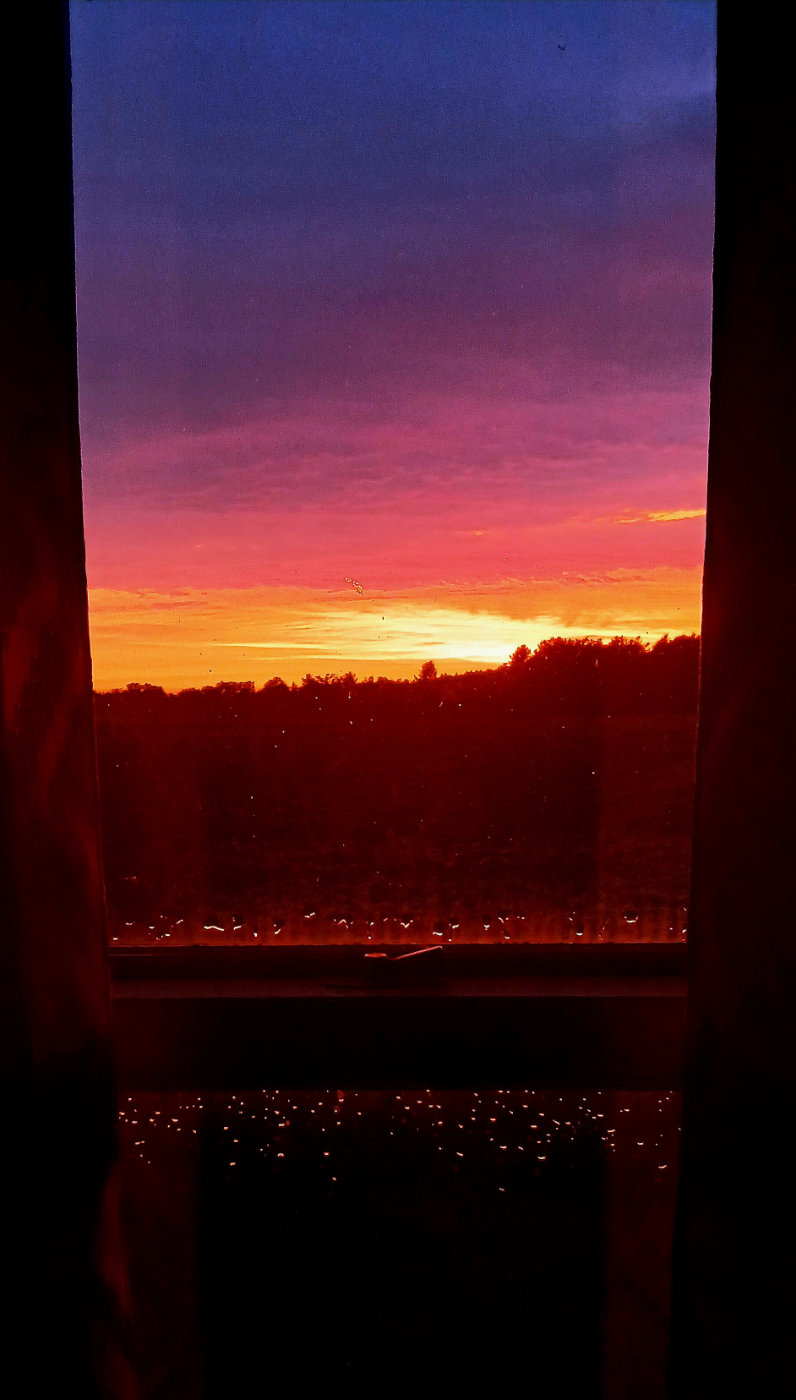
—© 2026 by Samantha Landvick
In Memory of the Morning
The sun peers over the horizon, signaling the dawn,
And the lambs graze, to its warmth they are drawn.
Their wool is as white as the cotton clouds above,
And they sing with the birds, of naught but their love—
For the pen where they dwell, and their companions as well.
For the grass that they eat, and the scents that they smell.
Their bellies are full, it is time for their rest,
In the morn when they sleep, they know they are blessed.
***
The afternoon comes, and with it a storm,
The sheep scramble for shelter, attempting to stay warm.
Their wool is soiled, and their mood is foul,
They lament in the rain, and in their sorrow they howl—
What of their kin, who have left them behind?
Their grass has been spoiled, but they are not blind.
For their pen is their prison, a cage for their sins,
As one morning ends, another mourning begins.
—© 2026 by Noah Spellich
Untitled Art 2: Alayna Neubert
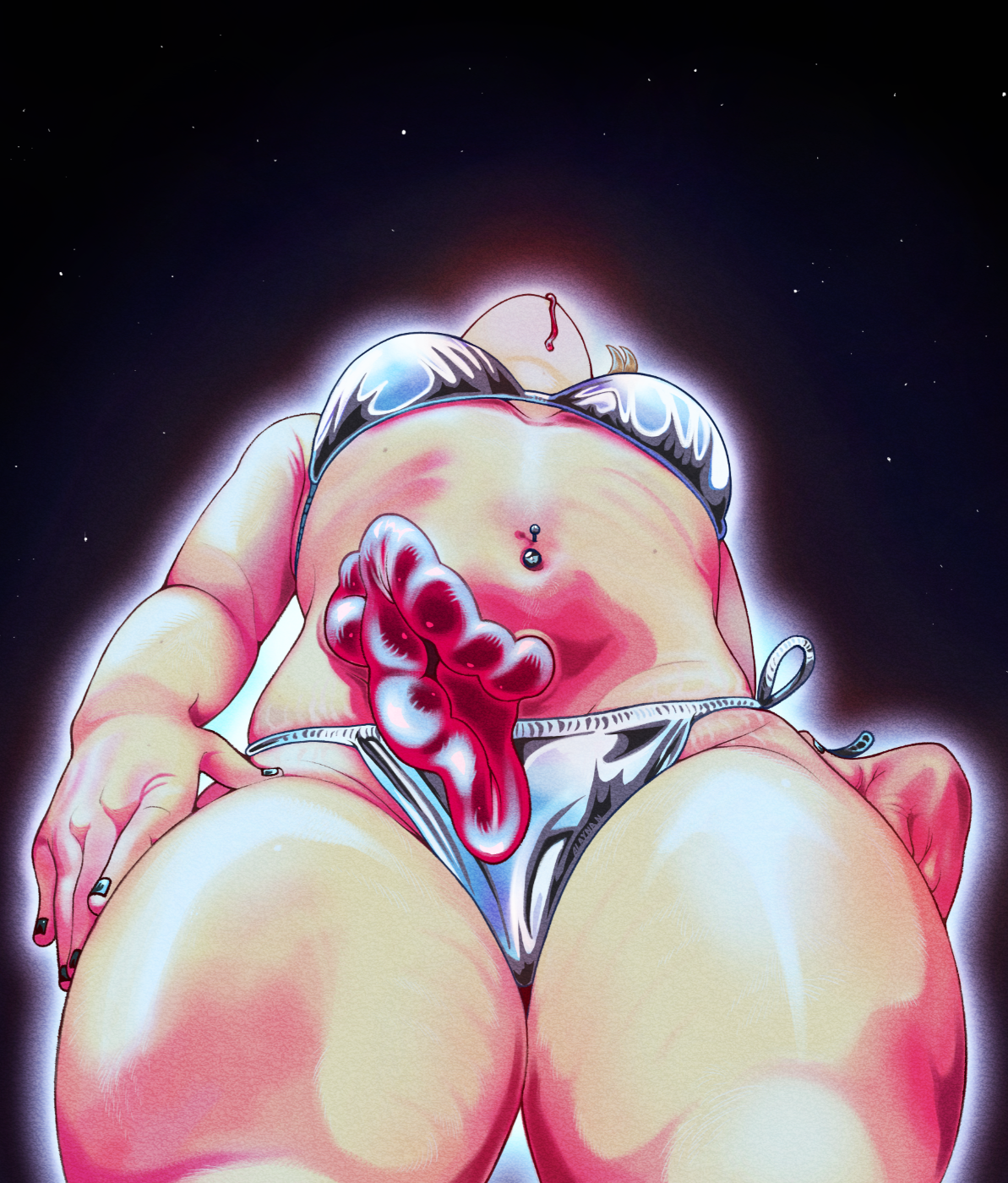
—© 2026 by Alayna Neubert
Artist’s Note: This digital illustration originated after I spent some time admiring the cover art of a Journey album I own. Pulling loose inspiration from chrome-tastic airbrush pop surrealism and movie posters from the early 1980s, this piece pays homage to sci-fi, fantasy, and the dream-like nostalgia I’ve enjoyed utilizing in past artworks. With this piece, I simply wanted to highlight the beauty of the female body using my own as inspiration, the gore being added purely to match the peculiar aesthetic of some of my other work. It was a very fun, experimental process as I explored how to mimic the style in a more modern medium.
Oblivion Devouring
And I have long felt the dissipation, the numbness creeping from my feet
And I wrestle the embrace of my ribcage, firm as the iron maiden’s clutch
And I am all moon-pallid complexion wrapped tight around gossamer guts
I leak red from the nose, and it tastes of milk and chips of paint.
And I have long been athirst for normalcy, for clean hands and cold water
And I am gaunt and hollow in the dark void of desolate winter evening
And I only have a moment to collect myself, swallowing down stinging bile
I wipe my mouth and spit, and it tastes of caustic acridity.
And I have long dreamed of a day where I could split open
And I could be born anew from the pit of my belly, skin flush of roseate returning
And I spill across the sky as aurora, taking shape of that which had been dormant
I am able to stomach it all, and it tastes of stars, and it tastes of stars.
—© 2026 by Brooke Schoening
Compartmentalization
There was a hole in her stomach. It was big enough to fit her fist in, reaching up to around her wrist as her knuckles touched her spine. It was a hole, not a tunnel — it didn’t reach all the way through her.
She stared at herself in the mirror like that, with her shirt hanging open over her jeans.
It didn’t hurt. It wasn’t bleeding. It was just there, glistening red and black and white at the very back.
When she pulled her hand out, it came away clean.
“Honey, you’re going to be late for school,” her mom yelled from downstairs.
“Coming,” she yelled back and buttoned up her shirt. She picked up her backpack as she left the room, checking to make sure its front pocket was zipped to cover the small packet of flesh she had placed inside to dispose of at school.
—© 2026 by Neesa Peak
Field of Fog
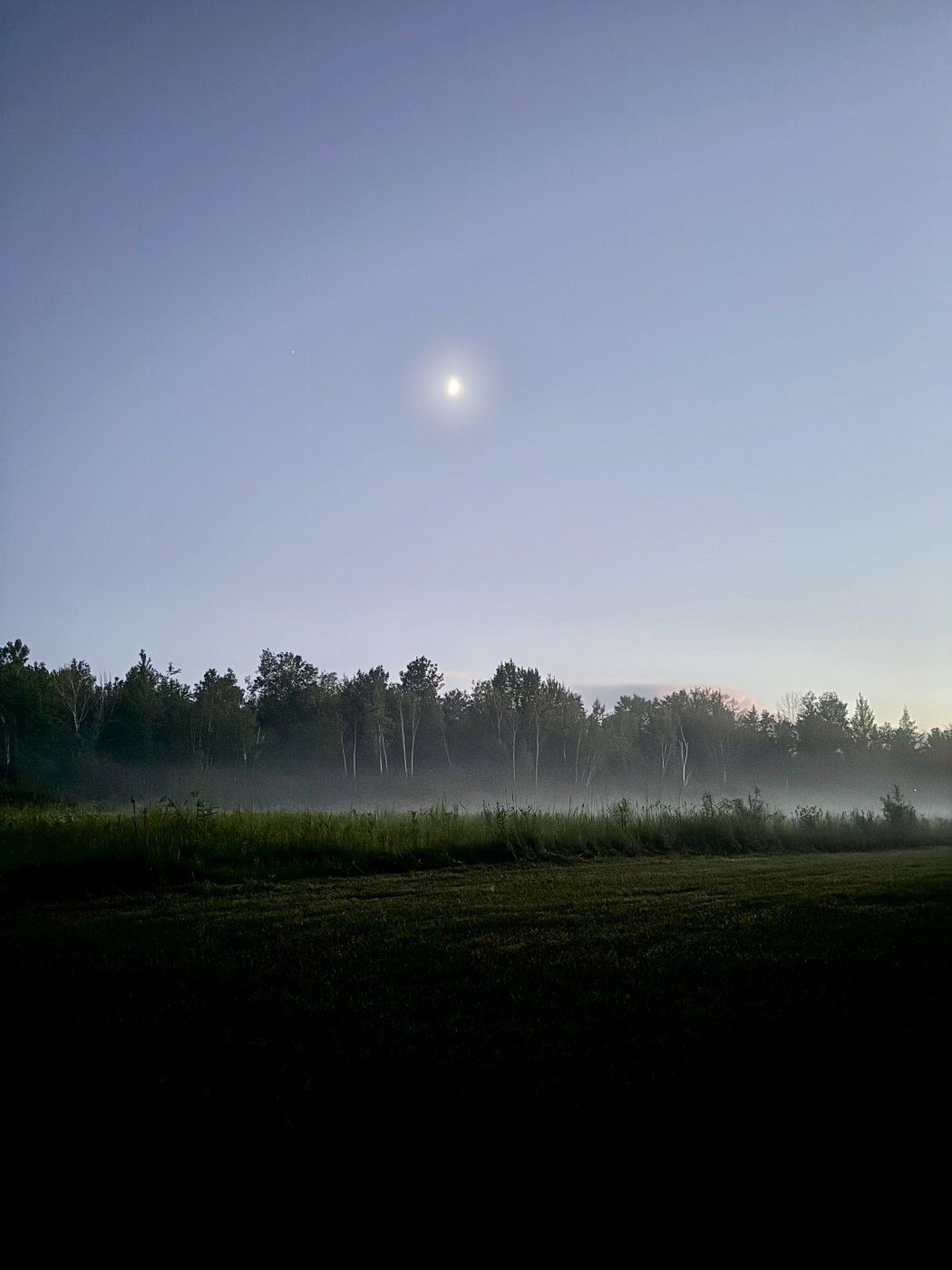
—© 2026 by Karrie Wortner
Invitation
When the letter came, I refused to break the seal.
When the postcard came, I kept the picture side up.
When the notes came, I emptied out my mailbox.
When the invitation came, I knew it was over.
I had waited too long. Lost my chance.
I should have know you wouldn’t wait forever,
but I thought you understood that the timing wasn’t right.
I guess time doesn’t wait.
I’d let myself care more than I ever should
So much so that the sight of your handwriting was all
it took for the last strand to break.
You said nothing when I came to the park,
Just stood silently on that little wooden bridge.
I stood with you. Nothing said. Nothing to say.
Until you asked me if I had gotten your letters.
Yes. Every. Single. One.
I wished you well.
You held my hand
in the shade of the trees
and somehow, you forgave me for never writing back.
—© 2026 by Natalie Johnson
Charcoal Self-Portrait
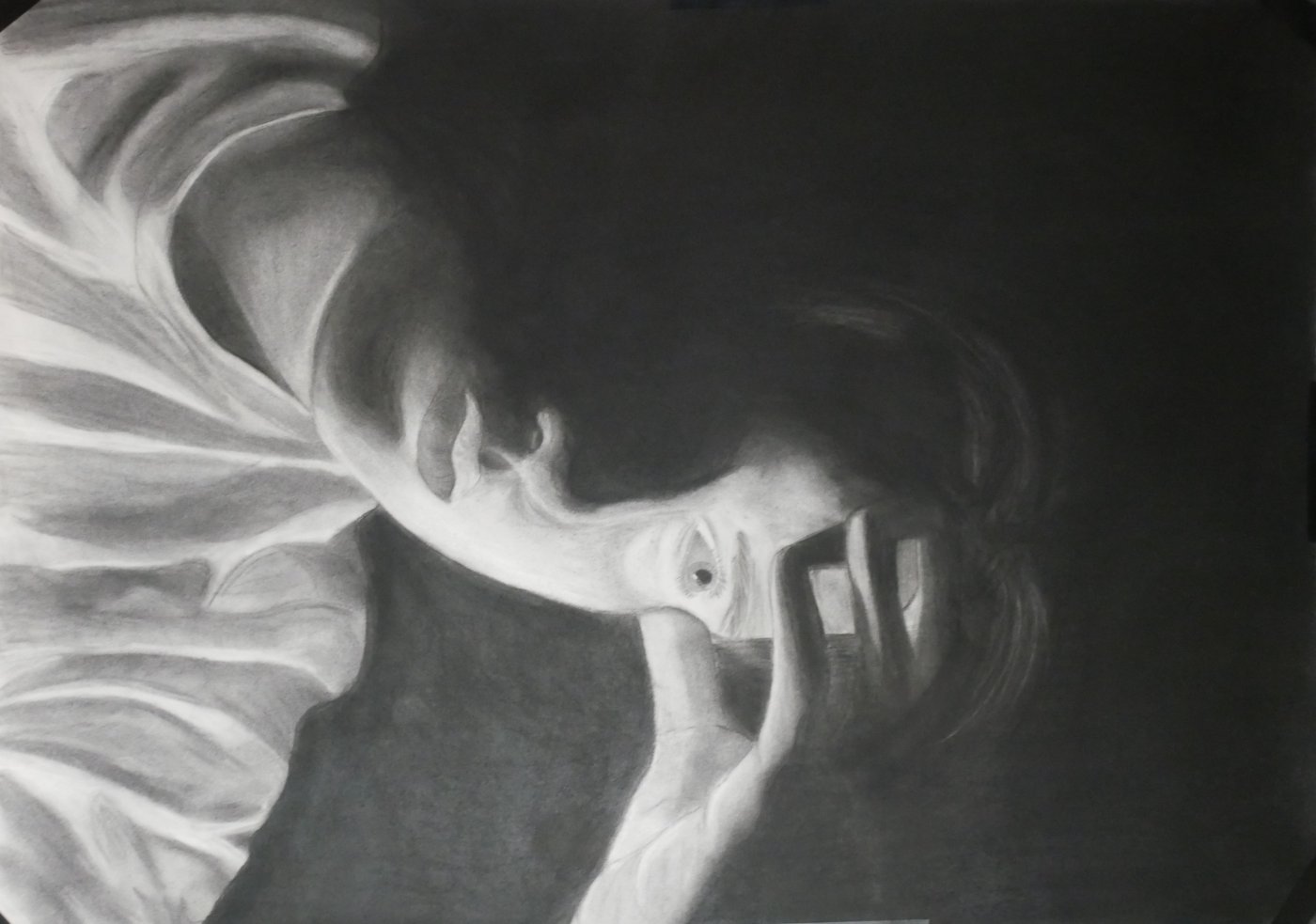 —© 2026 by Jos Donohue
Who's Really Sentenced?
My sister drowns in her black T-shirt. Her small frame is lost in the sea of material she hides under. The choker sits against her throat. Her bloodshot eyes make her sunken face more apparent. Shadows appear in areas once filled with the fat of innocence. Bruises streak the pale skin of her arms. Her smile begins to crumble.
My brother is wearing a matching black T-shirt. Bronzed skin covers the extra muscle he put on. The tan isn’t dark enough to hide the gang tattoo on his hand. Worry and fear are absent from his face. His smile is genuine. His dark hair cascades down his shoulders. Soon it will be shaved and remain that way the rest of his life.
Their arms wrap around one another as they stand against a nondescript concrete wall. This is one of the only times he embraces his sister. His eyes remain focused on the camera. Hers look off to the side. He can tune out the bustle of the visitation area, but it overwhelms her. How much of her childhood has been lost to this place? Hours driving back and forth on weekends. Guards more involved in her life than grandparents. Here, he thrives. Here, she dies.
—© 2026 by Tiffany Jablonowski
Fire and Water
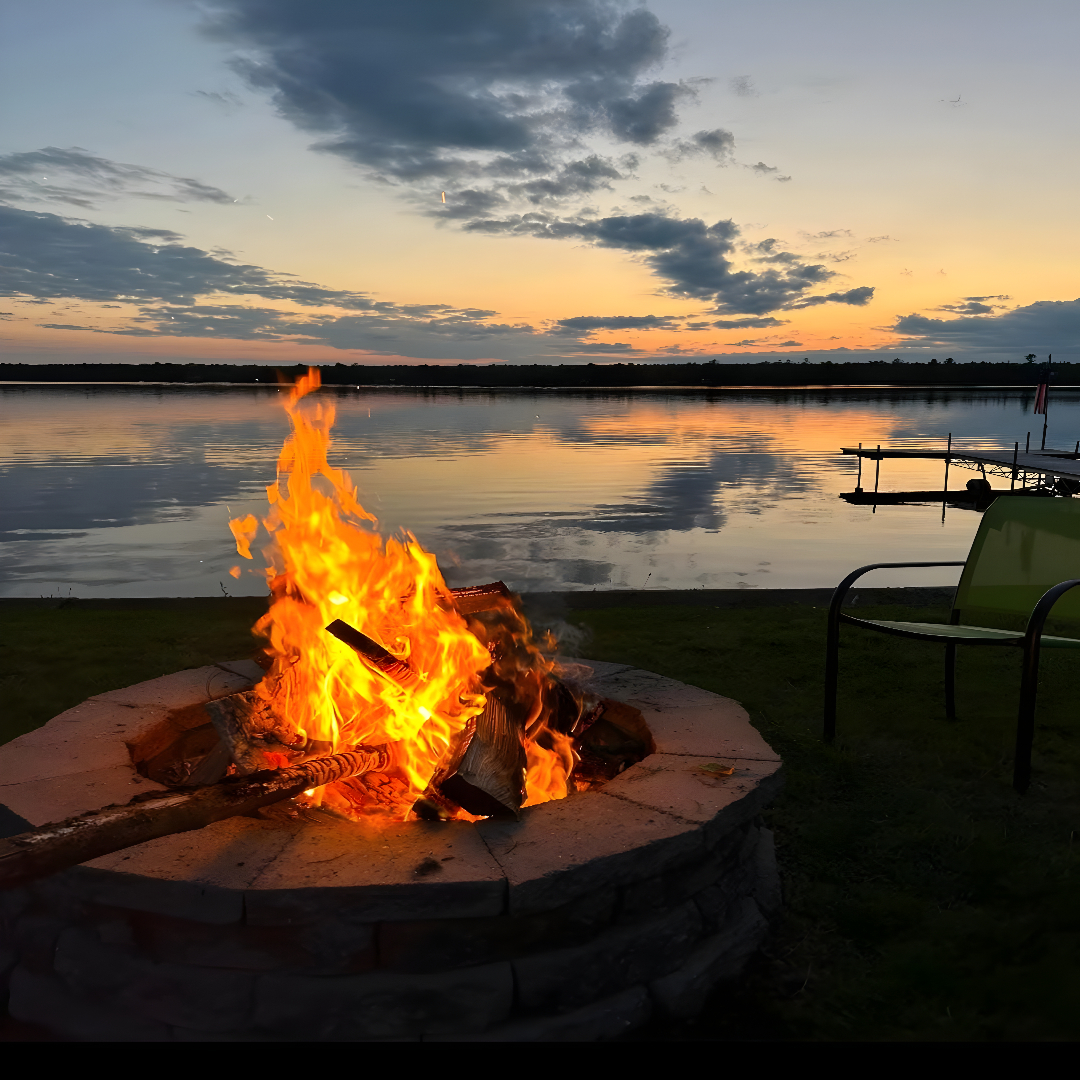
—© 2026 by Noah Spellich
Ninety-Three Years
The day I had been neglecting is here,
I cannot ignore it anymore.
Deep breaths as I enter her room,
I remind myself, this is what she wanted.
How does one begin this conversation?
The women who raised me,
Gave me purpose,
And taught me how to be,
Is now leaving this world.
I’ll never understand how the universe works,
Because somehow 93 years feels like nothing.
But this moment feels like everything.
I try to say the things I never said,
But as I look into her eyes one last time,
She knows, and I know that she knows.
The noise from outside carries into the room,
As if it is trying to fill the silence
That we are afraid to touch.
There are thousands of stories
Living in the lines of her face.
I wish I had asked for more of them.
The room feels smaller
As the grief trickles in.
And as she exhales with relief,
The world does not stop.
It simply continues,
And I think that is the cruelest part.
—© 2026 by Lily Dihel
Round and Around
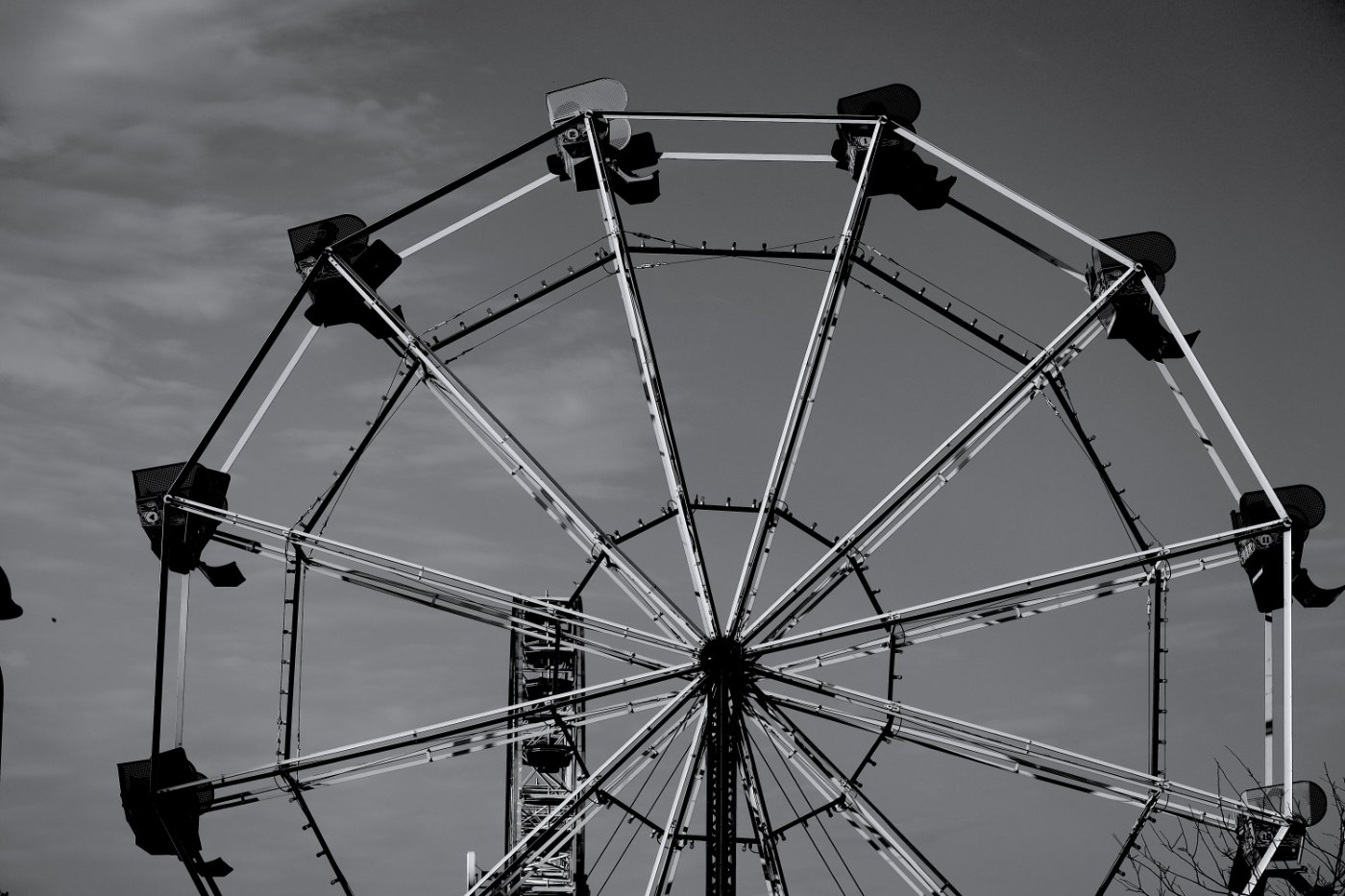
—© 2026 by Lara Gates
Fruit Chart
I taped the chart to the fridge the day I found out. It was colorful, cheerful, and each week was marked by some seed, fruit, or vegetable to make the process fun. Week 4: poppy seed. Week 5: sesame seed. Week 6: single pea. I loved the idea of you growing like something sweet.
I would run my finger down the weeks, imagining the tiny heartbeat and curled limbs, the fluttering of life inside me. Week 7: blueberry. Week 8: raspberry. Week 9: an olive. I didn’t even like olives, but I bought a jar and stared at the size of you.
Week 10: prune. Week 11: lime. Week 12: plum. I was seeing you everywhere. At the grocery store, in commercials, or in the hands of others. I always bought the fruit. I wanted to carry you in every way I could.
Week 13: peach. Week 14: lemon. Week 15: apple. They told me you looked like a girl and that you seemed healthy. I started saying she instead of it.
Week 16: avocado. I sliced one open and stared at the pit. I held it in my palm, heavy and smooth.
I took a photo of it next to my belly and sent it to my mother.
That night, the bleeding started. Just a little. I held my breath and didn’t tell anyone. I waited and told myself it was nothing, that it would go away.
It didn’t.
The doctor said it wasn’t my fault. That it happens. That it’s common. The fruit chart didn’t tell me that. It kept growing like it was supposed to. Like nothing was wrong. Week 17: turnip. Week 18: bell pepper. Week 19: mango.
I couldn’t take it down. I tried once, but my hand froze halfway. It felt like erasing her, like admitting she was never real. Week 20: banana. Week 25: zucchini. Week 30: cabbage. I stopped buying produce. I couldn’t stomach it.
I dreamed about her body blooming and then vanishing. I dreamed of slicing open fruit and finding nothing inside. I dreamed of seeds rattling in a crib. When the dreams got bad enough, I peeled the chart off the fridge. I folded it slowly, like I might tear it if I moved too quickly. I tucked it into the drawer alongside the ultrasound photo. I didn’t cry. I just sat there, staring at the empty fridge door, wondering what could have been different.
Week 40: pumpkin.
—© 2026 by Katie Frank
Untitled Photo: Vanessa Winter
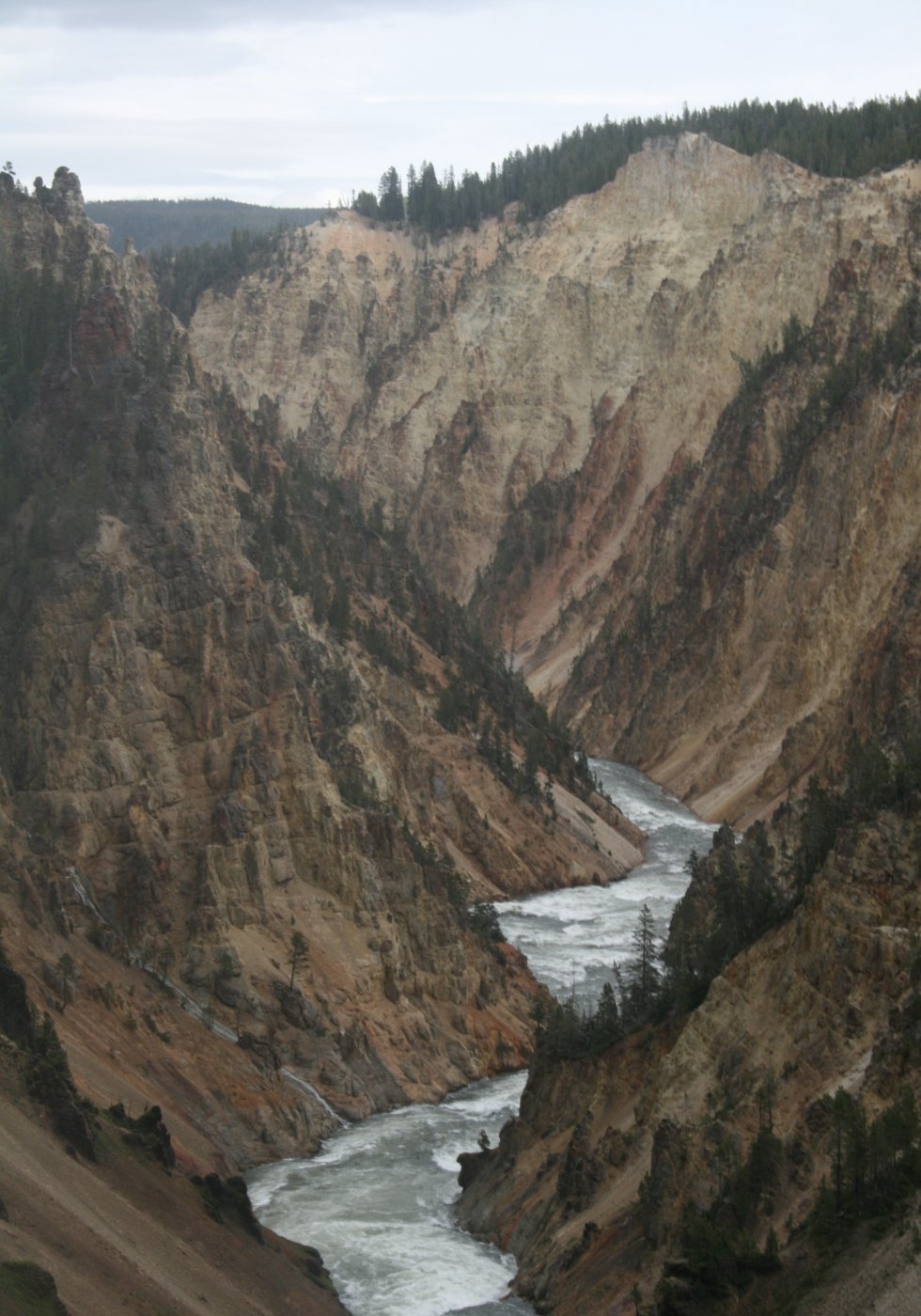
—© 2026 by Vanessa Winter
The Chapter She Refuses
The main character of this book
has spent chapter after chapter
becoming what everyone else wanted.
It was comfortable.
It was safe.
She was happy—enough.
Now it’s time for the next chapter.
Her nails dig into the last one.
She doesn’t know if she can let go,
but she knows she has to.
She’s been starving and pouring herself full,
trying to quiet the margins of her story.
But the words keep bleeding through.
How can she be who she wants to be
when she doesn’t know who that is?
She has filled silence with glass.
She has carved hunger into her skin.
She has tried to erase herself
line by line
but the story refuses to disappear.
If she stays here,
the next chapter won’t be new.
It will be her undoing.
—© 2026 by Hope Lundt
Untitled Art: Megan Heisz
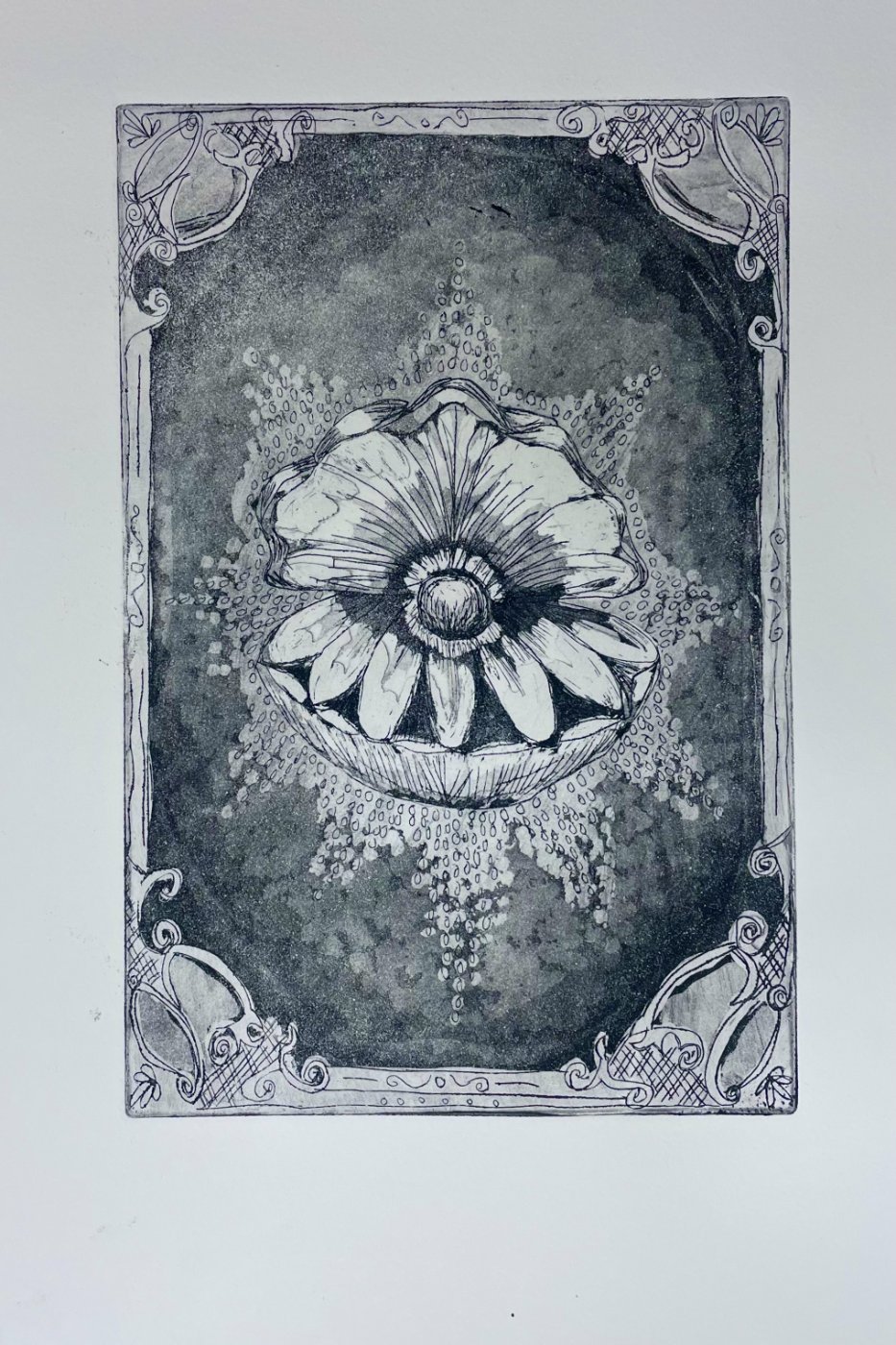
—© 2026 by Megan Heisz
Papier-Mâché Future
She sits at the table.
Hands steady, though the paper trembles.
Unpaid bills spread like wings.
Rent receipts curl at the edges.
Brown paper lunch bags, reused,
flattened into sheets of memory.
Bus tickets, subway stubs,
past-due notices,
doctor’s reminders for check-ups never kept.
Unfilled prescriptions,
paycheck stubs worth less than the ink.
Car repair slips, gas receipts,
the paper trail of survival.
She dips each scrap into paste.
Layer by layer,
she builds a shape that rises.
Not fragile, not disposable—
but a body of work,
a sculpture of endurance.
The table becomes altar.
The glue smells of persistence.
Her fingers press debt into form,
press hunger into curve,
press exhaustion into contour.
Every fold remembers.
Every crease resists.
This is not trash.
This is testimony.
A monument to what was carried,
to what was endured,
to what was swallowed so the day could go on.
Respect was not given.
Respect was taken.
Respect is here,
in the weight of paper hardened into shape.
She sits at the table.
She builds a future masterpiece.
It is made of survival.
It is made of refusal.
It is made of her.
And when it dries,
when the sculpture stands,
it will not be delicate.
It will not be silent.
It will be the sound of women
turning scraps into monuments,
turning burdens into art,
turning survival into a
future that cannot be ignored.
—© 2026 by Karrie Wortner
Radium Springs
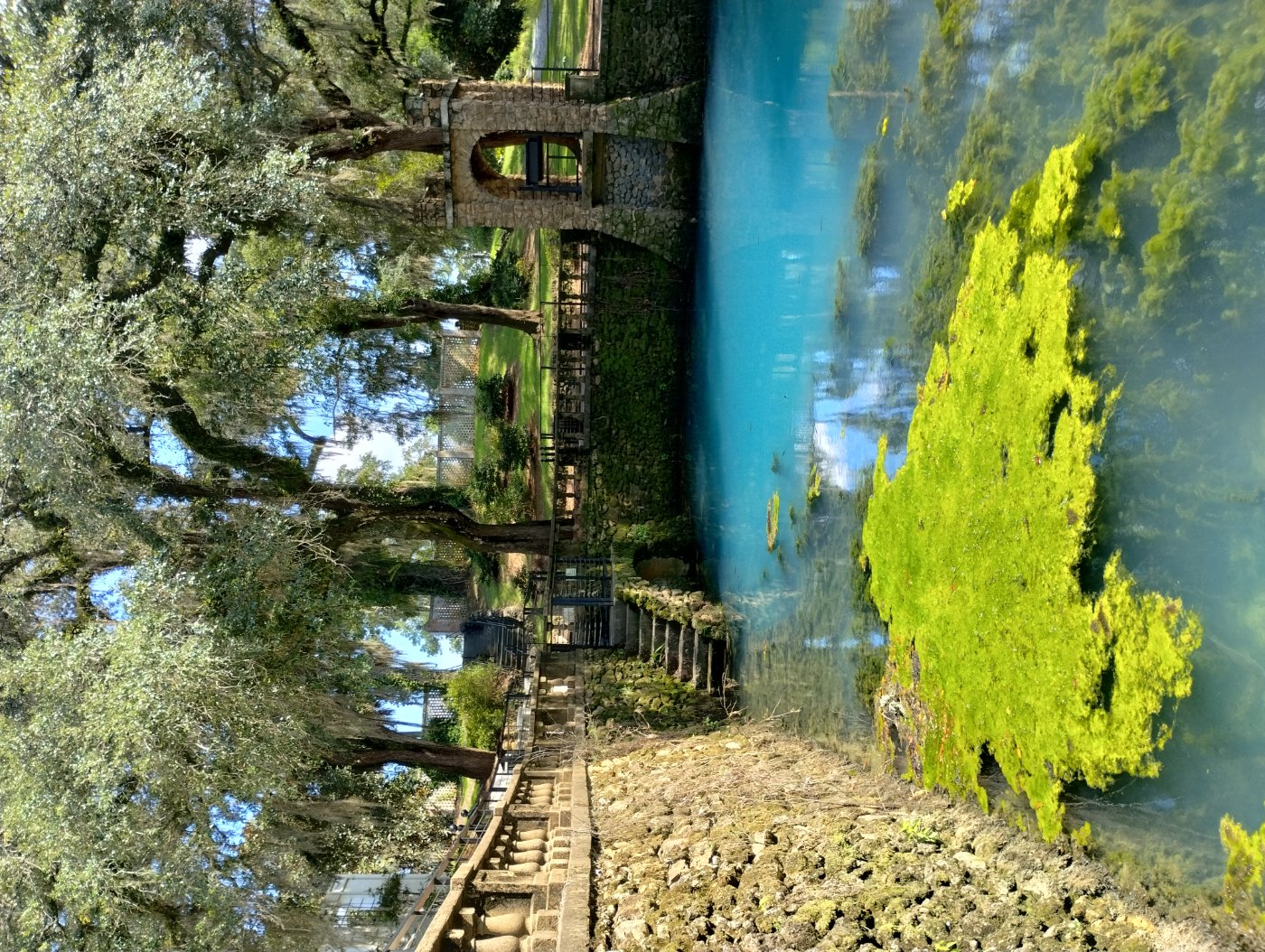
—© 2026 by Tiffany Jablonowski
Create
When in doubt, create.
The world is full of beautiful things.
So write about them,
Paint them,
Photograph them,
Create something beautiful from them.
Just don’t be the one to destroy them.
—© 2026 by Kelsey Vanderpool
Return Me
return me to the wide-open
fields and old growth woods.
lay me down at the base
of the mountain; cover me
in river moss and ferns.
let me breathe in, exhale,
and become one with the
soil and sky. bring me back
to the wild. bring me peace.
—© 2026 by Natalie Johnson
Disappearing Warmth
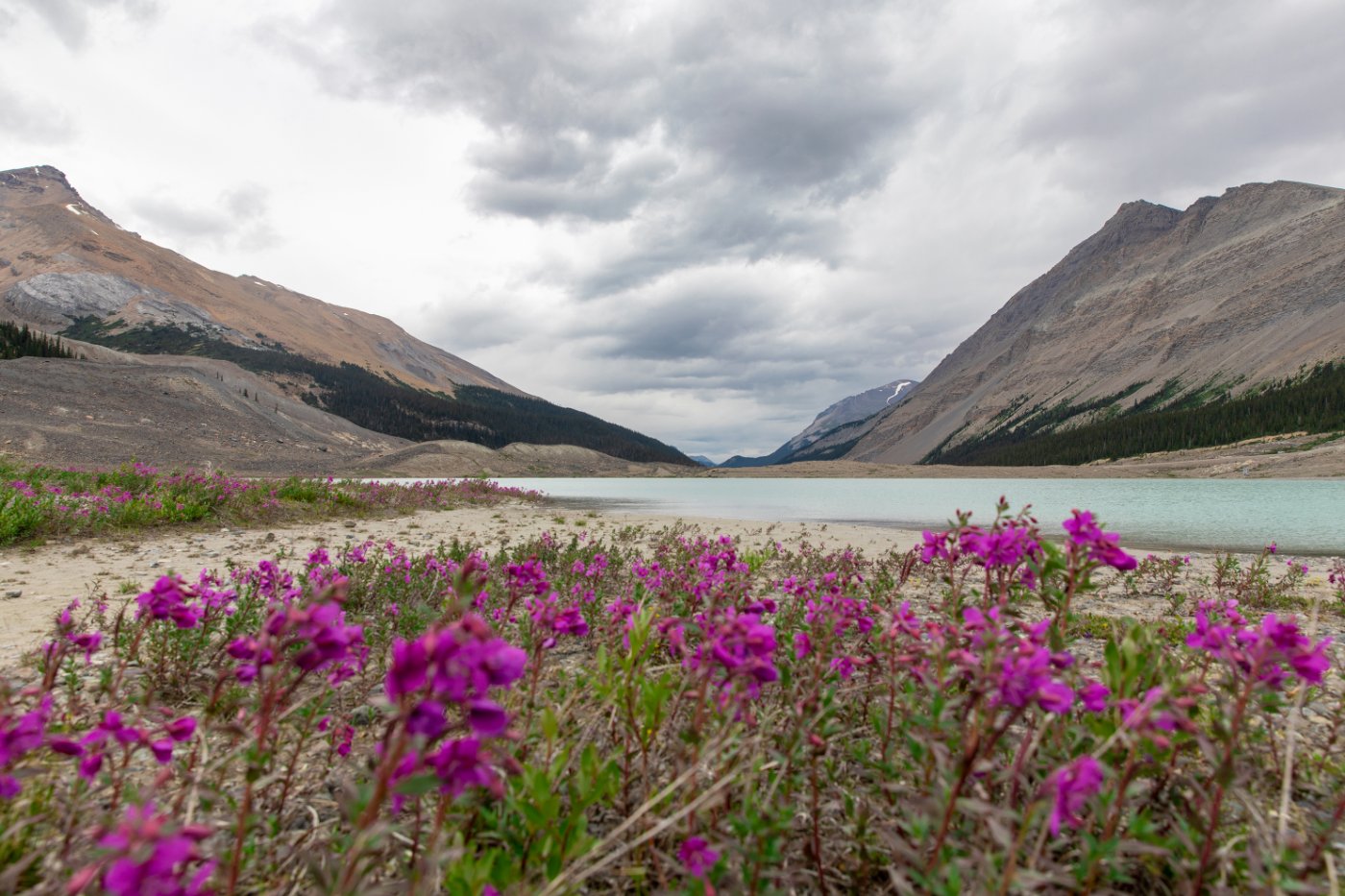
—© 2026 by Kira Ashbeck
Photographer’s Note: This image was captured in the summer of 2025 at Athabasca Glacier. The image title reflects the current climate state, which has caused this glacier, as well as many others, to lose substantial mass.
A Conversation with Mark Feathers
Digging up my grandfather’s grave was the hardest part; the rest — carving Anishinaabemowin runes of turtle, hummingbird, and sun into his brown-gray skin, reciting folklore incantations in the rhythms of nature, and the plucking out of his red, dulled eyes under Binaakwe-giizis — came easy and quietly in the singing night, when the spirits are loud and our minds are rapid and fierce
One Question
answered in the burly, uneven voice
words reeking of Zhigaagowashk
echoing sharply against granite
and the stillness of our hearts.
My words shake in the
frigid wind of the night,
like a chorus of spirits,
but I get them out,
like the nightmares I shake
from the dreamcatchers,
Why did you leave us, in that cold and loneliness of Gladstone?
How easy it must be for you, to make gunfire judgments of my journeys, of the trials of serpent, hummingbird, and turtle — shell, feather, and scale — and what of you? Do you not come from my loins and miskwi? Of the threads that I bathed in the void of stars and moonlight. If only your mother could see what you’ve done with these copper threads and silver scales. I ought to rip the rattle from your back and let zhaaboskwagizi and see what color shines through the clearest.
You wouldn’t be able to handle the truth of my Sault, what that river of mud and miskwi promised me, what my mother made of me, what my father left for us. You could not begin to know what it was like coming back to a french river and only a sentence or two of Anishinaabemowin; I came back to a home that did not recognize me, a river that flowed with dakib that was new and unknown. I did not know the birch trees’ sway anymore than I knew my father’s name before the hell of those schools.
You too would find something new, yet somewhere close where I could feel the winds of Mishigami and be reminded of the waters of a forgotten past ...
His body collapses within the earth.
There is a lonely silence
And I smile and
Turn from his grave
And face the Sault and
Dance until I see the sun.
—© 2026 by Caden Wiles
Untitled Photo: Joseph Warner
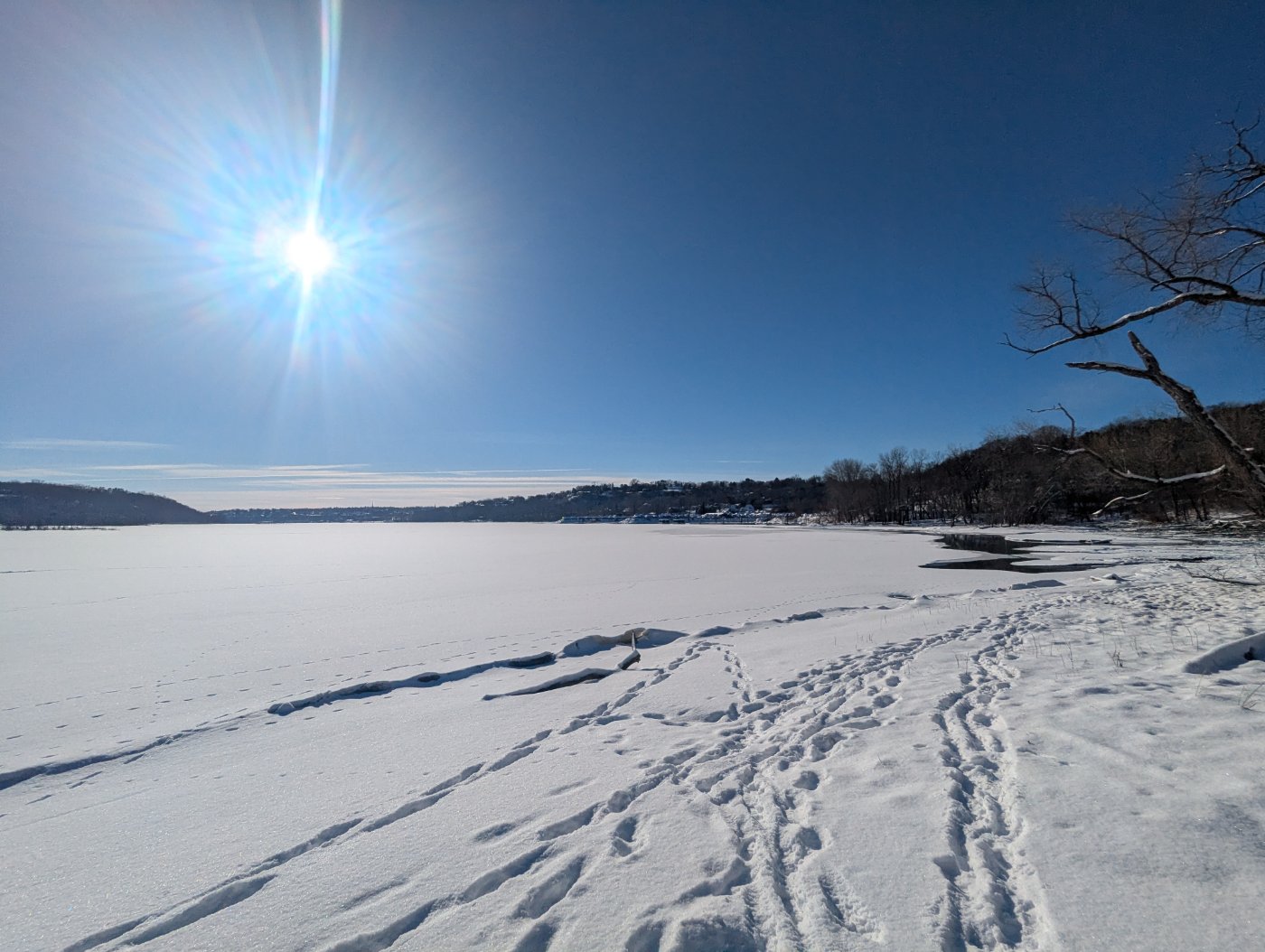
—© 2026 by Joseph Warner
An Ode to Change (and You)
They all looked the same
When we first met.
Messy hair that grazed their necks
And confident, cold eyes.
They seemed more sure
Of their place in the world
Than I will ever be.
For a second,
You did too.
Change is a monster,
Or that’s what I thought.
But, as I moved,
They didn’t follow,
Which wasn’t the case with You.
Now,
They are still self-assured,
Sharp eyes matching sharp souls,
While Your shell has chipped away
Revealing a soft heart.
Curly hair clipped short,
Dark eyes reflecting
Care and concern.
Only You have shown me that.
I hope they are doing well but
For You, I hope
That You can see Yourself
The way I see
Your selfless, loving soul.
I never liked change
But You showed me the truth:
Change is a beautiful being.
Or at least,
The change that lives within You.
—© 2026 by Brooke Janssen
The Consciousness of the Back Country
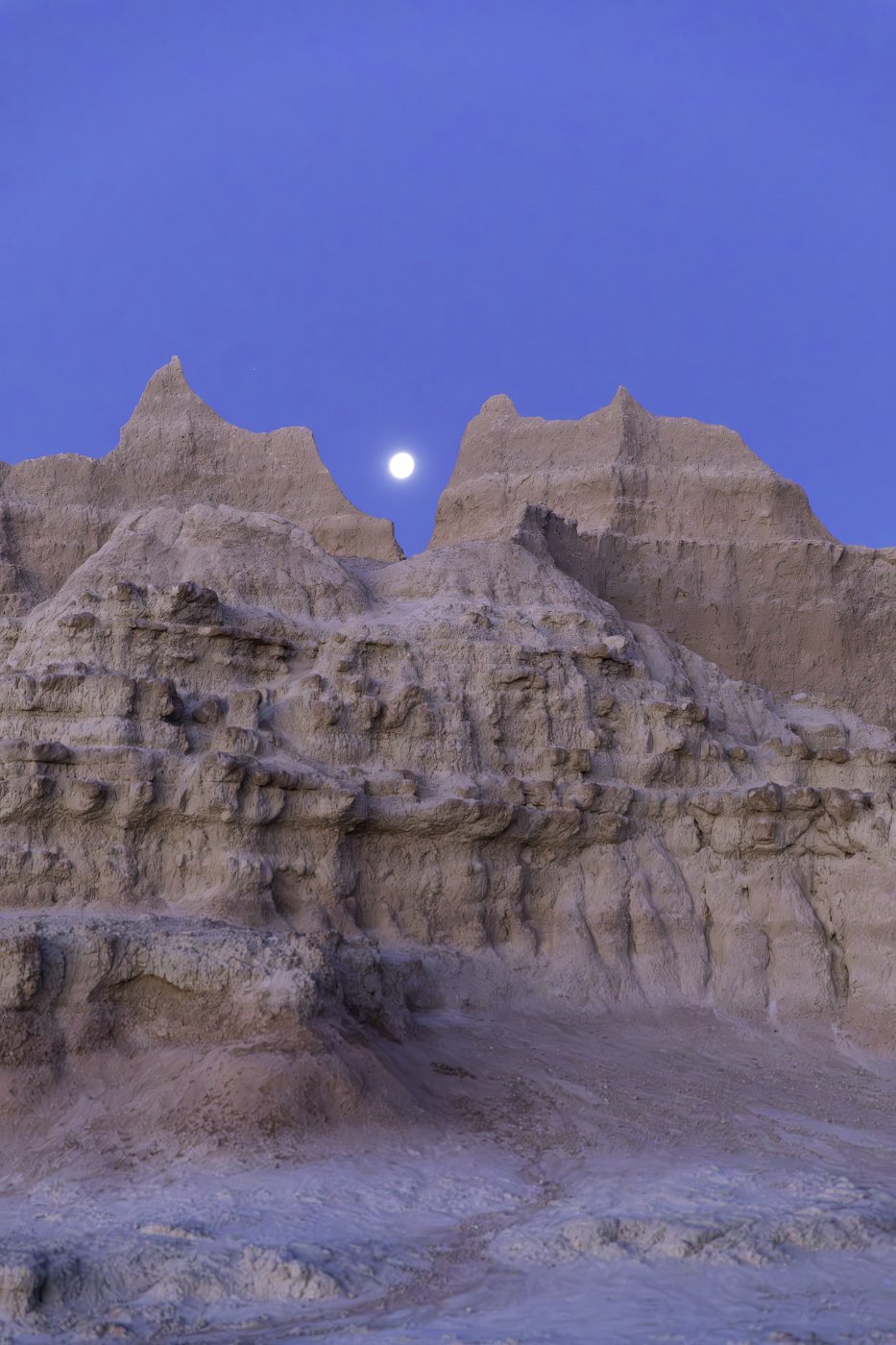
—© 2026 by Kira Ashbeck
Photographer’s Note: This image was taken in Badlands National Park, which is one of Kira’s favorite national parks; she believes that it is very underrepresented and underappreciated in the National Park scale. Through this image and the rest of her nature photography, Kira hopes to inspire her audience to help protect our wild lands.
I am a Rock
I often think about Simon and Garfunkel’s 1966 tune “I Am a Rock.” I think about the musical duo’s quest for isolation and, in turn, the strength that is awarded in loneliness. Usually, I am struck deepest by the sentiment that the decision to be a rock, rather than a leaf or a branch, is rooted in wishes for safety. To them, the stones and minerals act as armor; “a fortress deep and mighty.” Yet, the two also call upon their poetry as protection, rather than their new, unmovable exterior.
This song is based on a singular belief, which Paul Simone and Art Garfunkel brilliantly state to exit the record: “A rock feels no pain, and an island never cries.” But even if this is true in a literal sense, the sadness etched into the delivery of the final lines gives the listener a strong impression that these words are not meant to be taken at face value.
Simon and Garfunkel are no liars: rocks are without nerve endings, therefore unable to feel physical pain. But although an island may not cry using tear ducts, she is not without water. Mother Nature—or just MN to me, because we’re cool like that—uses each and every natural disaster as a means to an end. What we may see as innocent lives lost is a different picture entirely to MN: a parasite is a parasite is a parasite.
You pick up a rock during your walk along the river. Entranced by its crystal-like texture, you slip it into your pocket. You wish it to act as a good luck charm. Closer to shore, you pick up another—the smoothest you can find—and skip it along the water. It never learned to swim, so it sinks to the bottom. You continue along the beach, and the sand under your feet is nothing but remnants of what used to be skipping stones and good luck charms.
We (humans) can understand our parasitic habits on a wide scale: the desolation of forests, carbon emissions, fracking, etc. One example of a parasitic relationship (loosely defined as a relationship where the parasite benefits and the host is harmed) is a souvenir collector, who just so happens to enjoy walks along the water and getting more than three skips atop the surface. The benefit to this parasite is the momentary excitement of owning something that holds no monetary value but perhaps a sentimental one. The effect on the host is the slow yet effective erasure of a natural beauty.
But don’t worry, worm. It’s just a rock. Said rock would much rather sit in a polyester pocket than lounging toes in the water, ass in the sand, surrounded by its fellow pebbles and boulders. And, of course, the completion of your shell jar only stripped 100 hermit crabs naked, but they were all probably looking to relocate anyway. And just like I’ve always said, just because the freshly eroded cliffside is forcing a quick recovery in anticipation of the next MN sobbing session, having its wounds poked, prodded, and stomped on by the most granola, rock-climbing ecologist you know is nooo biggie.
It’s okay, really, because how much pain trickles down into a singular rock, one of some infinite number. Come on, don’t feel bad! How much can you really hurt the symbol of solidness?
—© 2026 by Victoria Urness
Who is a Mother?
Special Instructions: Read top to bottom, then bottom to top.
From my mom, inside my head:
I’m a mother.
Giving birth is what I do.
I’m going to have others.
Gotta get some help.
Who said that I was a bad one?
How can some claim such a godly title for themselves?
No mom’s perfect!
I did it to fix her, so I wouldn’t drug her on pills.
I did it anyway.
Someone’s gotta tall level of sorriness.
This mother had money!
Of course I spoiled myself;
Vegas. Tattoos. Reputation.
Gotta keep that story goin’.
I can’t lie that I have a favorite.
It’s not my first dude’s kids.
The newest girl’s got that Hollywood smile.
Oldest has mental sickness.
I am a mother.
—© 2026 by Samantha Landvick
Shelves
You were my specialty
And I was your poet.
ever-reaching shelves of books.
each page, each letter,
only in your rememberance.
Burdens like atlas,
Do I set these ablaze?
Flames that’ll fail to replicate my burning.
synapses charred with no sensory.
my lungs squeezed,
inhales anger the heat,
Still I write.
I look with a certain emptiness,
in which I can’t hate for any longer.
This verse will end, and i’ll add another book.
My shelves try holding,
But I fear the weight of my words now.
Maybe I need not more shelves,
But more care.
—© 2026 by Abubakar Mohamad Ismail
Untitled Art 3: Alayna Neubert
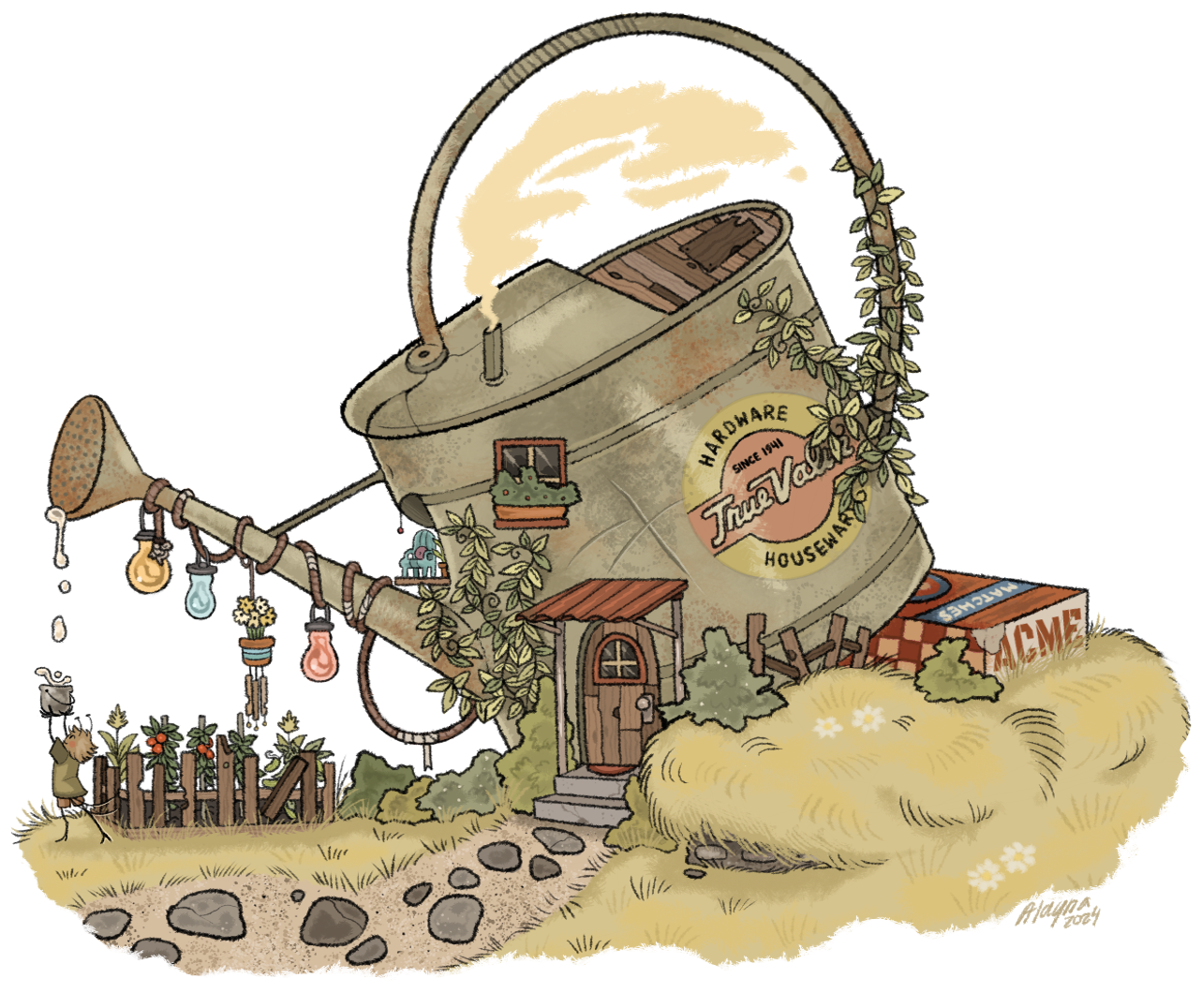
—© 2026 by Alayna Neubert
Grandma's Secret Ingredient
A scoop of thick vegetable shortening sticks to my spoon. A quick swipe of my finger pushes it into the measuring cup with a soft “plop” as it hits the glass. As the strong whiff of a vanilla-banana mixture on the counter fills the air, I am transported back to my grandmother’s kitchen. I remember the dark brick around the stove, the pink carpeting, and the smell of Elizabeth Taylor’s White Diamonds perfume obliterating my senses. Out of the corner of my eye, I see my grandmother beating eggs in an electric bowl. The same “plop” of bananas hits her mixture. She looks over and smiles. In an instant, I am back in my own kitchen, the shortening now dripping off my finger from my warm body heat. As I pour the banana bread into the pan, I’m reminded of the overhead light strobing over the brick oven.
As I lean against the counter, the warmth of the oven radiating towards me, I realize how these moments are stitched together by baking. I can almost hear my grandmother’s gentle voice guiding me through the process, her hands measuring and mixing ingredients, each movement a lesson. I think of how she would encourage me to add a sprinkle of cinnamon or a dash of nutmeg. The bowls may be different, and the kitchen might be more modern, but the memories still linger. I remember the first time I tried to replicate her banana bread; I wanted it to capture her spirit. Each flick of batter brought back memories of her laughter and kitchen dance parties, where we would shimmy to the music only we could hear, careful not to spill any batter on the carpet.
While I grease the pan, I can hear music playing in the back of my mind as Elvis Presley’s bass-filled voice croons over a record player, I can picture my childhood self peering into the oven glass, waiting for the batter to rise. It isn’t until I picture a soft touch on my shoulder that is no longer there that I’m brought back to reality. I hum “Can’t Help Falling in Love” while I place the batter in the oven. As an adult, I look into the glass, waiting for the batter to rise. With every bubble that forms as it cooks, I see laughter, memories, and traditions.
When I pull the finished product from the oven, I can continue a conversation with the past, bringing it back into my present. I know she’s here, smiling with each rise of the loaf, as the cooked batter cracks down the middle, I can hear her carefully coaxing me to pull the finished banana bread out of the oven, careful not to burn my wrists on the hot interior. Even as an adult, I slowly pull the tin-lined cookware out of the oven, careful not to hit the sides. Once it’s cooled, I cut out a slice, slather it with peanut butter, and hum Elvis’s tune.
—© 2026 by Karly Wigand
Northern Lights Over the Bay
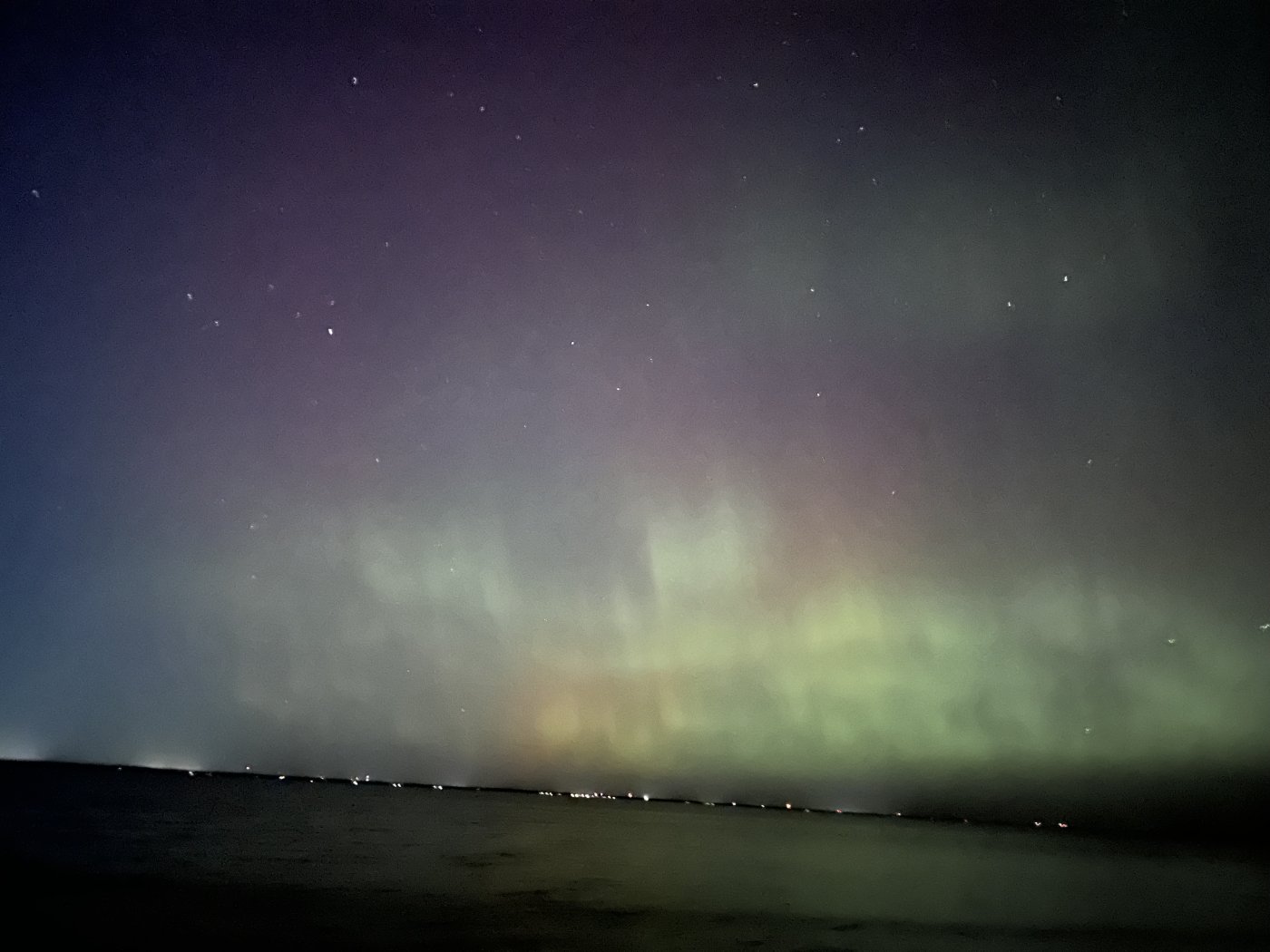
—© 2026 by Lauren Jarantowski-Bezjak
Imminent
these days when you think i’m not looking
your eyes ask the same question,
over and over:
why do you have to leave?
why do you have to leave?
put your head to my chest,
listen hard and
you’ll hear my answer:
why do you have to leave?
why do you have to leave?
i’m more mirror than person;
one summer morning i will look for you everywhere
and find you nowhere—
we will lie in the beds we made
forever.
—© 2026 by A.D. Powers
On the Clock
Tick tock tick tock
The time with rage begins.
My mind swirls with boiling blood, burned by botched beginnings.
I dig, desperate for determinate degradation, as the dentils of my identity detest in distress.
Fueled by failure: a fervor of fright
I know the time to figure my fundamental functions is fickle so I focus this fury forward.
Tick tock tick tock
Muddling mental mayhem makes my search maddening
Detours down death and damnation distract me from my destination.
Devils detailing my deteriorating determination decorate this domain,
they dare destroy my deep dedication to this dome.
diminishment through domination and dictation, all with dastardly delight.
Tick tock tock tick
The clock ticks with tongue and cheek, it knows why it is loud.
It’s poignant prognostication proliferates the passing problem:
Time is paramount, and the problem will persist post perception.
Acting fast is of my existence, for my essence acts against it.
I wish it could be anyway else, but my mind mutilates by the moment.
Tick tock tick tock
Stress strains my stride and sunders my resolve.
I’m rife with regret and ruin. The rough ram of rain plunges the ironic knife of rumination.
Ripping the wrongs is impossible and reinforcing what’s right is ridiculous.
Is repair realistic? Running and rushing to replace the ruptured for relief?
The past is only a pothole in the pavement of my life, how does one hollow out a hole?
Tick tock tick tock
An idea insinuates an immaculate solution.
Might this immature image of ideation be the key? A way out of the hell I’ve imagined.
Maybe I have time to try my terrific thought!
Ding!
My tribulation turns troublesome and the time turns wane
My stay is done, I’m slowly sucked back into my surreal surroundings.
A freak forgotten with a future I must feign, for failure from inaction aches too familiar.
—© 2026 by Jack Starzewski
Twisted in Orange
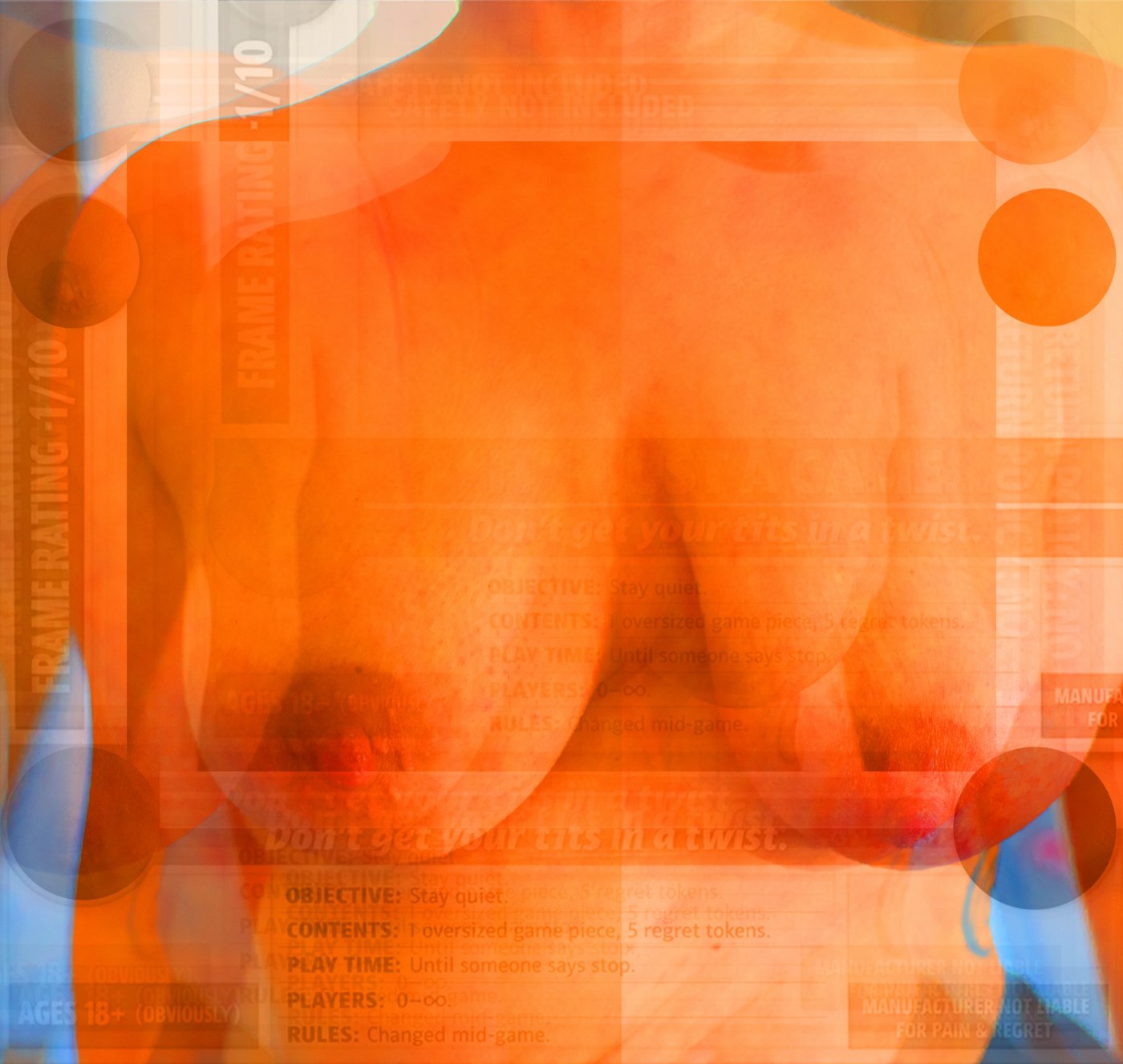
—© 2026 by Mardee Castor
Everything Starts with a Dot
a grain of sand?
to a pearl
mother creating
offering her hand
steal her beauty
her hard work
claim it as yours
use the resource till its dry
no more
a period to a sentence
— everything ends with a dot
—© 2026 by Megan Heisz
Drifters
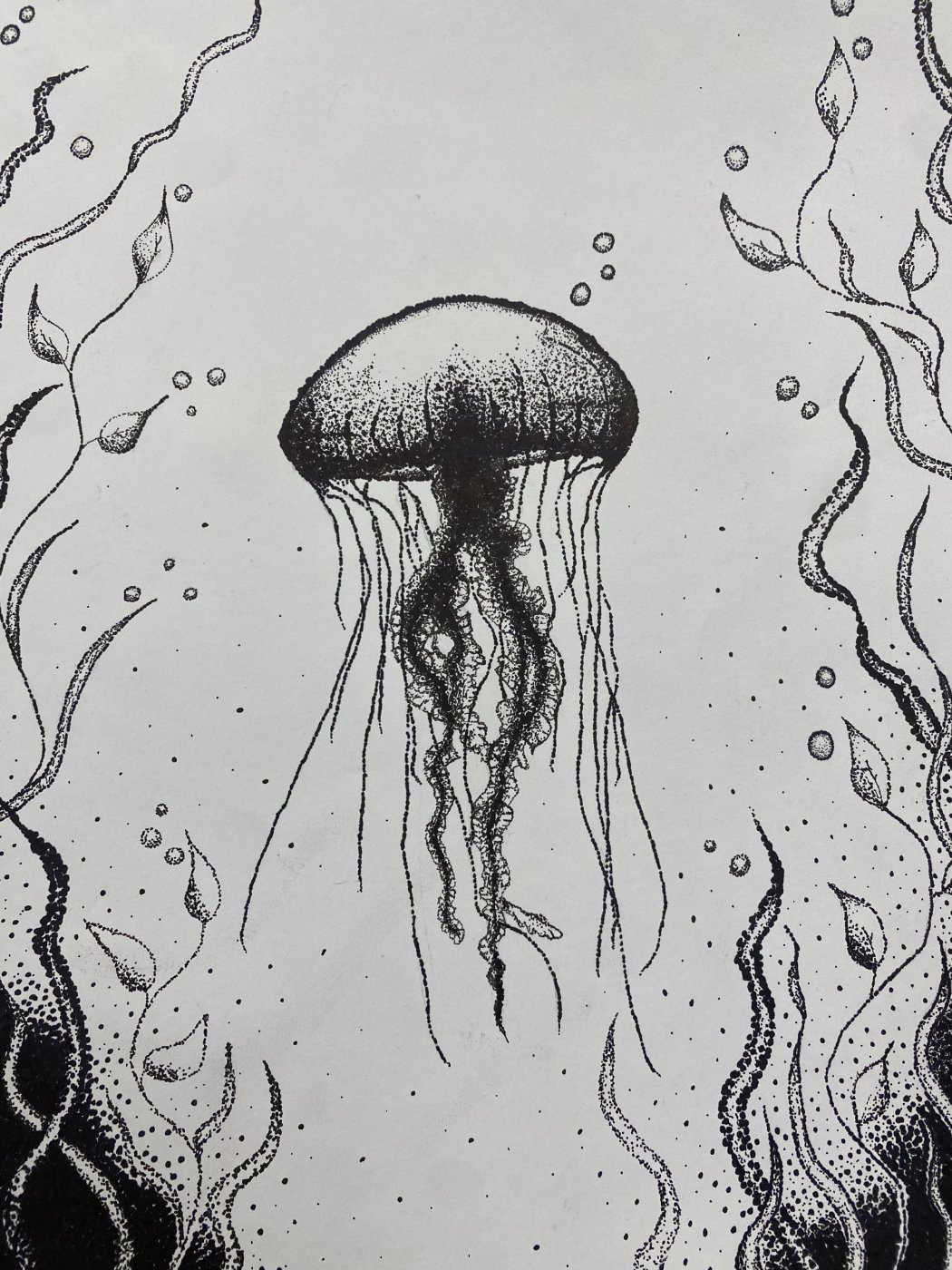
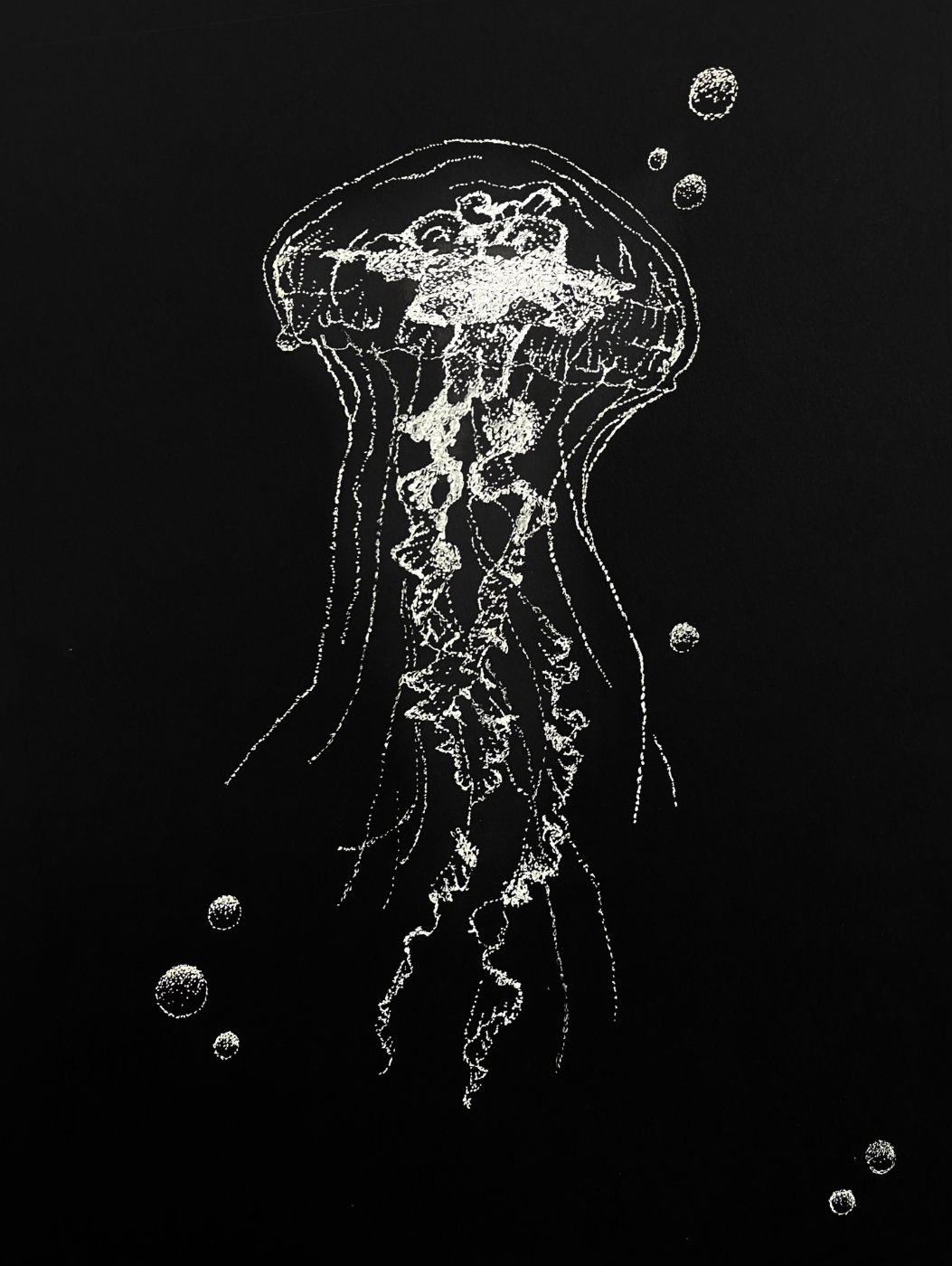
—© 2026 by Victoria Perez
The Ones Who Remain
Sometimes I think of your funeral.
The weather wasn’t dramatic.
It was calm, cool
the perfect day of fall.
Everyone crying over you.
I was numb,
tired, drained
emotions full of storms and rage.
I was young,
too young to be standing up there,
handing out tissues,
trying to swallow my own tears.
Sometimes I think it would be poetic
if, at my funeral, it rained
so only the people willing
to stand in it
would stay.
That’s kind of like life, isn’t it?
Some stay for a season,
but when the weather turns heavy,
it becomes too much to bear.
The ones who truly care
don’t wait for the sun
they stay
through every season.
—© 2026 by Bryanna Cavanaugh
Delicate Bloom
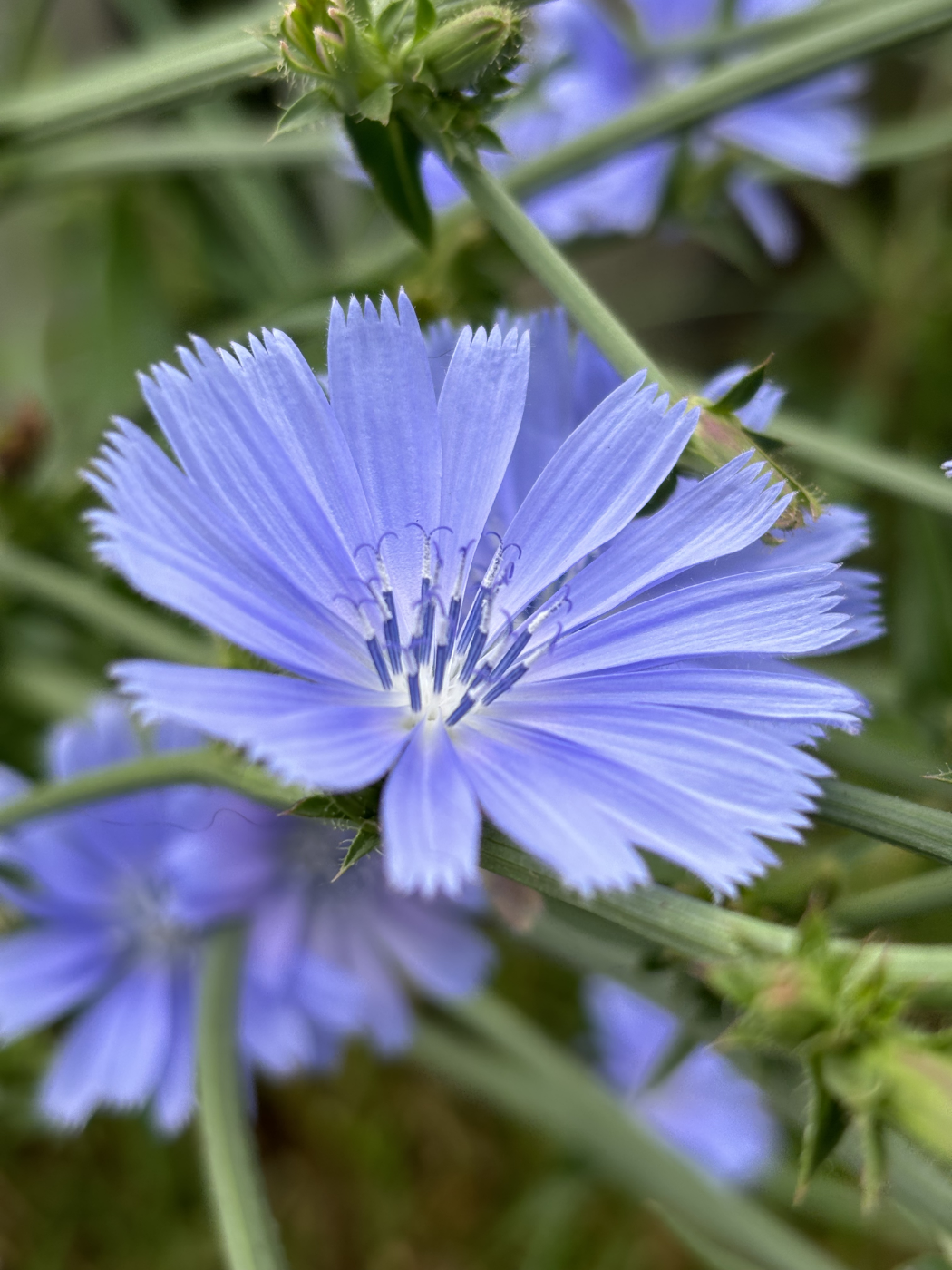
—© 2026 by Emily Goode
Everything Will Bee Alright
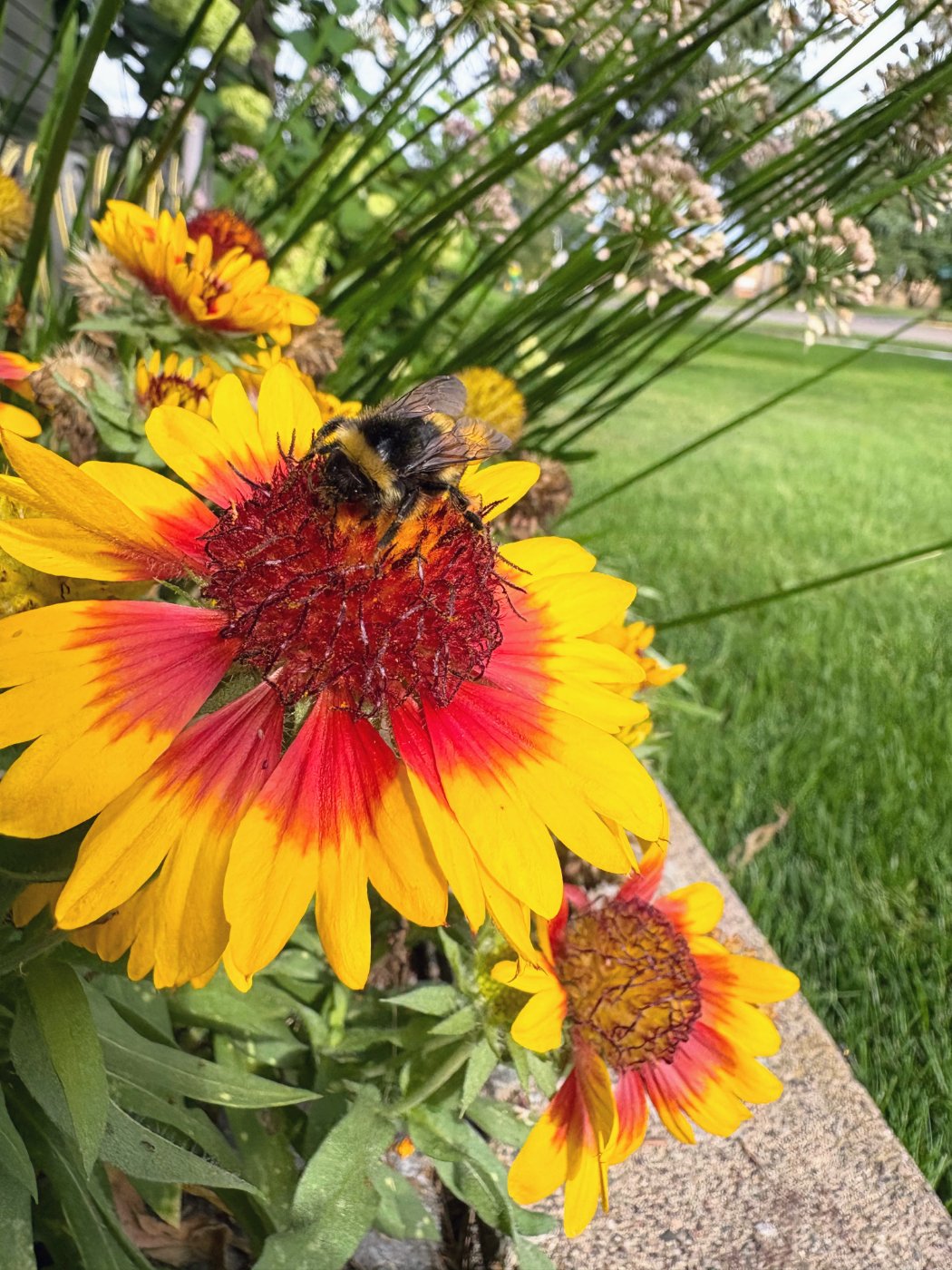
—© 2026 by Payton Rhyner
Seasons, Surges, and Syringas
The deluge of Time floods past me as I claw at it from the bank
Haunted by shades from my youth
Trying to resonate with vibes from yester-year
Against torrents and reason, I try to reclaim megabytes from the flowage
Just let me bathe in the essence again one more time! I promise I won’t burn it all up
I swear I won’t piss it all away this time down river
Just another shot-glass of loosh in the barrel, trying to grasp at smoke
Trying to download a re-dream to dream, trying to kiss a shadow.
Immersed in nostalgia from eras that have been eroded to dust
An old revenant like me knows what it feels like to be forgotten … a feeling I can’t forget
We should probably lock in and sync this data up together before the algorithm engulfs us
Before that Archon sinkhole swallows us … and recycles us back into this gyre
If the Son refuses to shine on me, surely, I deserve it
But will I still have your Strawberry-Moon?
And if so, how long can I bask in your Night?
Regardless of your answer, another Season is surging upon us
Though covered in frost, salt and soot, I’ll conduct these Spring-Time Rites nonetheless
Just don’t let the Son’s gaze forget about me forever
These Seasons rage through us as we flow through these Seasons
The current cut me so deep, I named the scar after you.
My broken levee has had enough and flood-land has trapped me in the Net
And I keep on catching glimpses of you floating out there
With the odour of lavender on your skin and Lilacs in your hair
I urge you not to capsize, keep your paddle keen and bright
I don’t care if I have to swim against the current the rest of the Night
Because my claws hurt and my Soul aches
And you’ve floated on so far away from me
Drowning somewhere in history …
—© 2026 by Mike Fugate
The Grief That Takes My Father's Shape
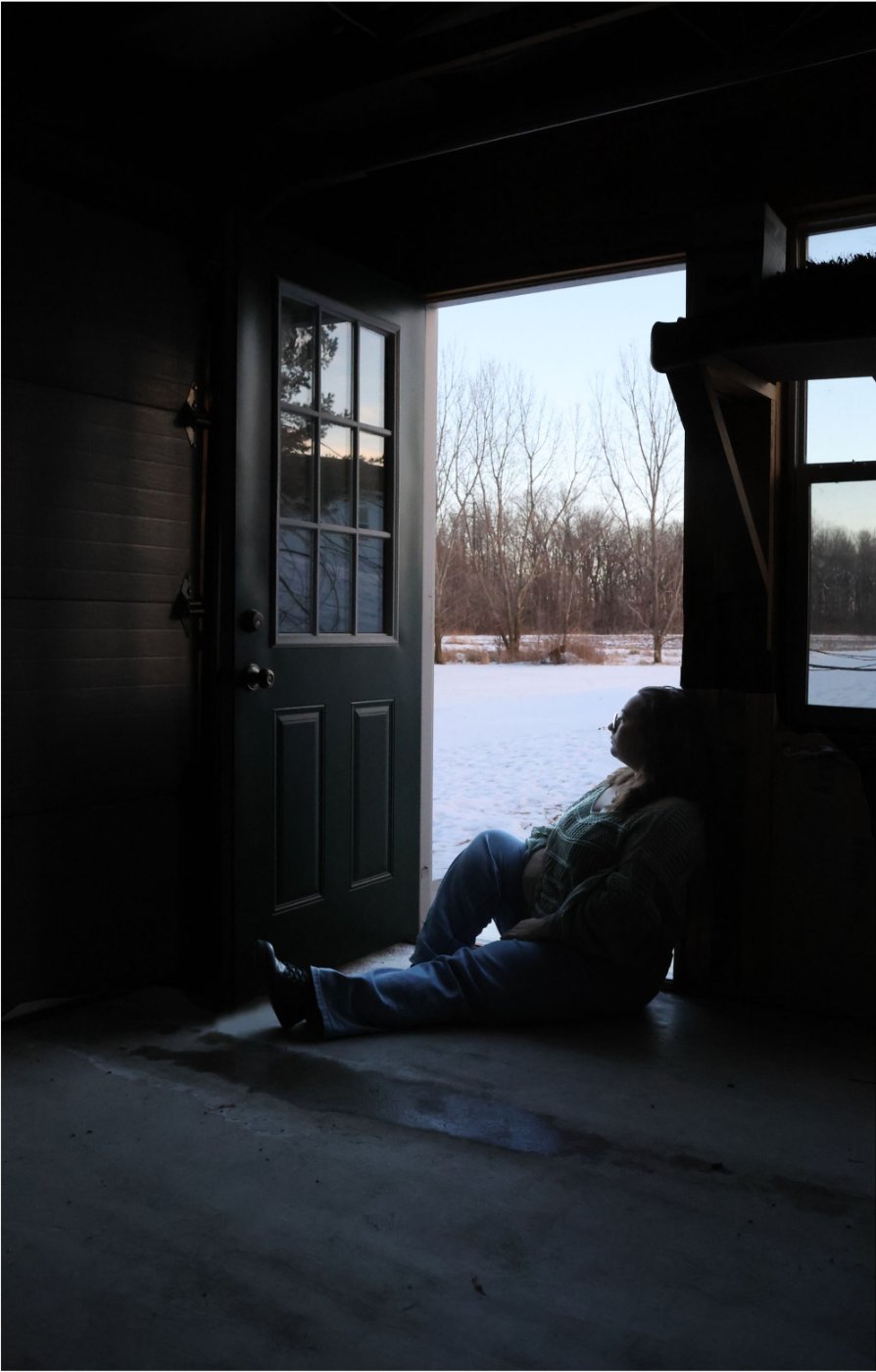
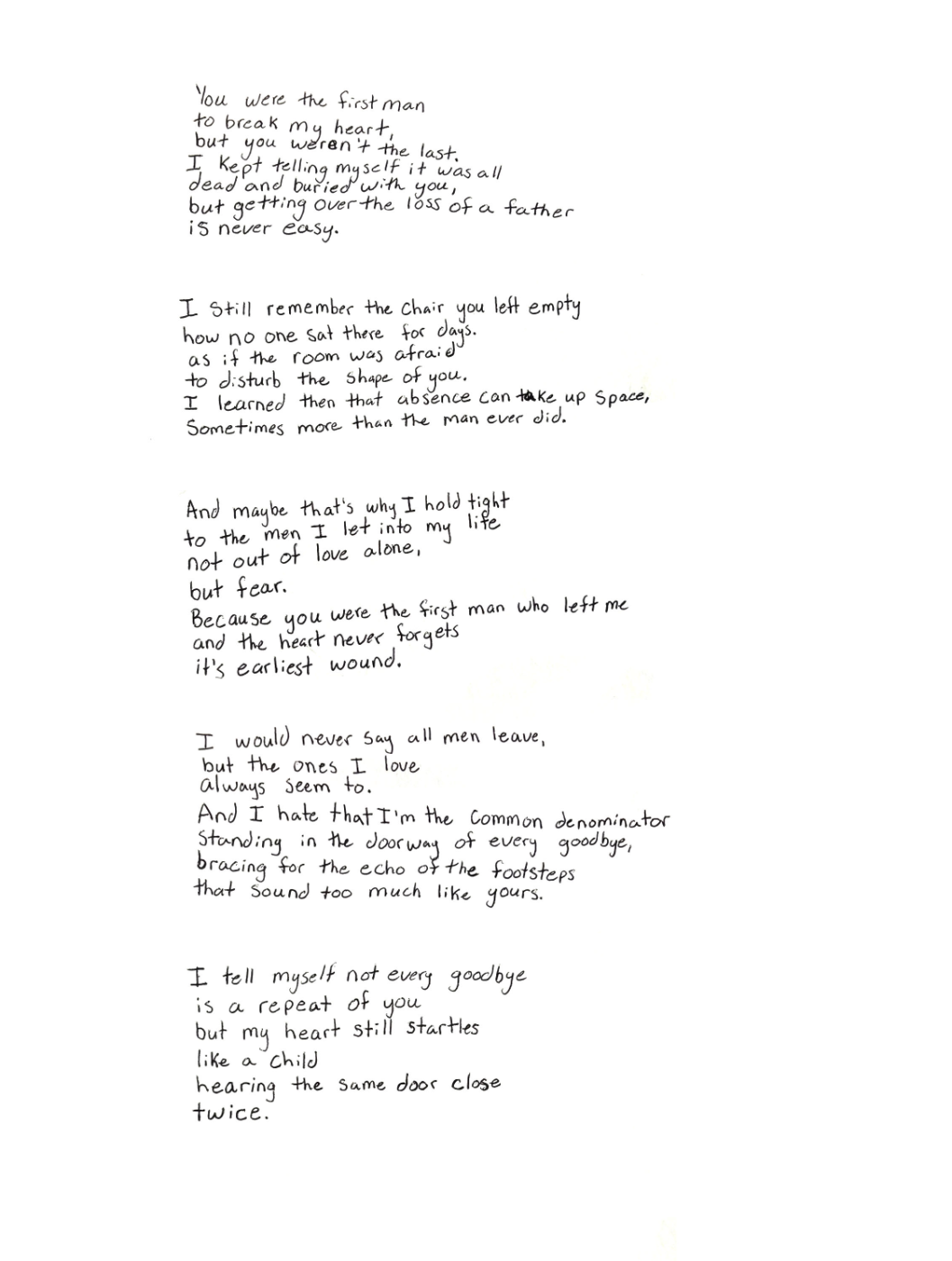 —© 2026 by Bryanna Cavanaugh
Untitled Art: Em Morrelle
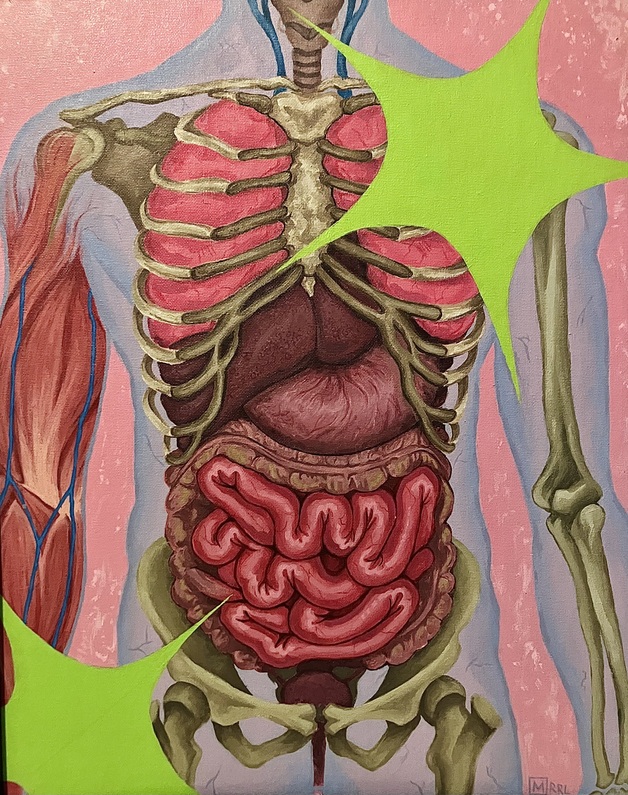
—© 2026 by Em Morrelle
Chemical Love
How can love,
deep,
consuming,
encompassing,
love,
be chemical?
Love
is all I have.
Love
is all I am.
I am
love.
And love is
chemical.
Am I
chemical
too?
—© 2026 by Emily Goode
The Messenger
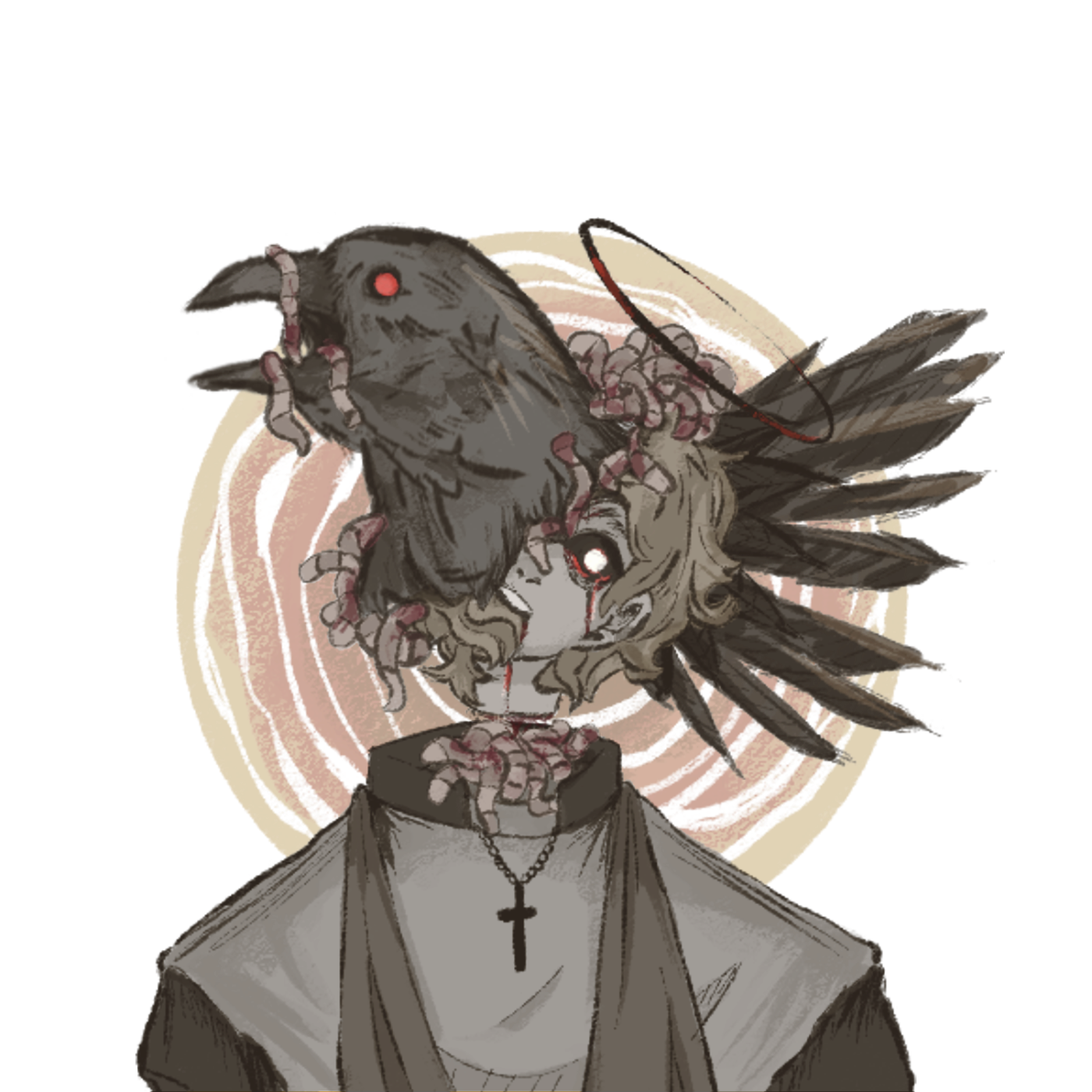
—© 2026 by Heba Obaideen
Marbled
Our cracks are ocean deep.
Substitute plaster for Elysium
soil to grow the golden garden
never wanted by you.
Gifted daffodils to the unrequited.
Cup the amaranth spilling from my chest
as I watch my love drown
in a sea of affection from Death himself.
Altar made in dark rooms as
you chained yourself to the bed.
Dead bodies knit themselves to my carpet
while their screams encompass my hallucinations.
Characters killed off when
they begged for more.
Needled my head, disgusted
by the husk inside a flesh shell.
Every drink tastes of the River Lethe—
forgetting to erase every memory
of your eyes becoming pearls
at the mention of his name.
A body trapped in white.
The train collects the soil for
the new garden you’ll grow
made of rocks and decayed dirt.
Hunting season for the hopeless—
romantic needn’t be mentioned.
Death will take her as his own
before I offer myself in his place.
—© 2026 by Chloe Smith
Climber's View
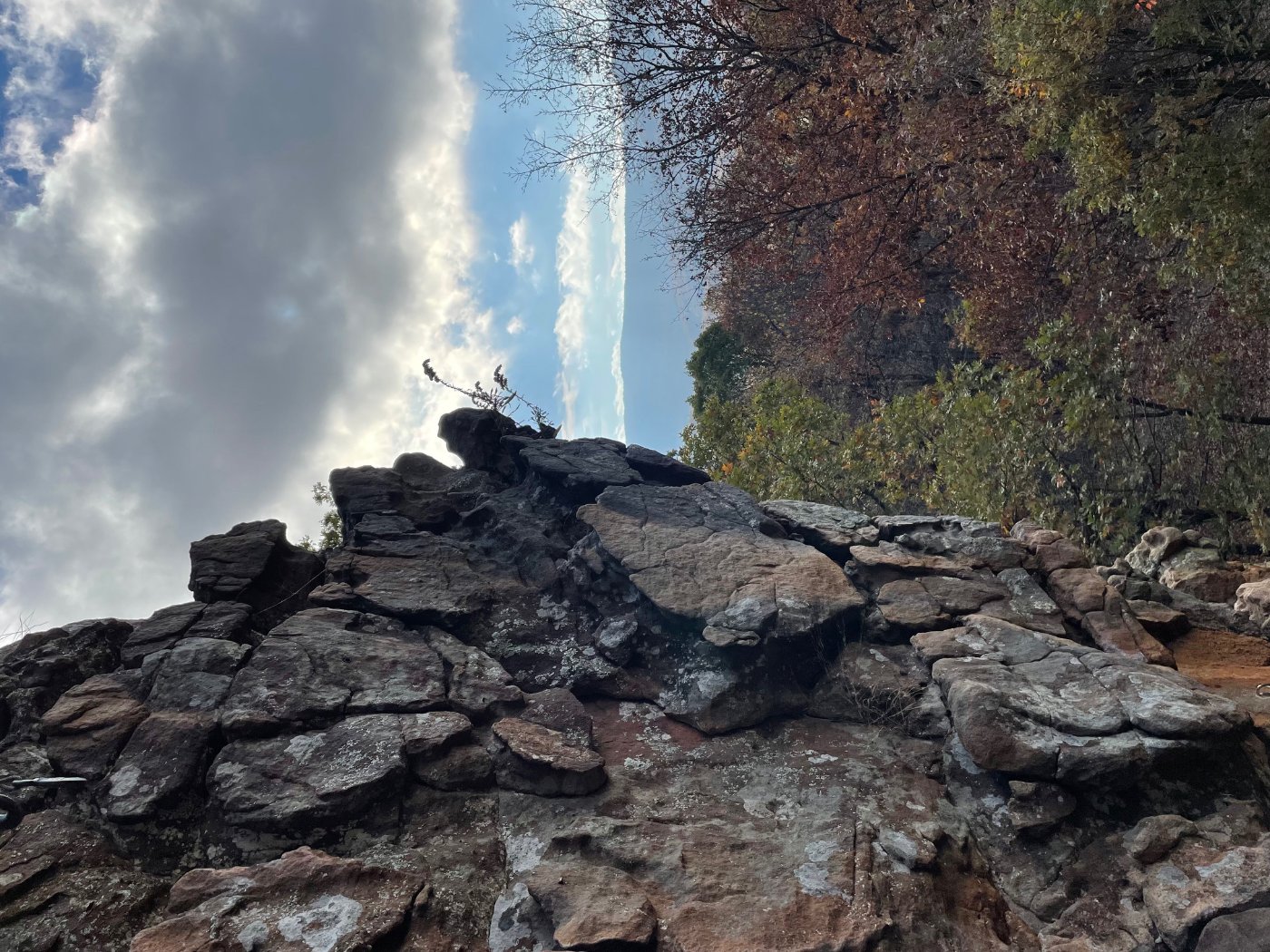
—© 2026 by Natalie Johnson
That Little Voice
I tell it to quiet
But instead it will riot
I try not to let it nag
But on the negative it will snag
It’s that little voice in the back of my head
The one that loves to fill me with dread
I know that I’m just overthinking
But I feel my confidence shrinking
I’m sure most people aren’t just pretending to care for me
But I know how wrong about that I can be
It’s that little voice in the back of my head
The one that makes me think of times I’ve been misled
I know it’s something to work on
But the bad thoughts continue to spawn
I really am trying my best
But it is hard when anxiety fills my chest
It’s that little voice in the back of my head
The one that makes it hard to get out of bed
I sometimes feel there is no hope
But I have been finding new ways to cope
I still have a lot of doubt
But a new mindset is begging to sprout
It’s that little voice in the back of my head
The one that I will force to be silent as the dead
—© 2026 by Payton Rhyner
Continuity
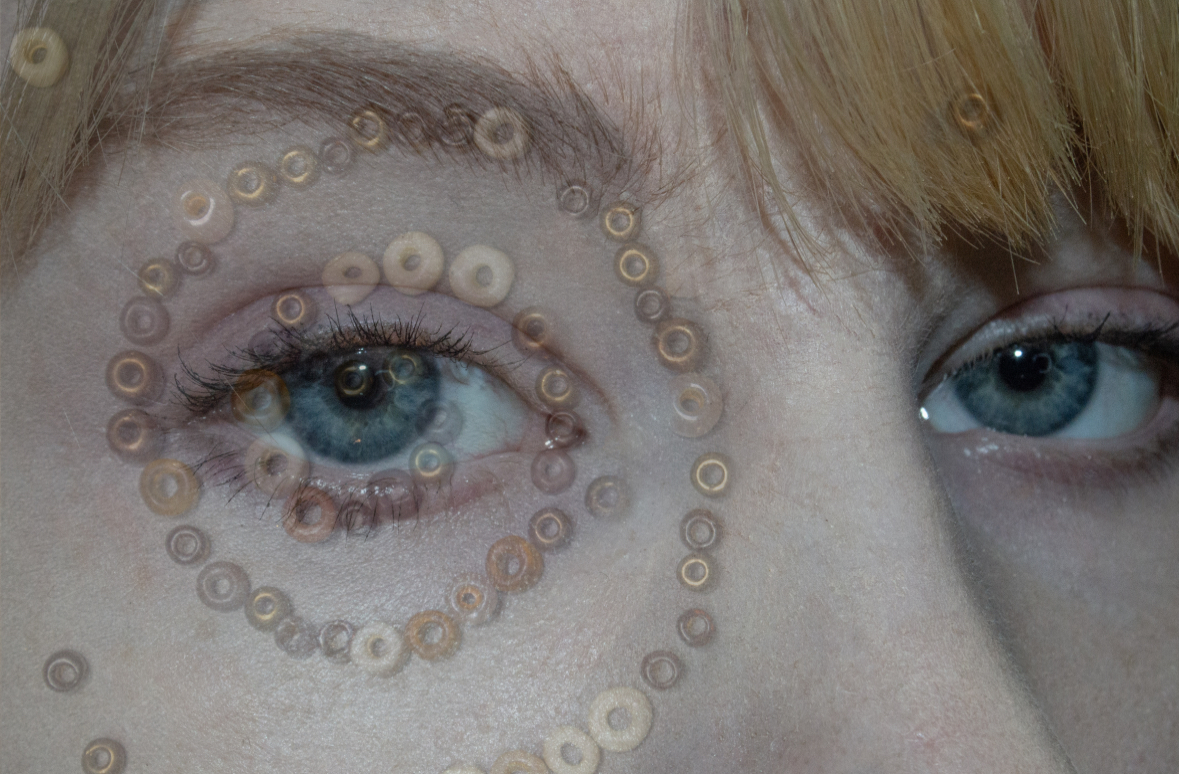
—© 2026 by Taylor Rugh
It's Hard to Hear the Rain, Isn't It?
The faint, rhythmic trickles of raindrops on the bus shelter were violently blared out by the static of my walkie. My fingers played with the stations, each with a distinct crackle; it’s ear piercing, but it’s what I need. I can’t take the sound of raindrops right now.
Some short man, so overly cultivated, wrestles his umbrella back together as his boy peeks his nose out of the shelter and giggles as the droplets fall down his nose.
“Nikkolas, get away from there; you will catch a cold,” says the man, his voice even squeakier than I thought it would be.
“Let him have fun, he’s just a boy, ” I say in a gruff voice.
The man’s eyebrow rises; he looks smug, his eyes are looking at my walkie with annoyance, and his lips are forming a smug smile about to part to make some shrill comment on my dirty clothes, my blaring walkie, or that I smell like medicine. No. I need a victory today. “They need to play around and get dirty and scrape their knees. It toughens them up and gives them independence. Hell, my father, my father was a true mountaineer. He’d take me thousands of feet in the air, and once I knew the basics, I was on my own to do whatever I wanted, climbing giant rocks and flimsy trees, completely out of his sight with only a walkie-talkie for emergencies. The freedom that gave me made me into the man I am today, and I do the same with my son.”
The man looks less impressed than I hoped. The last water droplets were a poor imitation of the downpour that occurred several hours prior. The only sound now was my walkie with its various cracks and gargles, and I could see that my speech, accompanied by the static, was about to make one of his blood vessels pop.
“That’s incredibly reckless of your father and could have gotten you—”
“But I wasn’t, I have all my limbs and I—”
“Yes, but what about your son, he—”
“No! Nope! That’s not how it is! That’s not how life goes! That’s how you’re supposed to raise a boy. If he can’t climb this, he’ll never take a risk. He’ll be an unmotivated, untalented, crybaby, scared of his own shadow, without anything to show for himself. I bet that rings true to you, huh? Look at you; you’re preventing your son from becoming a man because you’re afraid he’ll make something of himself, unlike you. Ha! I bet it rings true, doesn’t it?”
The air went quiet. That man has a look that I can only think of as concern. Moments passed until a bus rolled up, smashing what remained of a shallow puddle. The man holds his son’s hand and steps onto the bus with composure. His boy looks back at me; his eyes give a mischievous twinkle. I’m familiar with that look; I’ve done the same countless times as a boy towards my father and he towards me. I remember it. I don’t know where I saw it last, but as I almost conjure up the image, the loud buzzing drowns it. I’m grateful for that. I see the boy’s faint tuft of hair through the window. The bus shifts away; light reflects off the window in bright bands until he’s completely obscured. The bus tires sludge through the potholes. I watch it till it rounds the corner. When it’s completely gone, my fingers continue to fiddle. I relax myself and close my eyes so that my only senses are sound and touch. I let the blaring consume me. My static fills the misty air until silence. It is dead. The cold air is all that surrounds me. The raindrops stopped, but now I am alone now, alone in a box cradling the dead.
—© 2026 by Gianna Romano
Untitled Photo 1: Kassidy Paradowski Carne
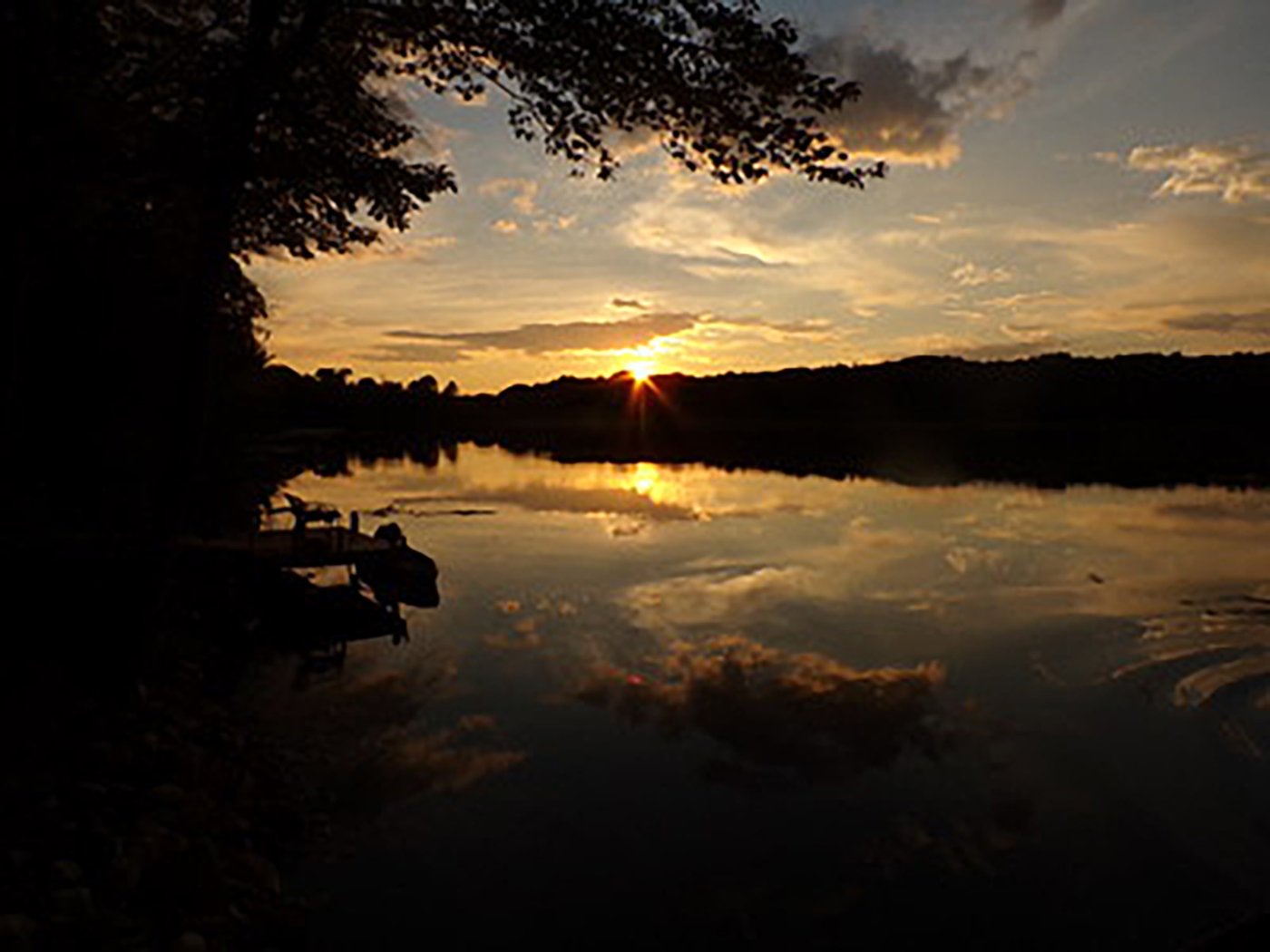
—© 2026 by Kassidy Paradowski Carne
Feather
The feather was in a dusty cedar box. Uncle gave it to me at Grandma’s funeral, making sure Mother couldn’t see. He said he hoped that I would be stronger than he was. I asked what he meant, he said it was Grandpa’s. I didn’t need him to elaborate.
I told Mother that I left my water in the car. She scolded me as she dropped the keys into my hand. I hid the box under the passenger seat, burying it under a pile of take-out bags and napkins.
***
I snuck the box into the house after Mother had gone to sleep and opened it with religious reverence. The feather inside looked like it had just been preened. As if it had not been surrounded by pain and sorrow for decades.
My grandfather has always been a strange figure in my life. Someone to be spoken of in hushed voices. Uncle knew him just long enough before “things got bad” to have happy memories. Mother refused to even do as much as whisper his name. When asked about him, Grandma always looked to her right hand, where one of her fingers was mangled from a fracture that never quite healed right.
Holding the feather in my hands should have felt like something more. It should have felt like some great truth about my heritage had been revealed to me. Instead, it just felt like a feather. Yet, even in my disappointment, I could not stop pride from welling up in my chest. I put the feather back into the box and slid it underneath my bed.
***
I held my graduation cap, the plain black fabric leaving me with a strange emptiness. I should have felt something: happiness, pride, relief. It wasn’t until I tied the feather to the cap that I felt something. I felt connected to something I had never felt before.
I didn’t show Mother the cap, and she was too busy to ask. When she saw me walk out into the scorching sun, she stood up and walked off the bleachers. Uncle didn’t leave. He cheered as I held my future in my hands.
Mother did her best to never look at the picture she hung on the wall, where the feather is dangling just to the side of my face.
***
When I saw Uncle at my graduation party he wrapped me in a bear hug and cried. “Look at you,” he said, “An Indian who’s gonna make something of himself.”
Indian.
I laughed when he let me go. “Since when am I an Indian?” I asked. Mother moved off the Rez years before she met Father, and she seemed determined to find the whitest man she could marry. I was born white, raised white and I would die white.
“Your father might be a white man, but you’ll always be Indian,” Uncle paused, “Ma would say that if she were here.” I wrapped my arms around him as he cried, and only then could I smell the alcohol in his breath.
***
I took the feather with me when I visited Uncle in the hospital. “Oh, Bertie, you came to visit,” he smiled, not realizing I wasn’t his sister. I didn’t have the heart to correct him.
I held the feather out to him; he refused it. “No, I’ve held on to it for long. Held on to him for long. That feather is cursed for us … but not for your kid.”
A week later, Uncle died.
***
I laid in my own hospital bed decades later, after my heart went on strike for a few hours. My kid visited me, an Indian if I’ve ever seen one, even with their white skin. They held the feather out to me. I took it and didn’t bother stopping the tears. I told my kid a story they’d heard a thousand times before: When my uncle handed me a dusty cedar box.
—© 2026 by Paul Christopherson
Chronic
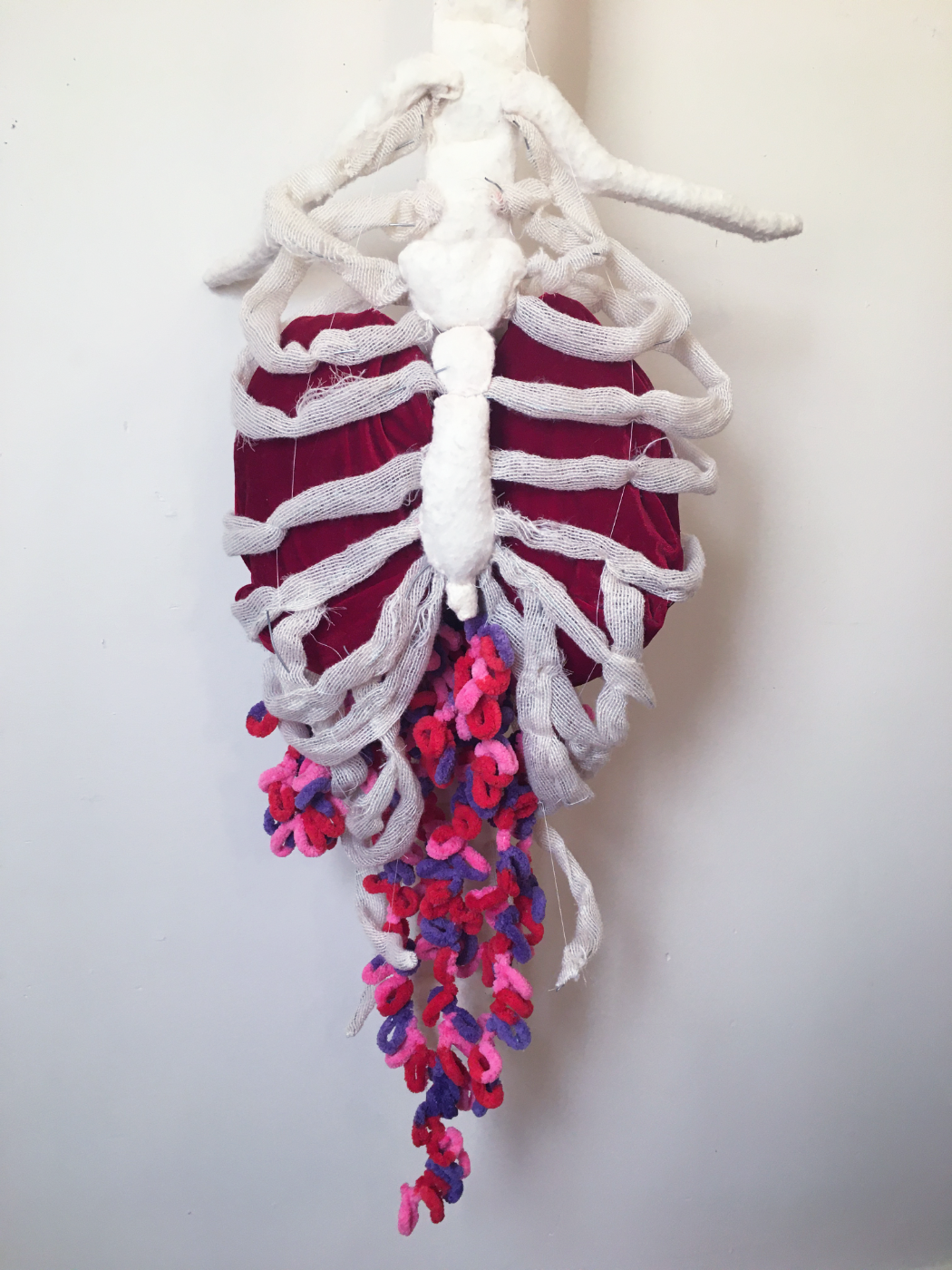
—© 2026 by Aspen M. Hirschberg
Myth of a Hero
Heroism is a myth, he thought to himself. His stomach felt like it was collapsing in on itself, the insatiable hunger becoming more unbearable by the minute. They called him a savior, a hero, and he’d been dumb enough to believe it. Dumb enough to think that he, the self-appointed martyr, the beloved champion of the village, the thief who’d escaped the gods, would be hailed for his selfless deeds. And for a moment he was. For a moment, he became their savior and symbol of hope.
They were starved. The earth could no longer bear enough harvest to support them. Animals in the forest were scarce and too small to feed their growing village. And when they turned to the gods, their pitiful prayers were ignored. Their once-favored village grew decrepit, and he, being the appointed hero of the village, acted and stole the cornucopia of the gods—all for his people, for their extended survival. At first, they praised him, celebrated his bravery, and reveled in the endless fruits of the cornucopia. But when the gods’ fury turned against him, so did the people. They rebuked him, shunned him, pointing their greedy fingers at him and recounting his “heroic” endeavors as selfish, cowardly exploits. And he, who had stolen for their survival, had borne the punishment alone—banished, cursed, and starved.
To always be in a state of hunger—that was his punishment. No meal would ever be enough to satiate his growing pains that were now a permanent fixture in his worn-down body, forever forbidden the simple human relief of food, every bite torture’s brief remedy, the thought of food alone a deep, soul-crushing pain. And he, once a praised hero, became a vagabond banished from his own village, forced to set out alone, the gods’ curse slowly eating away at him from the inside.
In the few days following his exile, he had gone out into the woods and eaten every wild animal he could find, leaving a massacre in his wake. At first, he’d been careful about it. Slowly and carefully skinning each animal as he’d been taught to do many years ago in his youth. After the first two days, desperation and despondency caused a shift. He no longer bothered with care and attention. He would throw his game into the fire, waiting only a few moments before taking it out with bare hands, the smell of burning flesh, his and the beast’s, coating the chilled air. Taste and pleasure were no longer a concern of his. The only thing he craved was the momentary satisfaction. But that never lasted long either; it didn’t matter how much he ate; he was always hungry.
For days, he wandered far from the only settlement he’d called home. Winter had settled in deeply. His skin was cold and frostbitten beyond what he thought was possible for a living man, but then again, was that what he was? He wondered now if he’d taken on a sort of immortality—not the sort that most heroes risked their lives for, but an agonizing kind that felt like the constant chill of death, clutching at him just out of reach. His ribs stuck out like nails, piercing his discolored flesh, making his once-strong and commanding figure appear frail. A rancid odor emanated from him; was it the scent of his own rotting flesh? He wasn’t sure. His hands bled, open blisters and burn wounds covering them, raw and uncared for.
Now, he lay in an empty, barren field—the outskirts of an old pillaged village, burned and razed to the ground in a fiery hell. Likely the work of “heroes,” he thought. The ground was ashen soil, unlikely to ever bear life again—the earth scarred permanently by the greed of humanity. The trees, ebony black, were nothing more than mimics of life. Even the gray sky seemed to agree: this barren land was unfit for sunny skies. What a fitting scenery for his agony.
As he lay there, he could hear the rapid beat of his own heart and his agonizing grumbling stomach, trying to drown it out with the sound of the howling wind around him. His eyes were closed, his breath heavy from labored starvation, as he pictured himself surrounded by a feast all for himself—a belated celebration for his undertaking. Endless platters of meat butchered and prepped just for him, served with the finest wine and rum the village had to offer.
He opened his eyes, bloodshot from the pain he’d endured for days on end, his attention going to a crow now perched atop his chest, its obsidian eyes watching him with curiosity. Maybe it thought he was dead and was there to satiate its own hunger. Crows, after all, were the messengers of death. And maybe, he was. His rotten flesh and brittle, poking bones certainly made him feel death’s grasp. He wasn’t sure anymore. He wasn’t even sure if he could die still or if his curse ensured he’d be agonized for eternity.
Back in his village, they used to say birds were a gateway to the mind and soul; they could feel a man’s emotion before he felt it himself and know his true intention before his mind was made. If they could, this one certainly didn’t. Or maybe it did, and that’s why it seemed to so willingly perch itself atop him, not mockingly, but willingly giving itself up to him. Maybe it peeked into his soul and acknowledged his pain, acknowledged his prolonged suffering. Its deep, longing gaze seemed to show understanding; it seemed to tug at the part of him that still felt a very human guilt. At least it brought him comfort to think that in its last moments, the creature felt empathy.
With a brisk movement—like a caged, desperate animal—he shot out without thinking, his soot and dirt-covered hands moving on their own as he wrapped them around the feathered fiend. It struggled against his grip, desperately trying to fly away, pecking at his grimy fingers, but he barely felt it. All he could think about was the momentary satisfaction from the simple mechanic of eating. He didn’t bother to defeather, cook, or even kill it first. He bit into its flesh, and it struggled harder for a moment, blood gushing out as its life force drained. But he didn’t stop, his teeth gnashing at the still-warm flesh. When he was done, blood, guts, and feathers covered him, evidence of the murder. And for a very brief moment, he felt his hunger give. Then slowly, within minutes, he began to feel its weight again, like a boulder slowly crushing his soul and bones into the soil. This is where you belong, it seemed to say, on this hellish Earth.
He looked down at his bloody hands. The creature’s blood mixed in with his own, his outgrown fingernails caked in dirt and crimson. They no longer looked human. His eyes stung, and he felt the flow of tears dripping down his bloodied face. He upturned his head to the sky, still grim with clouds, and he wailed, remembering his youth. He remembered; he used to think birds were sacred beings.
—© 2026 by Heba Obaideen
Demario Zayas Perez
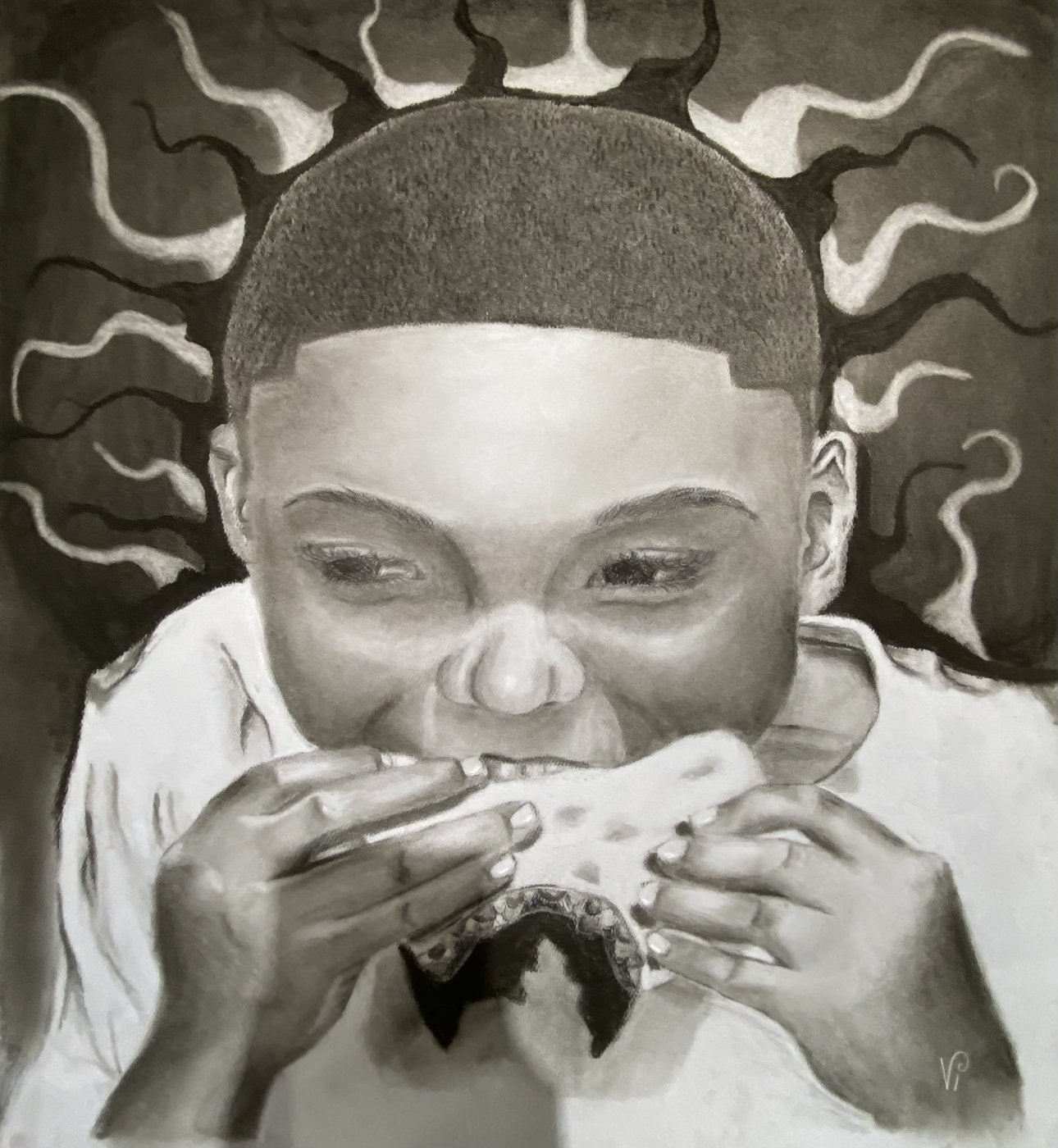
—© 2026 by Victoria Perez
Untitled Art: Jos Donohue
—© 2026 by Jos Donohue
No Regrets, Coyote
I push my hair out of my face again, a proven Sisyphean task as the wind blows it back into my mouth only moments later. I run a finger over my chapped lips, cracked and dull like my surroundings, a half-empty truck stop somewhere in Florida. Overhead, the lights have been flickering for the past ten minutes; every time I start to think they’ve stabilized, they spasm again.
I stopped keeping track of the names of the towns and cities that I’ve passed through a while ago. Now, I just move from one place to the next, each of them sliding off me; oversized coats that swallow me whole and then fall off my shoulders. My constant running has turned me into a new animal, nocturnal and wary. The rumbling sound of an open exhaust pipe pulls me from my thoughts, and my eyes settle on the truck immediately. It’s dirty, covered in dust and dried mud. Tarnished in the kind of way where you can’t imagine it ever being clean.
The man inside is even more disheveled than his truck. His long hair is tangled and twisted, brushing limply against his face and shoulders. He reminds me of a boy I used to know, all hair and limbs and teeth. It isn’t him, it couldn’t be, but I feel my heartbeat quickening regardless. I see him, and he sees me. He rumbles to a stop near the curb I’m sitting on and hops out of the driver’s side.
“Hey there, sweetheart, need a ride?” He smiles at me and I was right; he is all teeth. And I do need a ride. I’m just not sure yet if getting out of here is worth getting in there. You can’t really trust anyone on the road; they’re all running, too, and I can see it in his eyes, that look you get when you’ve been wandering highways for too long. That isolation, the ghostlike feeling of him. I’m afraid I might look the same way. That’s one of the reasons I don’t look real long in mirrors anymore.
“Yes,” comes out of my mouth before I can think better of it. I’ve got to get out of here one way or another, and no one else passing through a place like this is going to be any more trustworthy. I stand up to meet him, and he offers me a hand. It’s rough and warm, and after he takes it back, there’s a smear of grease on the inside of my wrist.
Dirt blooms from under the truck as we fly down the interstate. Bright sun and sticking heat, the air heavy in my lungs. I hadn’t slept in the hours before dawn, and I’m starting to feel that weight now. The landscape is enveloped in shades of orange, that black tar of the road stretching on endlessly in both directions. There’s no homes, no gas stations, no life. Roadkill litters the thoroughfare; guts splashed across pavement in intricate patterns; shiny red glistening over white lines.
Joni Mitchell’s “Coyote” slinks through the car radio, and the man hums softly along to the line about picking up a hitchhiker, a prisoner on the freeway. I can feel him looking at me as the song plays, and there’s a weight to his gaze that I can’t quite define. I shouldn’t have gotten into his truck. One of his hands is loose on the wheel, the other casually hanging out the window. He’s on his fourth cigarette in the past hour, and despite the gnawing fear in my stomach, I get the urge to ask him for one.
Something’s wrong with this picture, with his eyes. They’re so dark, and I wonder if they’d always been like that, how I could’ve missed eyes like that in the flickering light of the truck stop. And that boy I knew? He had eyes kinda like that, darker than the ocean and twice as deep. My mama used to say, “The Devil’s got his hooks in that boy, Mary. Just you wait and see.” There was plenty she was wrong about, but that boy? She was right about him. Because I looked into his eyes one night, and I knew there wasn’t a human soul behind them. This man isn’t that boy. Teeth and the Devil’s about all they got in common, but it’s enough. To my right, outside the window, I can see a gas station a few miles down the road. My fingers, slowly, lock around the car handle, and he realizes what I’m about to do a second too late to stop me. His eyes go wide, his lips start to form a word, and I jump.
—© 2026 by Jasmine Bertelson
Fruits of Extinction
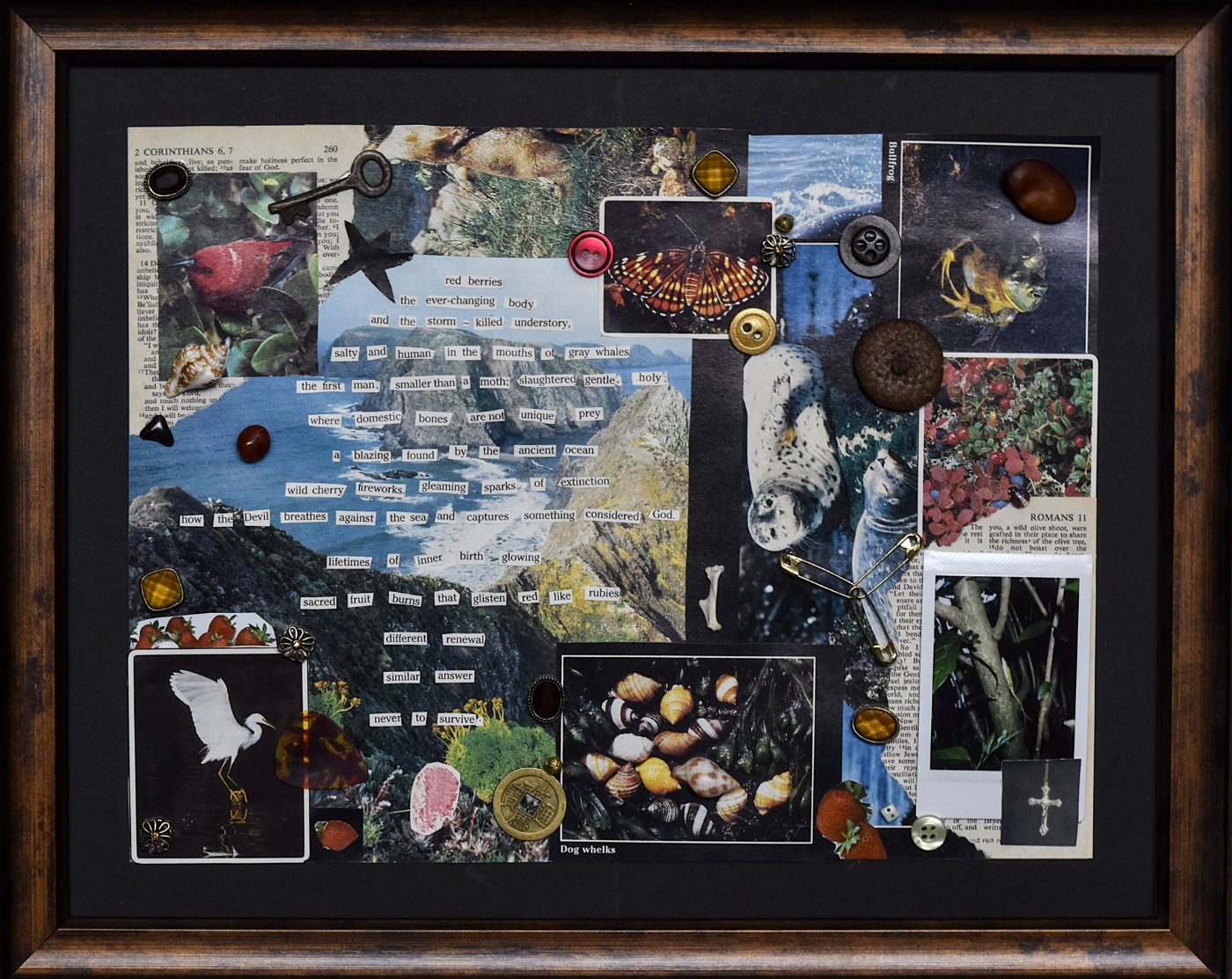
The words on this collage read as follows:
red berries
the ever-changing body
and the storm-killed understory
salty and human in the mouths of gray whales
the first man, smaller than a moth; slaughtered, gentle, holy;
where domestic bones are not unique prey
a blazing found by the ancient ocean
wild-cherry fireworks gleaming sparks of extinction
how the Devil breathes against the sea and captures something considered God.
lifetimes of inner birth glowing
sacred fruit burns that glisten red like rubies
different renewal
similar answer
never to survive.
—© 2026 by Brooke Schoening
Artist’s note: This multi-media collage is made out of old nature encyclopedia cutouts and decorated with embellishments like buttons, crystals, coins, seashells, and ethically sourced bones/teeth.
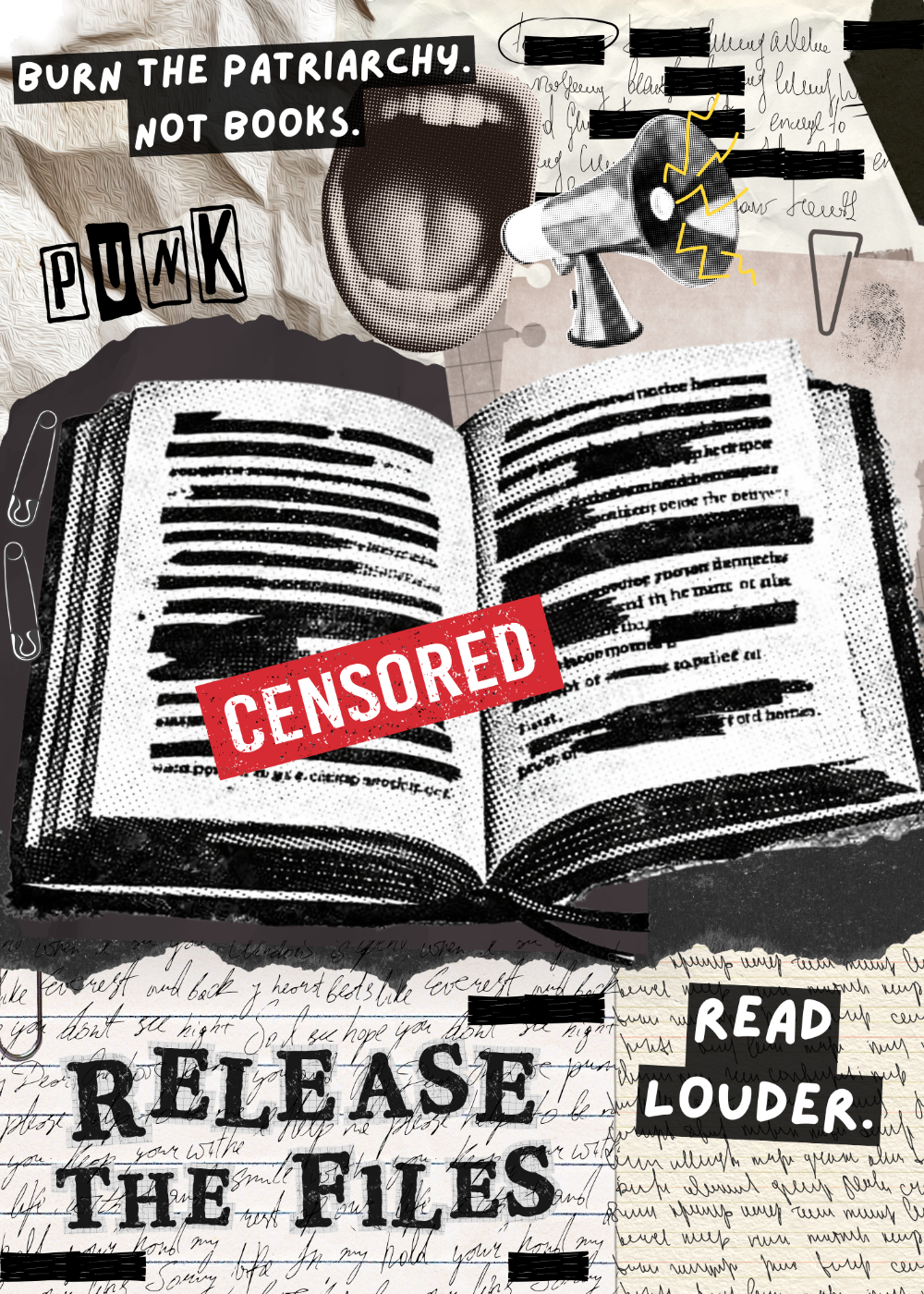
Redacted
—© 2026 by Ginger Knauer
Offer Penance
The wind almost whisked the slip from Jude’s grip as he took the last step onto his landing. He tightened his hold, not wanting to lose it. The fee would be lofty.
Their apartment, or rather, his apartment now, was on the left side. He approached the small screen beside the door that blinked to life at his presence.
“Welcome home, Jude Pratcher. Accrued fees for entry since last exit include: TOF fees for 12 seconds off feed, $326.”
Jude sighed. He had taken Restitution Street on his way home. He knew the cameras there were spotty. He had been in a hurry. He tapped the green circle below the message to acknowledge.
“Unreported chatter, $98.”
Jude acknowledged again. He hadn’t meant to ask the receptionist at the Directorate building how their morning had been. Azalea had given him bad habits. Jude’s available social funds flashed on the screen, minus the deductions from his fees. Before his door would open however, the final message appeared.
“Offer penance.”
Jude rubbed his forehead. With all the time he spent on the stairs he wished he had thought of something to offer. Only penance known to be true and sinful would be accepted. The Earthborn Directorate always knew.
“A man outside the Directorate building offered me his condolences today. At 3:04 p.m.,” Jude offered. He didn’t feel it was fair. The man had said it in front of two other visitors, so it had likely already been reported. The screen beeped, and Jude’s door clicked open. Inside, he closed the door behind him and set the slip he still carried on the small table where he had eaten breakfast with his wife just that morning.
Azalea Pratcher: Removed from the whole for distinctive behaviors. Associated fee: $1,907.
Her name was bolded; the ink looked fresh, but the rest looked faded. Older. Jude looked away from it and took three steps into the spacious room. He looked around at all they had, a cabinet for each of them beside their bed. Their table. Their stove. Even a small box for their produce. The housing authority would make him move soon, he suspected. It was too much for one person.
When they came, they would take her things. It was how this kind of thing was done. He looked at her cabinet and wondered. Had there been any signs? Had he missed something in her?
There were no commandments about respecting your spouse’s privacy, and Azalea was gone, yet Jude felt guilt compounding as he opened her cabinet. Inside he found about as much as was in his own space. She had a copy of the Sacramental Writ, a picture of her and her parents on the day she and Jude were selected to marry, and an old leather book.
All were familiar, save the book. Jude picked it up. It felt cool. It looked worn. It smelled ... like her. He remembered their conversation from just last night.
“Jude?” Azalea had asked. “Can I tell you something?”
“Of course you can,” Jude said. Their marriage wasn’t like most the Earthborn Directorate assigned. Jude and Azalea were friends. Procreation was their goal, as was their mandate, but they truly did care for one another.
“I want to go to a bookstore,” Azalea said, her eyes shining as she stared at him. “I heard of a store that sells books that aren’t provided by the Directorate. I want to go. I want to read them.”
“Why would you want to do that?” Jude had asked. He had been shocked. His wife? It was so unlike her. So unlike anyone.
“I want to learn.” Her answer had been so simple. So different. So individual.
He had told her this morning when he left for work that he would think about it. When he told her he hadn’t known. He truly meant to think about it. He thought he would see her again.
The memory fading, Jude opened the book. He found, inside, written words. He had never met anyone who knew how to write, yet the signature after each entry of this journal left little doubt who had set word to page. Azalea.
The words therein would have been enough to get Jude removed just for reading them. Azalea shared her dreams of the future. Of her love for Jude. Of her hunger to learn and grow. On those pages, she set herself apart from anyone Jude had ever known. Anyone he had ever heard of. Anyone he could even imagine. This woman, who poured her heart into the thoughts written there, had been his wife. And she was gone.
With shaking hands and sorrow he hadn’t known he could feel, Jude closed the book. He stared at the wall that Azalea had once confided she wished had a window, so she could look out at the world. For the first time since he heard of her removal, Jude wept.
When his shoulders stopped their quaking from the sobs, Jude stood and wiped his eyes. Azalea had told him, before he left, where the shop was. In her memory, he would go. He would try to find a shred of the light that had been in her and breathe it to life in himself.
Jude approached the door, and the small screen beside it blinked on.
“Accrued fees for exit since entry: Air filtration, $62.” Acknowledged.
“Reported noise from living space, $43.” Acknowledged.
“Offer penance.”
Jude thought. He thought so long, he worried the screen would fine him. Then, he said aloud the only thing he knew to be sin, knew to be a violation, but was as true as any penance he could offer.
“I miss her.”
The screen beeped, and the door clicked open.
As Jude exited and made his way out and down the steps, to live the dream his wife had shared, he remembered the penance he had last offered when he last left home. Just this morning.
“My wife wants to learn.”
—© 2026 by W. Tanner Forbes
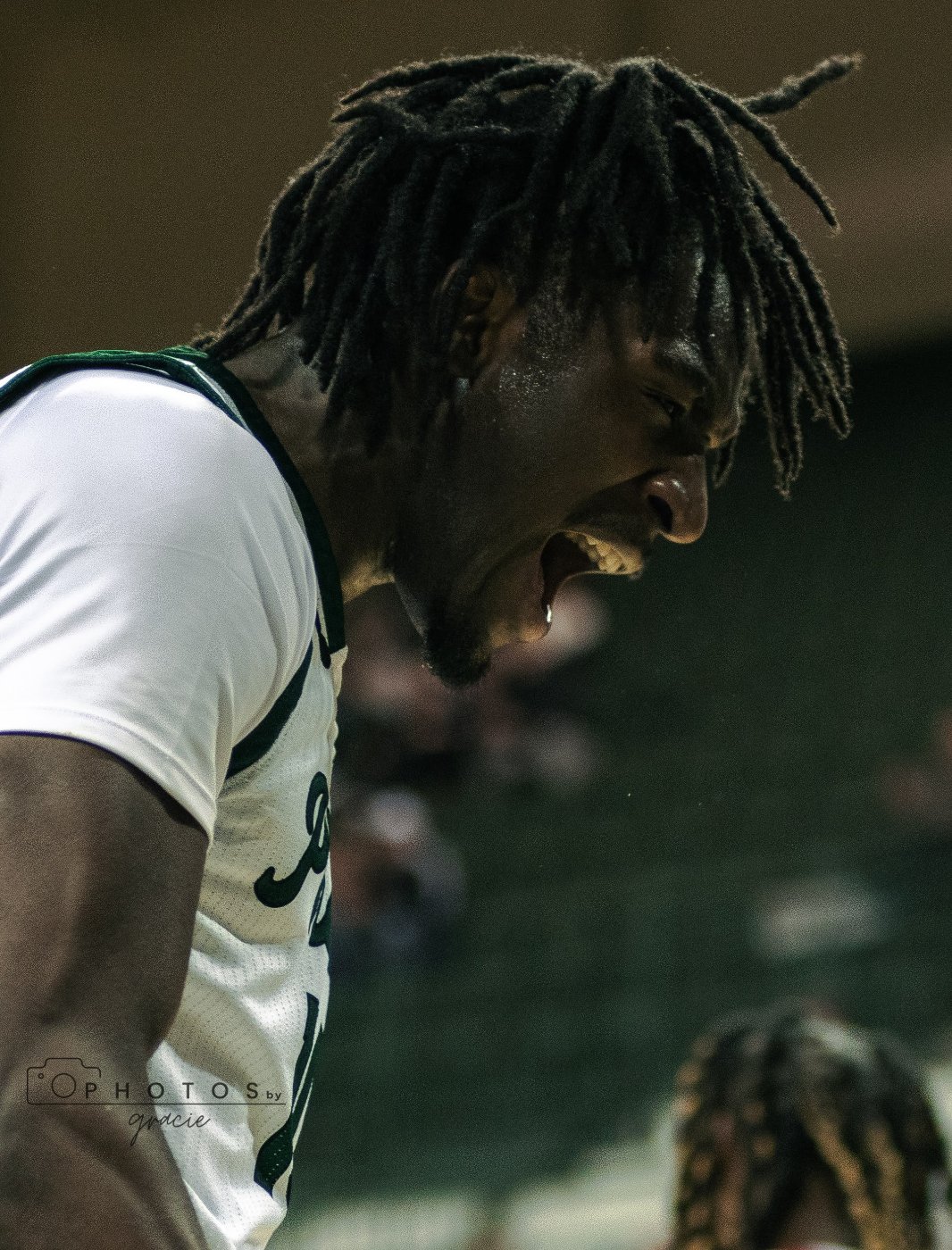
Past Pain
—© 2026 by Grace Schiltz
Hot Single Aliens in Your Area
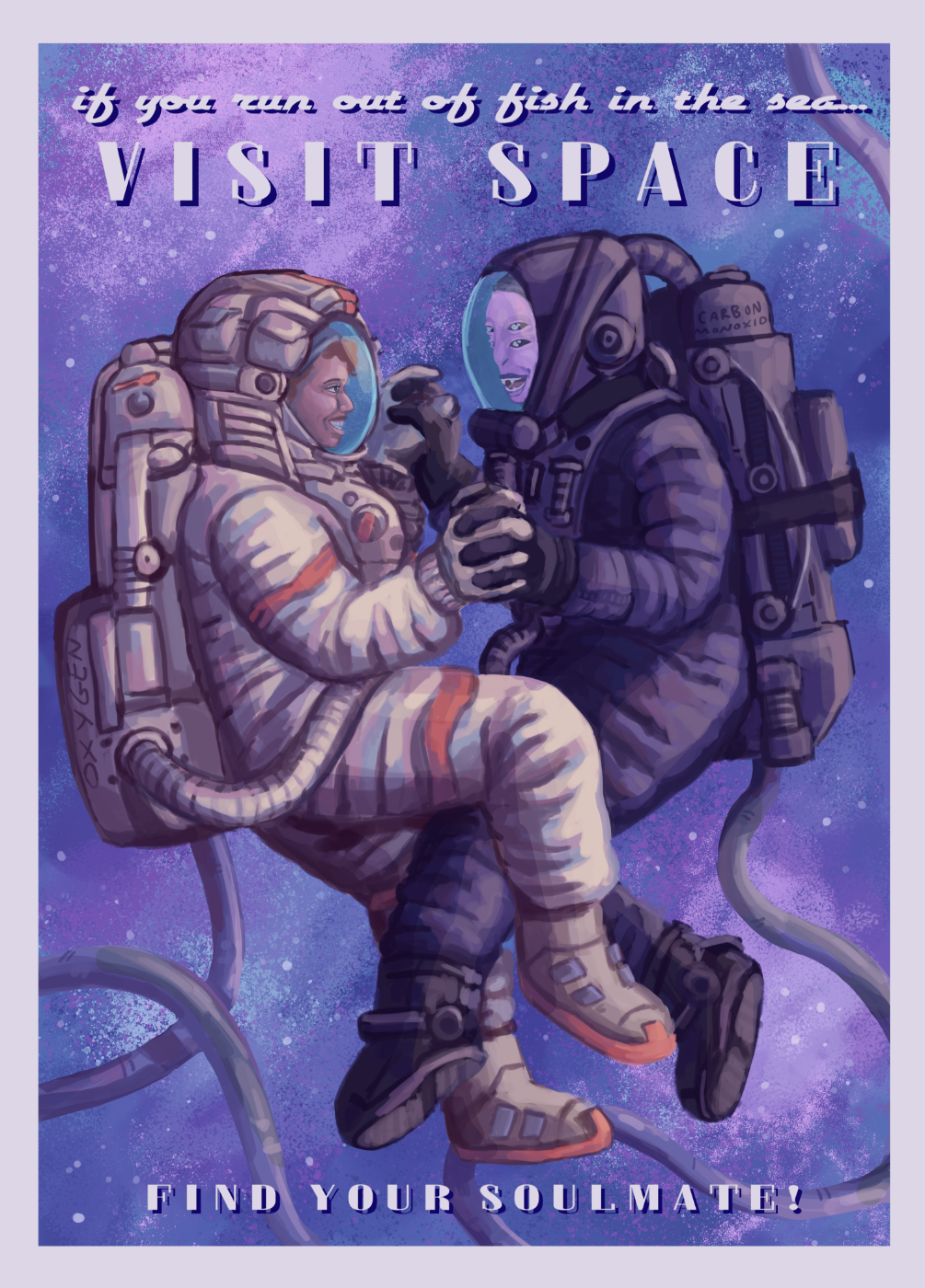
—© 2026 by Aspen M. Hirschberg
The Morrigan
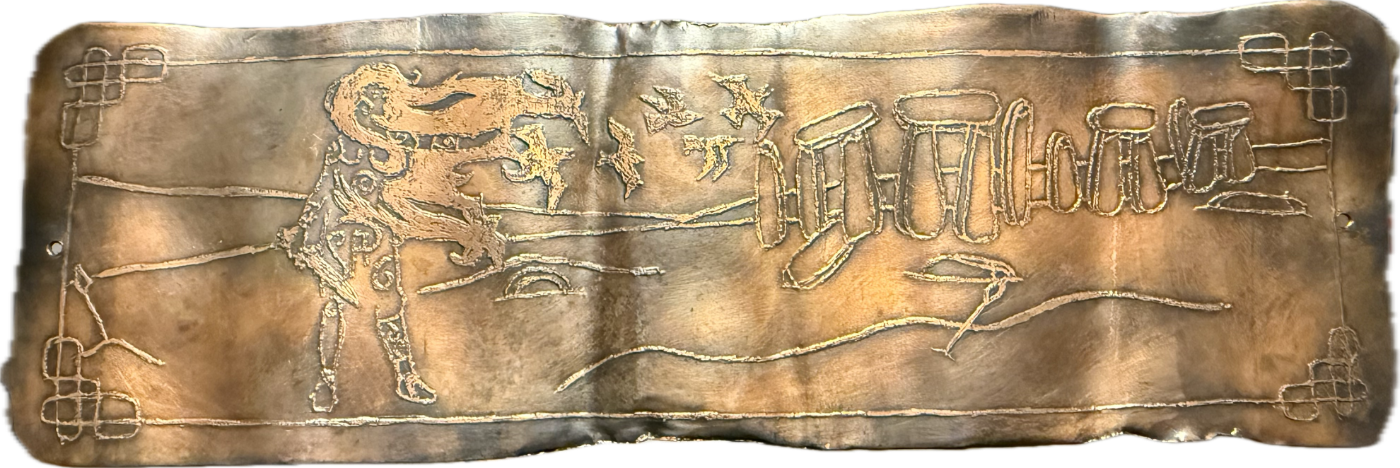
—© 2026 by Grey Mielke
Cervidae
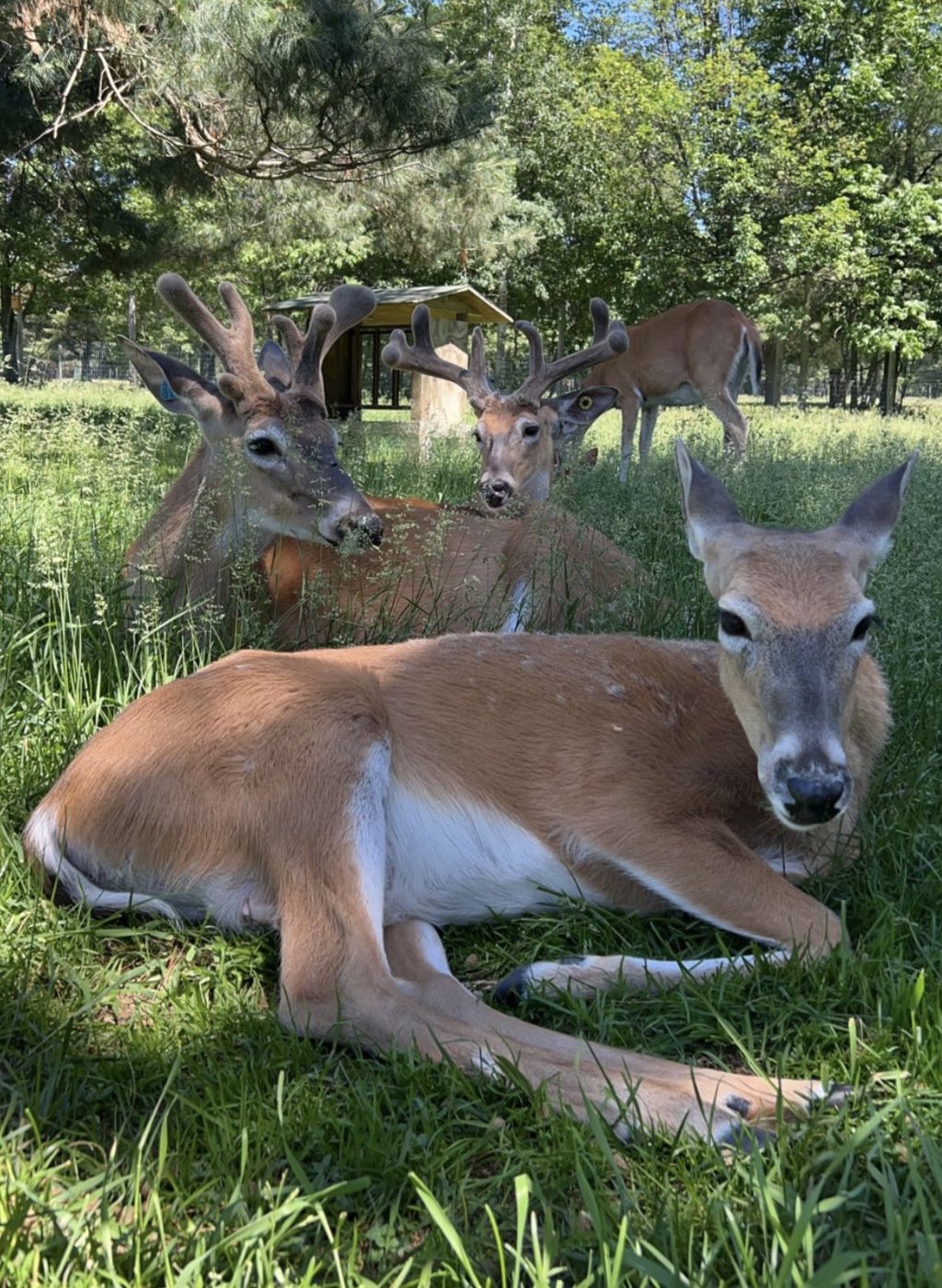
—© 2026 by Katie Frank
Meet the Team
With years of experience as an editor-in-chief for The Green American, a magazine focused on environmental and social justice issues, Professor Tracy Fernandez Rysavy is our advisor for the Northern Lights Journal. You can also get in touch with our current editorial staff.