Plant Care
At UW‑Green Bay, we take great care to raise hardy, healthy transplants—but because they’re greenhouse-grown, they’re still tender. Before planting, give your transplants time to adjust to outdoor conditions through a process called hardening off. This gradual transition helps plants build strength and resilience—so, much like the students supported through the Heirloom Plant Sale, they’re ready for the next stage of growth.
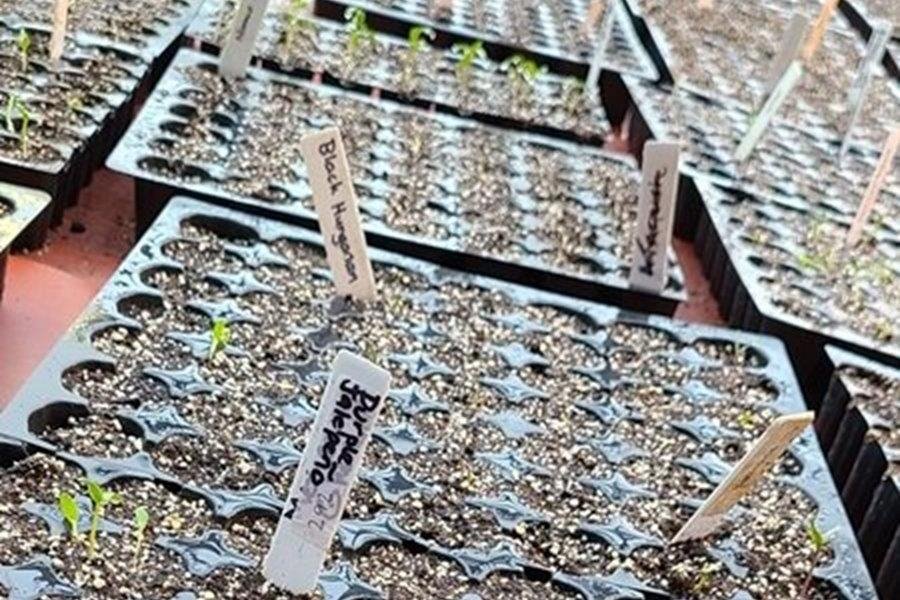
Step 1: Harden Off Before Planting
Tomatoes and peppers are tropical plants and are especially sensitive to cold. If outdoor temperatures are below 60°F, keep them indoors.
- Place plants outdoors in a sheltered, shady location (under a tree or on a porch).
- Day 1: Leave plants outside for 30 minutes.
- Day 2: Increase to 1 hour.
- Add about 1 hour each day, working up to 6 hours of sunlight.
- Gradually expose plants to more direct sun as time outdoors increases.
- Don't overwater. Allow soil to dry slightly between watering, but never let plants wilt.
- Bring plants indoors each night during this period.
After about 7 days, plants should tolerate full sun and can remain outside overnight, as long as nighttime temperatures stay near 50°F. After 7–10 days, plants are ready for the garden. Transplant on a cloudy day when possible and water well after planting.
Step 2: Plant at the Proper Depth
Tomatoes, peppers and eggplants prefer well-drained, moderately fertile soil high in organic matter.
Tomatoes
Tomatoes can be planted deep—burying part of the stem. Remove lower leaves and plant deeply, leaving about 4 inches of stem above the soil line. Roots will form along the buried stem, creating a stronger plant.
Peppers & Eggplants
Peppers and eggplants are more particular—plant them at the same depth as the pot. These plants don't form roots along buried stems, and planting too deep can stress them.
Step 3: Plant at the Right Time
Based on NOAA climate data for Green Bay (1981–2010):
- Last frost: May 1–10
- First freeze: Early October
- Average growing season: ~150 days
Even if warm weather arrives early, wait until soil temperatures reach 60–65°F before planting tomatoes and peppers. Cold soil slows growth and increases susceptibility to disease. Peppers, in particular, are sensitive—nighttime temperatures below 60°F or above 75°F can reduce fruit set. With thoughtful preparation, your plants will be ready to grow, adapt, and flourish.